Persistence, Privilege, and Parenting
Herausgegeben von Russell Sage Foundation
English
2011
ISBN 9781610447546
eBook
Buy at Catademic
🇺🇸
Catademic
🇺🇸
Shop besuchen →
Bajalibros Latam
🇺🇸
Shop besuchen →
Association of University Presses - Tienda FILUNI
🇺🇸
Shop besuchen →

Ebooks Librería Antártica
🇨🇱
Shop besuchen →
Ebooks Agustin
🇪🇸
Shop besuchen →
Bajalibros Argentina
🇦🇷
Shop besuchen →

Sanborns Ebooks
🇲🇽
Shop besuchen →
ebooks Libreria del GAM
🇺🇾
Shop besuchen →
Bookshop Uruguay
🇺🇾
Shop besuchen →

ebookskitapenas
🇬🇹
Shop besuchen →
Ebooks Yenny - El Ateneo
🇦🇷
Shop besuchen →
Crisol Ebooks
🇨🇴
Shop besuchen →
Verfügbar in 12 Buchhandlungen
Catademic
🇺🇸
Shop besuchen →
Association of University Presses - Tienda FILUNI
🇺🇸
Shop besuchen →
Ebooks Librería Antártica
🇨🇱
Shop besuchen →
Ebooks Agustin
🇪🇸
Shop besuchen →
Sanborns Ebooks
🇲🇽
Shop besuchen →
ebooks Libreria del GAM
🇺🇾
Shop besuchen →
ebookskitapenas
🇬🇹
Shop besuchen →
Ebooks Yenny - El Ateneo
🇦🇷
Shop besuchen →
Crisol Ebooks
🇨🇴
Shop besuchen →
Über dieses Buch
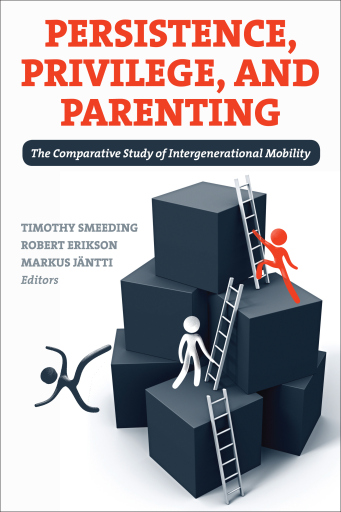
<div>Americans like to believe that theirs is the land of opportunity, but the hard facts are that children born into poor families in the United States tend to stay poor and children born into wealthy families generally stay rich. Other countries have shown more success at lessening the effects of inequality on mobility—possibly by making public investments in education, health, and family well-being that offset the private advantages of the wealthy. What can the United States learn from these other countries about how to provide children from disadvantaged backgrounds an equal chance in life? Making comparisons across ten countries, Persistence, Privilege, and Parenting brings together a team of eminent international scholars to examine why advantage and disadvantage persist across generations. The book sheds light on how the social and economic mobility of children differs within and across countries and the impact private family resources, public policies, and social institutions may have on mobility. In what ways do parents pass advantage or disadvantage on to their children? Persistence, Privilege, and Parenting is an expansive exploration of the relationship between parental socioeconomic status and background and the outcomes of their grown children. The authors also address the impact of education and parental financial assistance on mobility. Contributors Miles Corak, Lori Curtis, and Shelley Phipps look at how family economic background influences the outcomes of adult children in the United States and Canada. They find that, despite many cultural similarities between the two countries, Canada has three times the rate of intergenerational mobility as the United States—possibly because Canada makes more public investments in its labor market, health care, and family programs. Jo Blanden and her colleagues explore a number of factors affecting how advantage is transmitted between parents and children in the United States and the United Kingdom, including education, occupation, marriage, and health. They find that despite the two nations having similar rates of intergenerational mobility and social inequality, lack of educational opportunity plays a greater role in limiting U.S. mobility, while the United Kingdom’s deeply rooted social class structure makes it difficult for the disadvantaged to transcend their circumstances. Jane Waldfogel and Elizabeth Washbrook examine cognitive and behavioral school readiness across income groups and find that pre-school age children in both the United States and Britain show substantial income-related gaps in school readiness—driven in part by poorly developed parenting skills among overburdened, low-income families. The authors suggest that the most encouraging policies focus on both school and home interventions, including such measures as increases in federal funding for Head Start programs in the United States, raising pre-school staff qualifications in Britain, and parenting programs in both countries. A significant step forward in the study of intergenerational mobility, Persistence, Privilege, and Parenting demonstrates that the transmission of advantage or disadvantage from one generation to the next varies widely from country to country. This striking finding is a particular cause for concern in the United States, where the persistence of disadvantage remains stubbornly high. But, it provides a reason to hope that by better understanding mobility across the generations abroad, we can find ways to do better at home.</div>
Kategorien
- Sprache
- English
Teilen
Das könnte dir auch gefallen
Ciencias Sociales 8EGB
Eu odeio os homens
Harmange, Pauline
Teoría y práctica de la sistematización de experiencias
Carvajal Burbano, Arizaldo
Diseño de movimiento: la práctica de animación como generadora de conocimiento
Guzmán Ramírez, Jesús Alejandro
Cosmografías musicales prehispánicas del Suroccidente colombiano
Pinilla Higuera, Germán
Violencias contra las mujeres
Pérez Manzano, Mercedes, Beltrán, Elena, Faerman, Romina, García Sáez, José Antonio, Hopp, Cecilia Marcela, Cartabia Groba, Sabrina Ayelén, Sánchez, Cristina, Zúñiga Añazco, Yanira, Sordo Ruz, Tania, Fernández Valle, Mariano, Jaramillo Sierra, Isabel C., Correa Flórez, María Camila