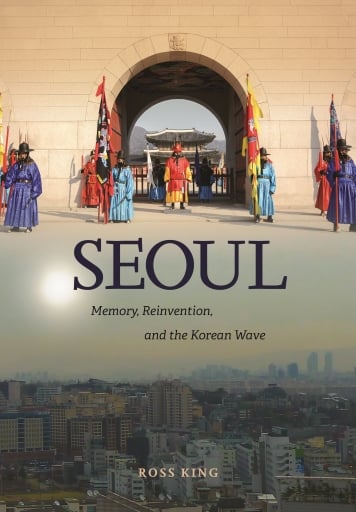
Seoul
Von King, Ross
Herausgegeben von University of Hawaii Press
English
345 Seiten
2018
ISBN 9780824873318
PDF
Buy at University of Hawaiʻi Press
🇺🇸
Catademic
🇺🇸
Shop besuchen →
UN
University of Hawaiʻi Press
🇺🇸
Shop besuchen →
Bajalibros Latam
🇺🇸
Shop besuchen →
Association of University Presses - Tienda FILUNI
🇺🇸
Shop besuchen →

Ebooks Librería Antártica
🇨🇱
Shop besuchen →
Ebooks Agustin
🇪🇸
Shop besuchen →
Bajalibros Argentina
🇦🇷
Shop besuchen →

Sanborns Ebooks
🇲🇽
Shop besuchen →
ebooks Libreria del GAM
🇺🇾
Shop besuchen →
Bookshop Uruguay
🇺🇾
Shop besuchen →

ebookskitapenas
🇬🇹
Shop besuchen →
Ebooks Yenny - El Ateneo
🇦🇷
Shop besuchen →
Crisol Ebooks
🇨🇴
Shop besuchen →
Verfügbar in 13 Buchhandlungen
Catademic
🇺🇸
Shop besuchen →
UN
University of Hawaiʻi Press
🇺🇸
Shop besuchen →
Association of University Presses - Tienda FILUNI
🇺🇸
Shop besuchen →
Ebooks Librería Antártica
🇨🇱
Shop besuchen →
Ebooks Agustin
🇪🇸
Shop besuchen →
Sanborns Ebooks
🇲🇽
Shop besuchen →
ebooks Libreria del GAM
🇺🇾
Shop besuchen →
ebookskitapenas
🇬🇹
Shop besuchen →
Ebooks Yenny - El Ateneo
🇦🇷
Shop besuchen →
Crisol Ebooks
🇨🇴
Shop besuchen →
Über dieses Buch
<p>Seoul is a colossus both in its physical presence and the demand it places on any intellectual effort to understand it. How did it come to be? How can a city this immense work? Underlying its spectacle and incongruities is a city that might be described as ill at ease with its own past. The bitter rifts of Japanese colonization persist, as does the troubled aftermath of the Korean War and its divisions; the economic “Miracle on the Han” that followed is crosscut by memories of the violent dictatorship that drove it.<br><br>In <i>Seoul</i>, author Ross King interrogates this contested history and its physical remnants, tacking between the city’s historiography and architecture, with attention to monuments, streets, and other urban spaces. The book’s structuring device is the dichotomy of erasure and memory as necessary preconditions for reinvention. King traces this phenomenon from the old dynasties to the Japanese regime and wartime destruction; he then follows the equally destructive reinvention of Korea under dictatorship to the brilliant city of the present with its extraordinary explosion of creativity and ideas—the post-1991 Hallyu, the Korean Wave. The final chapter returns to questions of forgetting and memory, but now as “conditions of possibility” for what would seem to underlie the present trajectory of this extraordinary city and culture.<br><br><i>Seoul </i>can be read, King suggests, in the context of the hybrid ideas that have characterized Korean cultural history. It may be their present eruption that accounts for the city of contradictions that confronts the contemporary observer and that most extraordinary of Korean phenomena: the rise of an alternative, virtual world, eclipsing both city and nation. Has the very idea of Korea been reinvented even as the weakly defined nation-state slips away?</p>
- Sprache
- English
Teilen
Das könnte dir auch gefallen
Some architectural problems of to-day
Reilly, C. H. , Sir
El poder de la proximidad (Serie ENDEBATE)
Moreno, Carlos
España fea
Rubio, Andrés
Ciudad, urbanización y urbanismo en el siglo XX venezolano
Negrón, Marco, Olivar, José Alberto, Almandoz Marte, Arturo, Deluca González, María Elena, Sarli Cilento, Alfredo, Bolívar, Teolinda
Derecho urbanístico en la Comunidad de Madrid
Caballero, Francisco Velasco
Las escalas de la metrópoli: lejanía versus proximidad
Arturo Orellana, Carme Miralles-Guasch, Luis Fuente