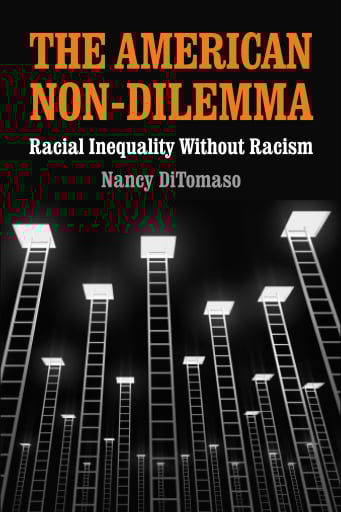
The American Non-Dilemma
Von DiTomaso, Nancy
Herausgegeben von Russell Sage Foundation
English
2013
ISBN 9781610447898
eBook
Buy at Catademic
🇺🇸
Catademic
🇺🇸
Shop besuchen →
Bajalibros Latam
🇺🇸
Shop besuchen →
Association of University Presses - Tienda FILUNI
🇺🇸
Shop besuchen →

Ebooks Librería Antártica
🇨🇱
Shop besuchen →
Ebooks Agustin
🇪🇸
Shop besuchen →
Bajalibros Argentina
🇦🇷
Shop besuchen →
Sanborns Ebooks
🇲🇽
Shop besuchen →
ebooks Libreria del GAM
🇺🇾
Shop besuchen →
Bookshop Uruguay
🇺🇾
Shop besuchen →
ebookskitapenas
🇬🇹
Shop besuchen →
Ebooks Yenny - El Ateneo
🇦🇷
Shop besuchen →
Crisol Ebooks
🇨🇴
Shop besuchen →
Verfügbar in 12 Buchhandlungen
Catademic
🇺🇸
Shop besuchen →
Association of University Presses - Tienda FILUNI
🇺🇸
Shop besuchen →

Ebooks Librería Antártica
🇨🇱
Shop besuchen →
Ebooks Agustin
🇪🇸
Shop besuchen →
Sanborns Ebooks
🇲🇽
Shop besuchen →
ebooks Libreria del GAM
🇺🇾
Shop besuchen →
ebookskitapenas
🇬🇹
Shop besuchen →
Ebooks Yenny - El Ateneo
🇦🇷
Shop besuchen →
Crisol Ebooks
🇨🇴
Shop besuchen →
Über dieses Buch
<div>The Civil Rights movement of the 1960s seemed to mark a historical turning point in advancing the American dream of equal opportunity for all citizens, regardless of race. Yet 50 years on, racial inequality remains a troubling fact of life in American society and its causes are highly contested. In The American Non-Dilemma, sociologist Nancy DiTomaso convincingly argues that America's enduring racial divide is sustained more by whites' preferential treatment of members of their own social networks than by overt racial discrimination. Drawing on research from sociology, political science, history, and psychology, as well as her own interviews with a cross-section of non-Hispanic whites, DiTomaso provides a comprehensive examination of the persistence of racial inequality in the post-Civil Rights era and how it plays out in today's economic and political context. Taking Gunnar Myrdal's classic work on America's racial divide, The American Dilemma, as her departure point, DiTomaso focuses on "the white side of the race line." To do so, she interviewed a sample of working, middle, and upper-class whites about their life histories, political views, and general outlook on racial inequality in America. While the vast majority of whites profess strong support for civil rights and equal opportunity regardless of race, they continue to pursue their own group-based advantage, especially in the labor market where whites tend to favor other whites in securing jobs protected from market competition. This "opportunity hoarding" leads to substantially improved life outcomes for whites due to their greater access to social resources from family, schools, churches, and other institutions with which they are engaged. DiTomaso also examines how whites understand the persistence of racial inequality in a society where whites are, on average, the advantaged racial group. Most whites see themselves as part of the solution rather than part of the problem with regard to racial inequality. Yet they continue to harbor strong reservations about public policies—such as affirmative action—intended to ameliorate racial inequality. In effect, they accept the principles of civil rights but not the implementation of policies that would bring about greater racial equality. DiTomaso shows that the political engagement of different groups of whites is affected by their views of how civil rights policies impact their ability to provide advantages to family and friends. This tension between civil and labor rights is evident in Republicans' use of anti-civil rights platforms to attract white voters, and in the efforts of Democrats to bridge race and class issues, or civil and labor rights broadly defined. As a result, DiTomaso finds that whites are, at best, uncertain allies in the fight for racial equality. Weaving together research on both race and class, along with the life experiences of DiTomaso's interview subjects, The American Non-Dilemma provides a compelling exploration of how racial inequality is reproduced in today's society, how people come to terms with the issue in their day-to-day experiences, and what these trends may signify in the contemporary political landscape.</div>
Kategorien
- Sprache
- English
Teilen
Das könnte dir auch gefallen
A memória vegetal
Eco, Umberto
A Grande Degeneração
Ferguson, Niall
El peso del tiempo
Bartomeus, Oriol
Descendientes de africanos en la Independencia
Mosquera Mosquera, Sergio Antonio
Rutas metodológicas para la modelización en ciencias
Suárez Ariza, Roberto, Martínez Cotrina, Jorge
La migración transnacional en Peguche, Ecuador, y la fiesta del Pawkar Raymi
Ordóñez Charpentier, Angélica