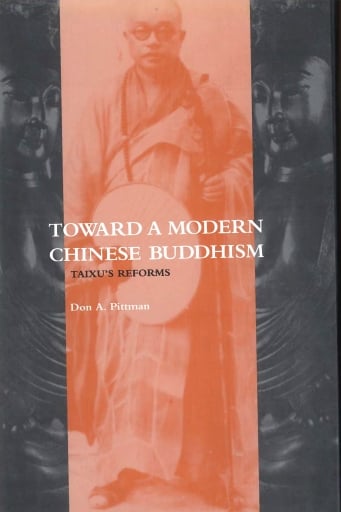
Toward a Modern Chinese Buddhism
Von Pittman, Don A.
Herausgegeben von University of Hawaii Press
English
404 Seiten
2001
ISBN 9780824865269
PDF
Buy at Bajalibros Latam
🇺🇸
Catademic
🇺🇸
Shop besuchen →
Bajalibros Latam
🇺🇸
Shop besuchen →
Association of University Presses - Tienda FILUNI
🇺🇸
Shop besuchen →

Ebooks Librería Antártica
🇨🇱
Shop besuchen →
Ebooks Agustin
🇪🇸
Shop besuchen →
Bajalibros Argentina
🇦🇷
Shop besuchen →

Sanborns Ebooks
🇲🇽
Shop besuchen →
ebooks Libreria del GAM
🇺🇾
Shop besuchen →
Bookshop Uruguay
🇺🇾
Shop besuchen →

ebookskitapenas
🇬🇹
Shop besuchen →
Ebooks Yenny - El Ateneo
🇦🇷
Shop besuchen →
Crisol Ebooks
🇨🇴
Shop besuchen →
Verfügbar in 12 Buchhandlungen
Catademic
🇺🇸
Shop besuchen →
Association of University Presses - Tienda FILUNI
🇺🇸
Shop besuchen →
Ebooks Librería Antártica
🇨🇱
Shop besuchen →
Ebooks Agustin
🇪🇸
Shop besuchen →
Sanborns Ebooks
🇲🇽
Shop besuchen →
ebooks Libreria del GAM
🇺🇾
Shop besuchen →
ebookskitapenas
🇬🇹
Shop besuchen →
Ebooks Yenny - El Ateneo
🇦🇷
Shop besuchen →
Crisol Ebooks
🇨🇴
Shop besuchen →
Über dieses Buch
<p>The Venerable Master Taixu (1890–1947) is the most important and controversial Chinese Buddhist reformer of the twentieth century. Viewed as dangerously rash by conservative Buddhists, irrelevant by secular humanists, and spiritually misguided by Christian missionaries, Taixu was nevertheless committed to forging a socially engaged form of Buddhism and to organizing a Buddhist mission in the West. His bold and inventive "Buddhist revolution" continues to shape aspects of a revitalized Buddhism in East Asia and around the world. The present volume is the first major study in English to focus on the charismatic reformer and his teachings and provides a comprehensive and absorbing interpretation of Taixu’s aims and the divisive controversies that surrounded him. This nuanced work is richly documented with quotations from Taixu’s own writings and from various Chinese intellectuals and evangelists of the period.<br><br> As the most politically involved of all the Buddhist leaders in the Republican period, Taixu sought to present Mahâyâna Buddhism as the core of a new Chinese culture and the only adequate foundation for a truly global civilization. Distancing himself from those masters who focused on otherworldly paradises and stressed dependence on celestial buddhas and bodhisattvas, he emphasized what could actually be accomplished in this world through the work of thousands of living bodhisattvas dedicated to building a pure land here and now. A realist who acknowledged the complexities of the human condition in an increasingly interdependent and violent world, Taixu was also a utopian who tried to imagine how Buddhists could begin to realize their ultimate ideals—ideals that in fact lay beyond the preservation of institutional Buddhism itself.<br><br>Students of Buddhism, Chinese religion, contemporary Chinese history and culture, and Taiwan studies will welcome this study of a crucially important and intriguingly complex individual whose life encapsulates many of the forces and possibilities apparent within Chinese Buddhism in the contemporary world.</p>
Kategorien
- Sprache
- English
Teilen
Das könnte dir auch gefallen
The Buddhist Catechism & The Life of Buddha and Its Lessons
Olcott, Henry S.
Der Buddhismus in Süd- und Südostasien
Bechert, Heinz
Family Matters in Indian Buddhist Monasticisms
Clarke, Shayne
La paz está en tu interior
Hanh, Thich Nhat
Viver quando alguém que amamos morre
Hanh, Thich Nhat
El arte de saber perdonar
Dalai-Lama