Zum Hauptinhalt springen
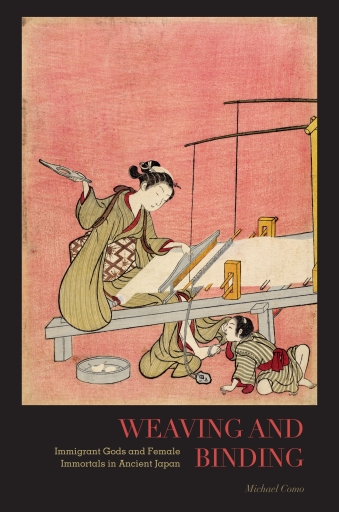
Weaving and Binding

Weaving and Binding

Von Como, Michael

Herausgegeben von University of Hawaii Press

English 330 Seiten 2009 ISBN 9780824837525
Geschätzte Lesezeit: 6 Std. 3 Min.
PDF

Über dieses Buch

Among the most exciting developments in the study of Japanese religion over the past two decades has been the discovery of tens of thousands of ritual vessels, implements, and scapegoat dolls (hitogata) from the Nara (710-784) and early Heian (794-1185) periods. Because inscriptions on many of the items are clearly derived from Chinese rites of spirit pacification, it is now evident that previous scholarship has mischaracterized the role of Buddhism in early Japanese religion. Weaving and Binding makes a compelling argument that both the Japanese royal system and the Japanese Buddhist tradition owe much to continental rituals centered on the manipulation of yin and yang, animal sacrifice, and spirit quelling. Building on these recent archaeological discoveries, Michael Como charts an epochal transformation in the religious culture of the Japanese islands, tracing the transmission and development of fundamental paradigms of religious practice to immigrant lineages and deities from the Korean peninsula. In addition to archaeological materials, Como makes extensive use of a wide range of textual sources from across Asia, including court chronicles, poetry collections, gazetteers, temple records, and divinatory texts. As he investigates the influence of myths, legends, and rites of the ancient Chinese festival calendar on religious practice across the Japanese islands, Como shows how the ability of immigrant lineages to propitiate hostile deities led to the creation of elaborate networks of temple-shrine complexes that shaped later sectarian Shinto as well as popular understandings of the relationship between the buddhas and the gods of Japan. For much of the book, this process is examined through rites and legends from the Chinese calendar that were related to weaving, sericulture, and medicine—technologies that to a large degree were controlled by lineages with roots in the Korean peninsula and that claimed female deities and weaving maidens as founding ancestors. Como’s examination of a series of ancient Japanese legends of female immortals, weaving maidens, and shamanesses reveals that female deities played a key role in the moving of technologies and ritual practices from peripheral regions in Kyushu and elsewhere into central Japan and the heart of the imperial cult. As a result, some of the most important building blocks of the purportedly native Shinto tradition were to a remarkable degree shaped by the ancestral cults of immigrant lineages and popular Korean and Chinese religious practices. This is a provocative and innovative work that upsets the standard interpretation of early historical religion in Japan, revealing a complex picture of continental cultic practice both at court and in the countryside.

Verfügbarkeit

Weaving and Binding ist als PDF in 13 Online-Buchhandlungen erhältlich. Zu den Buchhandlungen, die es führen, gehören Association of University Presses - Tienda FILUNI, Bajalibros Argentina, Bajalibros Latam.

Sprache
English
Teilen

Häufige Fragen

In welchen Formaten ist Weaving and Binding erhältlich?
Weaving and Binding ist als PDF in 13 Online-Buchhandlungen erhältlich.
Wo kann ich Weaving and Binding kaufen?
Du kannst Weaving and Binding bei Association of University Presses - Tienda FILUNI, Bajalibros Argentina, Bajalibros Latam kaufen. Vergleiche alle Optionen in der Liste auf dieser Seite.
Wie lange dauert es, Weaving and Binding zu lesen?
Bei durchschnittlichem Lesetempo dauert Weaving and Binding etwa 6 Std. 3 Min. (330 Seiten).

Bewertungen und Rezensionen

Noch keine Bewertungen. Sei der Erste, der dieses Buch rezensiert.

Anmelden um dieses Buch zu bewerten und zu rezensieren.

Kommentare

Anmelden um an der Unterhaltung teilzunehmen.

Noch keine Kommentare.