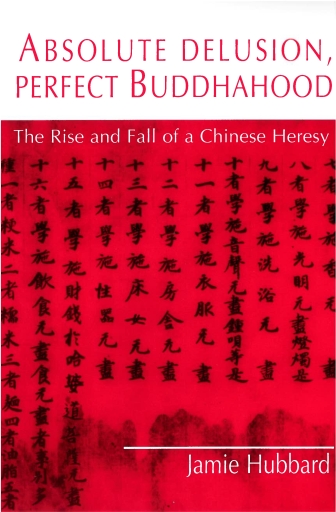
Absolute Delusion, Perfect Buddhahood
Published by University of Hawaii Press
English
352 pages
2000
ISBN 9780824861346
Estimated reading time: 6 h 27 min
PDF
Buy at Ebooks Librería Antártica
🇨🇱
 Association of University Presses - Tienda FILUNI
🇺🇸
Visit store →
Association of University Presses - Tienda FILUNI
🇺🇸
Visit store →
 Bajalibros Argentina
🇦🇷
Visit store →
Bajalibros Argentina
🇦🇷
Visit store →
 Bajalibros Latam
🇺🇸
Visit store →
Bajalibros Latam
🇺🇸
Visit store →
 Bookshop Uruguay
🇺🇾
Visit store →
Bookshop Uruguay
🇺🇾
Visit store →
 Catademic
🇺🇸
Visit store →
Catademic
🇺🇸
Visit store →
Available at 13 bookshops
Association of University Presses - Tienda FILUNI
🇺🇸
Visit store →
Bajalibros Argentina
🇦🇷
Visit store →
Bajalibros Latam
🇺🇸
Visit store →
Bookshop Uruguay
🇺🇾
Visit store →
Catademic
🇺🇸
Visit store →








About this book
In spite of the common view of Buddhism as nondogmatic and tolerant, the historical record preserves many examples of Buddhist thinkers and movements that were banned as heretical or subversive. The San-chieh (Three Levels) was a popular and influential Chinese Buddhist movement during the Sui and T’ang periods, counting powerful statesmen, imperial princes, and even an empress, Empress Wu, among its patrons. In spite, or perhaps precisely because, of its proximity to power, the San-chieh movement ran afoul of the authorities and its teachings and texts were officially proscribed numerous times over a several-hundred-year history. Because of these suppressions San-chieh texts were lost and little information about its teachings or history is available. The present work, the first English study of the San-chieh movement, uses manuscripts discovered at Tun-huang to examine the doctrine and institutional practices of this movement in the larger context of Mahayana doctrine and practice.
By viewing San-chieh in the context of Mahayana Buddhism, Hubbard reveals it to be far from heretical and thereby raises important questions about orthodoxy and canon in Buddhism. He shows that many of the hallmark ideas and practices of Chinese Buddhism find an early and unique expression in the San-chieh texts.
Availability
Absolute Delusion, Perfect Buddhahood is available as PDF at 13 online bookshops. Bookshops carrying it include Association of University Presses - Tienda FILUNI, Bajalibros Argentina, Bajalibros Latam.
Genres
- Language
- English
Share
Frequently asked questions
- In what formats is Absolute Delusion, Perfect Buddhahood available?
- Absolute Delusion, Perfect Buddhahood is available as PDF at 13 online bookshops.
- Where can I buy Absolute Delusion, Perfect Buddhahood?
- You can buy Absolute Delusion, Perfect Buddhahood at Association of University Presses - Tienda FILUNI, Bajalibros Argentina, Bajalibros Latam. Compare every option in the list on this page.
- How long does it take to read Absolute Delusion, Perfect Buddhahood?
- At an average reading pace, Absolute Delusion, Perfect Buddhahood takes about 6 h 27 min to read (352 pages).
Ratings & reviews
No ratings yet. Be the first to review this book.
Sign in to rate and review this book.