A Path into the Mountains
Publicado por University of Hawaii Press
English
2022
ISBN 9780824893125
eBook
Buy at Bajalibros Argentina
🇦🇷
 Association of University Presses - Tienda FILUNI
🇺🇸
Visitar tienda →
Association of University Presses - Tienda FILUNI
🇺🇸
Visitar tienda →
 Bajalibros Latam
🇺🇸
Visitar tienda →
Bajalibros Latam
🇺🇸
Visitar tienda →
 Bookshop Uruguay
🇺🇾
Visitar tienda →
Bookshop Uruguay
🇺🇾
Visitar tienda →
 Catademic
🇺🇸
Visitar tienda →
Catademic
🇺🇸
Visitar tienda →
Disponible en 13 librerías
Association of University Presses - Tienda FILUNI
🇺🇸
Visitar tienda →
 Bajalibros Latam
🇺🇸
Visitar tienda →
Bookshop Uruguay
🇺🇾
Visitar tienda →
Catademic
🇺🇸
Visitar tienda →
Bajalibros Latam
🇺🇸
Visitar tienda →
Bookshop Uruguay
🇺🇾
Visitar tienda →
Catademic
🇺🇸
Visitar tienda →








Sobre este libro
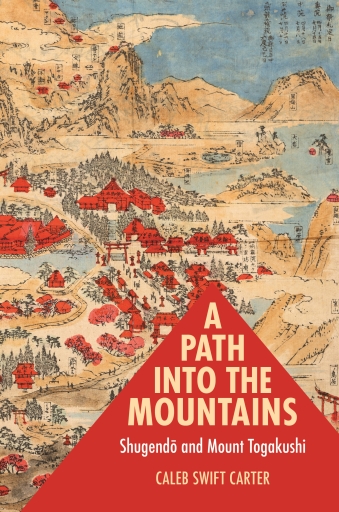
Shugendō has been an object of fascination among scholars and the general public, yet its historical development remains an enigma. This book offers a provocative reexamination of the social, economic, and spiritual terrain from which this mountain religious system arose. Caleb Carter traces Shugendō through the mountains of Togakushi (Nagano Prefecture), while situating it within the religious landscape of medieval and early modern Japan. His is the first major study to view Shugendō as a self-conscious religious system—something that was historically emergent but conceptually distinct from the prevailing Buddhist orders of medieval Japan. Beyond Shugendō, his work rethinks a range of issues in the history of Japanese religions, including exclusionary policies toward women, the formation of Shintō, and religion at the social and geographical margins of the Japanese archipelago.
Carter takes a new tack in the study of religions by tracking three recurrent and intersecting elements—institution, ritual, and narrative. Examination of origin accounts, temple records, gazetteers, and iconography from Togakushi demonstrates how practitioners implemented storytelling, new rituals and festivals, and institutional measures to merge Shugendō with their mountain’s culture while establishing social legitimacy and economic security. Indicative of early modern trends, the case of Mount Togakushi reveals how Shugendō moved from a patchwork of regional communities into a translocal system of national scope, eventually becoming Japan’s signature mountain religion.
Disponibilidad
A Path into the Mountains está disponible como eBook en 13 librerías online. Entre las librerías que lo venden están Association of University Presses - Tienda FILUNI, Bajalibros Argentina, Bajalibros Latam.
Categorías
- Idioma
- English
Compartir
Preguntas frecuentes
- ¿En qué formatos está disponible A Path into the Mountains?
- A Path into the Mountains está disponible como eBook en 13 librerías online.
- ¿Dónde puedo comprar A Path into the Mountains?
- Puedes comprar A Path into the Mountains en Association of University Presses - Tienda FILUNI, Bajalibros Argentina, Bajalibros Latam. Compara todas las opciones en la lista de esta página.
Valoraciones y reseñas
Aún no hay valoraciones. Sé el primero en reseñar este libro.
Acceder para valorar y reseñar este libro.