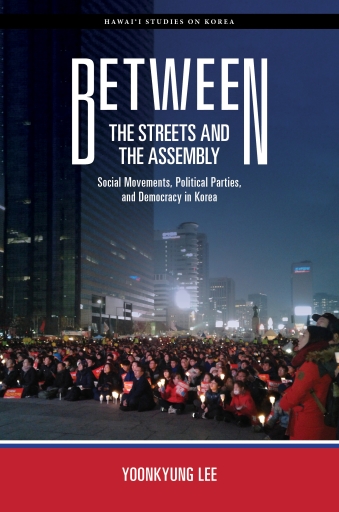
Between the Streets and the Assembly
Por Lee, Yoonkyung
Publicado por University of Hawaii Press
English
245 páginas
2022
ISBN 9780824892043
PDF
Buy at Bajalibros Latam
🇺🇸
Catademic
🇺🇸
Visitar tienda →
Bajalibros Latam
🇺🇸
Visitar tienda →
Association of University Presses - Tienda FILUNI
🇺🇸
Visitar tienda →

Ebooks Librería Antártica
🇨🇱
Visitar tienda →
Ebooks Agustin
🇪🇸
Visitar tienda →
Bajalibros Argentina
🇦🇷
Visitar tienda →

Sanborns Ebooks
🇲🇽
Visitar tienda →
ebooks Libreria del GAM
🇨🇱
Visitar tienda →
Bookshop Uruguay
🇺🇾
Visitar tienda →

ebookskitapenas
🇬🇹
Visitar tienda →
Ebooks Yenny - El Ateneo
🇦🇷
Visitar tienda →
Crisol Ebooks
🇵🇪
Visitar tienda →
Disponible en 12 librerías
Catademic
🇺🇸
Visitar tienda →
Association of University Presses - Tienda FILUNI
🇺🇸
Visitar tienda →
Ebooks Librería Antártica
🇨🇱
Visitar tienda →
Ebooks Agustin
🇪🇸
Visitar tienda →
Sanborns Ebooks
🇲🇽
Visitar tienda →
ebooks Libreria del GAM
🇨🇱
Visitar tienda →
ebookskitapenas
🇬🇹
Visitar tienda →
Ebooks Yenny - El Ateneo
🇦🇷
Visitar tienda →
Crisol Ebooks
🇵🇪
Visitar tienda →
Sobre este libro
<p>Streets in Korea rarely go quiet without first having a public demonstration and Korean citizens are known as seasoned protestors, charting the course of national politics. <i>Between the Streets and the Assembly </i>explores how protest movements have become the prominent mode of democratic politics in Korea, in contrast to political parties in the National Assembly that have lagged behind in partisan representation and accountability. To unpack this political dynamic, this book closely follows three groups of democracy activists who were born in their resistance to military dictatorships but who pursued different methods of democratic representation in postauthoritarian Korea (1987–2020). One group stayed in civil society and organized powerful protests outside formal institutions; another group chose to join existing parties with the aim of reforming legislative politics; and the third group was devoted to forming separate progressive parties to be the agent of transformative agenda. By analyzing the interactive evolution of these three modes of democratic representation, Yoonkyung Lee finds that social movement organizations have been more effective than activist-turned politicians in centrist or progressive parties in creating coordination infrastructures for collective action. Through the practice of organizing national solidarity networks, innovating the methods of mass street demonstrations, and drawing professional expertise to formulate policy alternatives, Korean civic groups have built the capacity to directly shape and alter the course of <i>national </i>politics, unlike activist-turned politicians who remained divided with no common political programs.<br><br>This study asserts that social movement organizations and political parties develop variable capacities for democratic representation, depending on coevolutionary interactions with each other. The experience of Korean democracy shows social movement groups can be a powerful agent of national politics against the scholarly assumption that views civic associations as narrowly focused, transient organizations. <i>Between the Streets and the Assembly </i>suggests a different possibility of political process, one in which civic groups and participatory citizens, not political parties, are the primary drivers of democratic politics.</p>
Categorías
- Idioma
- English
Compartir