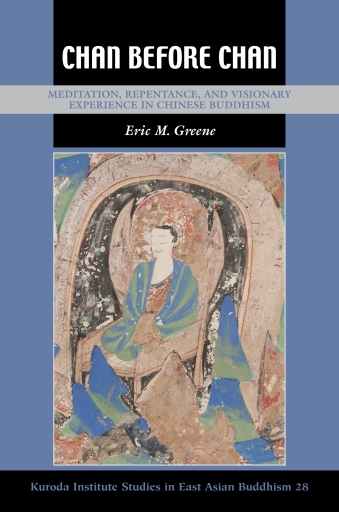
Chan Before Chan
Por Greene, Eric M.
Publicado por University of Hawaii Press
English
337 páginas
2021
ISBN 9780824886875
PDF
Buy at Association of University Presses - Tienda FILUNI
🇺🇸
Catademic
🇺🇸
Visitar tienda →
UN
University of Hawaiʻi Press
🇺🇸
Visitar tienda →
Bajalibros Latam
🇺🇸
Visitar tienda →
Association of University Presses - Tienda FILUNI
🇺🇸
Visitar tienda →

Ebooks Librería Antártica
🇨🇱
Visitar tienda →
Ebooks Agustin
🇪🇸
Visitar tienda →
Bajalibros Argentina
🇦🇷
Visitar tienda →

Sanborns Ebooks
🇲🇽
Visitar tienda →
ebooks Libreria del GAM
🇺🇾
Visitar tienda →
Bookshop Uruguay
🇺🇾
Visitar tienda →

ebookskitapenas
🇬🇹
Visitar tienda →
Ebooks Yenny - El Ateneo
🇦🇷
Visitar tienda →
Crisol Ebooks
🇨🇴
Visitar tienda →
Disponible en 13 librerías
Catademic
🇺🇸
Visitar tienda →
UN
University of Hawaiʻi Press
🇺🇸
Visitar tienda →
Association of University Presses - Tienda FILUNI
🇺🇸
Visitar tienda →
Ebooks Librería Antártica
🇨🇱
Visitar tienda →
Ebooks Agustin
🇪🇸
Visitar tienda →
Sanborns Ebooks
🇲🇽
Visitar tienda →
ebooks Libreria del GAM
🇺🇾
Visitar tienda →
ebookskitapenas
🇬🇹
Visitar tienda →
Ebooks Yenny - El Ateneo
🇦🇷
Visitar tienda →
Crisol Ebooks
🇨🇴
Visitar tienda →
Sobre este libro
<p>What is Buddhist meditation? What is going on—and what should be going on—behind the closed or lowered eyelids of the Buddha or Buddhist adept seated in meditation? And in what ways and to what ends have the answers to these questions mattered for Buddhists themselves? Focusing on early medieval China, this book takes up these questions through a cultural history of the earliest traditions of Buddhist meditation (<i>chan</i>), before the rise of the Chan (Zen) School in the eighth century. In sharp contrast to what would become typical in the later Chan School, early Chinese Buddhists approached the ancient Buddhist practice of meditation primarily as a way of gaining access to a world of enigmatic but potentially meaningful visionary experiences. In <i>Chan Before Chan</i>, Eric Greene brings this approach to meditation to life with a focus on how medieval Chinese Buddhists interpreted their own and others’ visionary experiences and the nature of the authority they ascribed to them. <br><br>Drawing from hagiography, ritual manuals, material culture, and the many hitherto rarely studied meditation manuals translated from Indic sources into Chinese or composed in China in the 400s, Greene argues that during this era meditation and the mastery of meditation came for the first time to occupy a real place in the Chinese Buddhist social world. Heirs to wider traditions that had been shared across India and Central Asia, early medieval Chinese Buddhists conceived of “chan” as something that would produce a special state of visionary sensitivity. The concrete visionary experiences that resulted from meditation were understood as things that could then be interpreted, by a qualified master, as indicative of the mediator’s purity or impurity. Buddhist meditation, though an elite discipline that only a small number of Chinese Buddhists themselves undertook, was thus in practice and in theory constitutively integrated into the cultic worlds of divination and “repentance” (<i>chanhui</i>) that were so important within the medieval Chinese religious world as a whole.</p>
- Idioma
- English
Compartir
También te puede interesar
Following the Sun-Flag: A Vain Pursuit Through Manchuria
Fox, John, Jr.
Ball of Fat (Boule De Suif)
de Maupassant, Guy
Politics of Control
Hung, Chang-tai
El mundo al revés
Jisheng, Yang
A Call to Mission - A History of the Jesuits in China 1842-1954
Strong, David
Tang China in Multi-Polar Asia
Wang, Zhenping