Ir al contenido principal
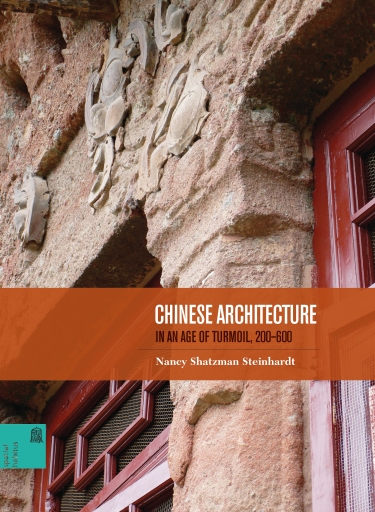
Chinese Architecture in an Age of Turmoil, 200-600

Chinese Architecture in an Age of Turmoil, 200-600

Por Steinhardt, Nancy Shatzman

Publicado por University of Hawaii Press

English 498 páginas 2014 ISBN 9780824838232
Tiempo de lectura estimado: 9 h 8 min
PDF

Sobre este libro

Between the fall of the Han dynasty in 220 CE and the year 600, more than thirty dynasties, kingdoms, and states rose and fell on the eastern side of the Asian continent. The founders and rulers of those polities represented the spectrum of peoples in North, East, and Central Asia. Nearly all of them built palaces, altars, temples, tombs, and cities, and almost without exception, the architecture was grounded in the building tradition of China. Illustrated with more than 475 color and black-and-white photographs, maps, and drawings, Chinese Architecture in an Age of Turmoil uses all available evidence—Chinese texts, secondary literature in six languages, excavation reports, and most important, physical remains—to present the architectural history of this tumultuous period in China’s history. Its author, Nancy Shatzman Steinhardt, arguably North America’s leading scholar of premodern Chinese architecture, has done field research at nearly every site mentioned, many of which were unknown twenty years ago and have never been described in a Western language. The physical remains are a handful of pagodas, dozens of cave-temples, thousands of tombs, small-scale evidence of architecture such as sarcophaguses, and countless representations of buildings in paint and relief sculpture. Together they narrate an expansive architectural history that offers the first in-depth study of the development, century-by-century, of Chinese architecture of third through the sixth centuries, plus a view of important buildings from the two hundred years before the third century and the resolution of architecture of this period in later construction. The subtext of this history is an examination of Chinese architecture that answers fundamental questions such as: What was achieved by a building system of standardized components? Why has this building tradition of perishable materials endured so long in China? Why did it have so much appeal to non-Chinese empire builders? Does contemporary architecture of Korea and Japan enhance our understanding of Chinese construction? How much of a role did Buddhism play in construction during the period under study? In answering these questions, the book focuses on the relation between cities and monuments and their heroic or powerful patrons, among them Cao Cao, Shi Hu, Empress Dowager Hu, Gao Huan, and lesser-known individuals. Specific and uniquely Chinese aspects of architecture are explained. The relevance of sweeping—and sometimes uncomfortable—concepts relevant to the Chinese architectural tradition such as colonialism, diffusionism, and the role of historical memory also resonate though the book.

Disponibilidad

Chinese Architecture in an Age of Turmoil, 200-600 está disponible como PDF en 13 librerías online. Entre las librerías que lo venden están Association of University Presses - Tienda FILUNI, Bajalibros Argentina, Bajalibros Latam.

Idioma
English
Compartir

Preguntas frecuentes

¿En qué formatos está disponible Chinese Architecture in an Age of Turmoil, 200-600?
Chinese Architecture in an Age of Turmoil, 200-600 está disponible como PDF en 13 librerías online.
¿Dónde puedo comprar Chinese Architecture in an Age of Turmoil, 200-600?
Puedes comprar Chinese Architecture in an Age of Turmoil, 200-600 en Association of University Presses - Tienda FILUNI, Bajalibros Argentina, Bajalibros Latam. Compara todas las opciones en la lista de esta página.
¿Cuánto se tarda en leer Chinese Architecture in an Age of Turmoil, 200-600?
A un ritmo de lectura medio, Chinese Architecture in an Age of Turmoil, 200-600 se lee en unas 9 h 8 min (498 páginas).

Valoraciones y reseñas

Aún no hay valoraciones. Sé el primero en reseñar este libro.

Acceder para valorar y reseñar este libro.

Comentarios

Acceder para unirte a la conversación.

Aún no hay comentarios.