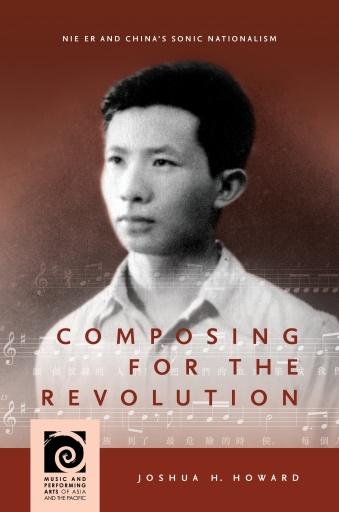
Composing for the Revolution
Publicado por University of Hawaii Press
Inglés
297 páginas
2020
ISBN 9780824885731
Tiempo de lectura estimado: 5 h 27 min
PDF
Comprar en Viubux
🇲🇽
 Association of University Presses - Tienda FILUNI
🇺🇸
Visitar tienda →
Association of University Presses - Tienda FILUNI
🇺🇸
Visitar tienda →
 Bajalibros Argentina
🇦🇷
Visitar tienda →
Bajalibros Argentina
🇦🇷
Visitar tienda →
 Bajalibros Latam
🇺🇸
Visitar tienda →
Bajalibros Latam
🇺🇸
Visitar tienda →
 Bookshop Uruguay
🇺🇾
Visitar tienda →
Bookshop Uruguay
🇺🇾
Visitar tienda →
 Catademic
🇺🇸
Visitar tienda →
Catademic
🇺🇸
Visitar tienda →
Disponible en 16 librerías
Association of University Presses - Tienda FILUNI
🇺🇸
Visitar tienda →
Bajalibros Argentina
🇦🇷
Visitar tienda →
Bajalibros Latam
🇺🇸
Visitar tienda →
Bookshop Uruguay
🇺🇾
Visitar tienda →
Catademic
🇺🇸
Visitar tienda →











Sobre este libro
In Composing for the Revolution: Nie Er and China’s Sonic Nationalism, Joshua Howard explores the role the songwriter Nie Er played in the 1930s proletarian arts movement and the process by which he became a nationalist icon. Composed only months before his untimely death in 1935, Nie Er’s last song, the “March of the Volunteers,” captured the rising anti-Japanese sentiment and was selected as China’s national anthem with the establishment of the People’s Republic. Nie was quickly canonized after his death and later recast into the “People’s Musician” during the 1950s, effectively becoming a national monument.
Howard engages two historical paradigms that have dominated the study of twentieth-century China: revolution and modernity. He argues that Nie Er, active in the leftist artistic community and critical of capitalism, availed himself of media technology, especially the emerging sound cinema, to create a modern, revolutionary, and nationalist music. This thesis stands as a powerful corrective to a growing literature on the construction of a Chinese modernity, which has privileged the mass consumer culture of Shanghai and consciously sought to displace the focus on China’s revolutionary experience.
Composing for the Revolution also provides insight into understudied aspects of China’s nationalism—its sonic and musical dimensions. Howard’s analyses highlights Nie’s extensive writings on the political function of music, examination of the musical techniques and lyrics of compositions within the context of left-wing cinema, and also the transmission of his songs through film, social movements, and commemoration. Nie Er shared multiple and overlapping identities based on regionalism, nationalism, and left-wing internationalism. His march songs, inspired by Soviet “mass songs,” combined Western musical structure and aesthetic with elements of Chinese folk music. The songs’ ideological message promoted class nationalism, but his “March of the Volunteers” elevated his music to a universal status thereby transcending the nation.
Traversing the life and legacy of Nie Er, Howard offers readers a profound insight into the meanings of nationalism and memory in contemporary China. Composing for the Revolution underscores the value of careful reading of sources and the author’s willingness to approach a subject from multiple perspectives.
Disponibilidad
Composing for the Revolution está disponible como PDF en 16 librerías online. Entre las librerías que lo venden están Association of University Presses - Tienda FILUNI, Bajalibros Argentina, Bajalibros Latam.
Categorías
- Idioma
- Inglés
Compartir
Preguntas frecuentes
- ¿En qué formatos está disponible Composing for the Revolution?
- Composing for the Revolution está disponible como PDF en 16 librerías online.
- ¿Dónde puedo comprar Composing for the Revolution?
- Puedes comprar Composing for the Revolution en Association of University Presses - Tienda FILUNI, Bajalibros Argentina, Bajalibros Latam. Compara todas las opciones en la lista de esta página.
- ¿Cuánto se tarda en leer Composing for the Revolution?
- A un ritmo de lectura medio, Composing for the Revolution se lee en unas 5 h 27 min (297 páginas).
Valoraciones y reseñas
Aún no hay valoraciones. Sé el primero en reseñar este libro.
Acceder para valorar y reseñar este libro.