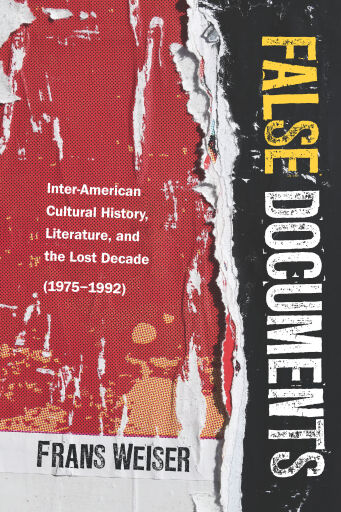
False Documents
Por Weiser, Frans
Publicado por Ohio State University Press
English
2020
ISBN 9780814277720
eBook
Buy at THEOSUPress
🇺🇸
Catademic
🇺🇸
Visitar tienda →
ebookstaolistic
🇺🇸
Visitar tienda →
Bajalibros Latam
🇺🇸
Visitar tienda →
Association of University Presses - Tienda FILUNI
🇺🇸
Visitar tienda →

TH
THEOSUPress
🇺🇸
Visitar tienda →
Ebooks Librería Antártica
🇨🇱
Visitar tienda →
Ebooks Agustin
🇪🇸
Visitar tienda →
Bajalibros Argentina
🇦🇷
Visitar tienda →

Sanborns Ebooks
🇲🇽
Visitar tienda →
ebooks Libreria del GAM
🇺🇾
Visitar tienda →
Bookshop Uruguay
🇺🇾
Visitar tienda →

ebookskitapenas
🇬🇹
Visitar tienda →
Ebooks Yenny - El Ateneo
🇦🇷
Visitar tienda →
Crisol Ebooks
🇨🇴
Visitar tienda →
Disponible en 14 librerías
Catademic
🇺🇸
Visitar tienda →

ebookstaolistic
🇺🇸
Visitar tienda →
Association of University Presses - Tienda FILUNI
🇺🇸
Visitar tienda →
TH
THEOSUPress
🇺🇸
Visitar tienda →
Ebooks Librería Antártica
🇨🇱
Visitar tienda →
Ebooks Agustin
🇪🇸
Visitar tienda →
Sanborns Ebooks
🇲🇽
Visitar tienda →
ebooks Libreria del GAM
🇺🇾
Visitar tienda →
ebookskitapenas
🇬🇹
Visitar tienda →
Ebooks Yenny - El Ateneo
🇦🇷
Visitar tienda →
Crisol Ebooks
🇨🇴
Visitar tienda →
Sobre este libro
<div><i>False Documents: Inter-American Cultural History, Literature, and the Lost Decade (1975–1992) </i>examines the “return of history” that swept across the Americas during the final two decades of the Cold War as Latin American nations redemocratized and US multiculturalism responded to the conservative bicentennial backlash. Revising the predominantly economic and isolationist accounts of the era, Frans Weiser examines the work of journalists and academics from Hispanic America, Brazil, and the United States who adopted fiction to document recent national discord, repositioning challenges to self-determination in a postnational context.<br> After deconstructing economic accounts of the “two Americas" model of the hemisphere, including the lost decade (1981–1992) and the “end of history” (1975–1992), Weiser considers six case studies during the same period that reach very different conclusions by drawing on cultural history, including works by Tomás Eloy Martínez, Laura Antillano, Ana Maria Machado, Silviano Santiago, John Updike, and Jay Cantor. In order to expose how governments controlled and misrepresented recent events, these writers created false documents, or fake historical texts, that presented themselves as legitimate eyewitness accounts or archival documents. Weiser establishes how this alternative to postmodern irony more effectively galvanized citizen responses. As the first book to contextualize the parallel, hemispheric evolutions of postwar literary criticism and cultural historiography, <i>False Documents</i> responds to the methodological impasse between Latin American and American studies as well as the antagonism between history and literature, arguing that collaboration and synthesis are particularly vital at a moment when the humanities is increasingly under attack.<br> </div>
- Idioma
- English
Compartir
También te puede interesar
The Panama Canal
Haskin, Frederic J.
Crónica mexicana. Manuscrito # 117 de la Colección Hans Peter Kraus
Alvarado Tezozomoc, Fernando
Decretos
de Céspedes, Carlos Manuel
K'axob
Settlement, Subsistence, and Social Complexity
Comentarios reales y otros textos (Los mejores clásicos)
Garcilaso de la Vega, Inca