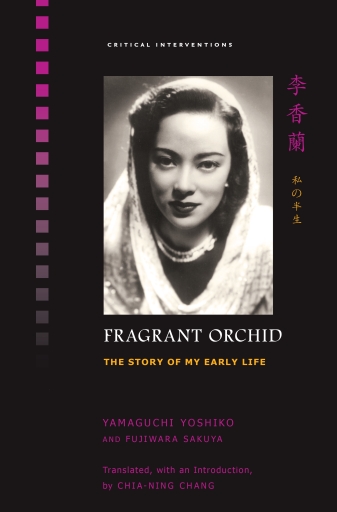
Fragrant Orchid
Por Yamaguchi, Yoshiko, Fujiwara, Sakuya
Publicado por University of Hawaii Press
English
2015
ISBN 9780824854027
eBook
Buy at Association of University Presses - Tienda FILUNI
🇺🇸
Catademic
🇺🇸
Visitar tienda →
UN
University of Hawaiʻi Press
🇺🇸
Visitar tienda →
ebookstaolistic
🇺🇸
Visitar tienda →
Bajalibros Latam
🇺🇸
Visitar tienda →
Association of University Presses - Tienda FILUNI
🇺🇸
Visitar tienda →

Ebooks Librería Antártica
🇨🇱
Visitar tienda →
Ebooks Agustin
🇪🇸
Visitar tienda →
Bajalibros Argentina
🇦🇷
Visitar tienda →

Sanborns Ebooks
🇲🇽
Visitar tienda →
ebooks Libreria del GAM
🇺🇾
Visitar tienda →
Bookshop Uruguay
🇺🇾
Visitar tienda →

ebookskitapenas
🇬🇹
Visitar tienda →
Ebooks Yenny - El Ateneo
🇦🇷
Visitar tienda →
Crisol Ebooks
🇨🇴
Visitar tienda →
Disponible en 14 librerías
Catademic
🇺🇸
Visitar tienda →

UN
University of Hawaiʻi Press
🇺🇸
Visitar tienda →
ebookstaolistic
🇺🇸
Visitar tienda →
Association of University Presses - Tienda FILUNI
🇺🇸
Visitar tienda →
Ebooks Librería Antártica
🇨🇱
Visitar tienda →
Ebooks Agustin
🇪🇸
Visitar tienda →
Sanborns Ebooks
🇲🇽
Visitar tienda →
ebooks Libreria del GAM
🇺🇾
Visitar tienda →
ebookskitapenas
🇬🇹
Visitar tienda →
Ebooks Yenny - El Ateneo
🇦🇷
Visitar tienda →
Crisol Ebooks
🇨🇴
Visitar tienda →
Sobre este libro
<p>The acclaimed actress and legendary singer, Yamaguchi Yoshiko (aka Li Xianglan, 1920-2014), emerged from Japan-occupied Manchuria to become a transnational star during the Second Sino-Japanese war. Born to Japanese parents, raised in Manchuria, and educated in Beijing, the young Yamaguchi learned to speak impeccable Mandarin Chinese and received professional training in operatic singing. When recruited by the Manchurian Film Association in 1939 to act in "national policy" films in the service of Japanese imperialism in China, she allowed herself to be presented as a Chinese, effectively masking her Japanese identity in both her professional and private lives.<br><br>Yamaguchi soon became an unprecedented transnational phenomenon in Manchuria, Shanghai, and Japan itself as the glamorous female lead in such well-known films as <i>Song of the White Orchid</i> (1939), <i>China Nights</i> (1940), <i>Pledge in the Desert</i> (1940), and <i>Glory to Eternity</i> (1943). Her signature songs, including "When Will You Return?" and "The Evening Primrose," swept East Asia in the waning years of the war and remained popular well into the postwar decades.<br><br>Ironically, although her celebrated international stardom was without parallel in wartime East Asia, she remained a puppet within a puppet state, choreographed at every turn by Japanese film studios in accordance with the expediencies of Japan's continental policy. In a dramatic turn of events after Japan's defeat, she was placed under house arrest in Shanghai by the Chinese Nationalist forces and barely escaped execution as a traitor to China. Her complex and intriguing life story as a convenient pawn, willing instrument, and tormented victim of Japan's imperialist ideology is told in her bestselling autobiography, translated here in full for the first time in English. An addendum reveals her postwar career in Hollywood and Broadway in the 1950s, her friendship with Charlie Chaplin, her first marriage to Isamu Noguchi, and her postwar life as singer, actress, political figure, television celebrity, and private citizen. <br><br>A substantial introduction by Chia-ning Chang contextualizes Yamaguchi's life and career within the historical and cultural zeitgeist of wartime Manchuria, Japan, and China and the postwar controversies surrounding her life in East Asia.</p>
- Idioma
- English
Compartir