Imperial Islands
Publicado por University of Hawaii Press
English
329 páginas
2021
ISBN 9780824890391
PDF
Buy at Catademic
🇺🇸
Catademic
🇺🇸
Visitar tienda →
Bajalibros Latam
🇺🇸
Visitar tienda →
Association of University Presses - Tienda FILUNI
🇺🇸
Visitar tienda →

Ebooks Librería Antártica
🇨🇱
Visitar tienda →
Ebooks Agustin
🇪🇸
Visitar tienda →
Bajalibros Argentina
🇦🇷
Visitar tienda →

Sanborns Ebooks
🇲🇽
Visitar tienda →
ebooks Libreria del GAM
🇨🇱
Visitar tienda →
Bookshop Uruguay
🇺🇾
Visitar tienda →

ebookskitapenas
🇬🇹
Visitar tienda →
Ebooks Yenny - El Ateneo
🇦🇷
Visitar tienda →
Crisol Ebooks
🇵🇪
Visitar tienda →
Disponible en 12 librerías
Catademic
🇺🇸
Visitar tienda →
Association of University Presses - Tienda FILUNI
🇺🇸
Visitar tienda →
Ebooks Librería Antártica
🇨🇱
Visitar tienda →
Ebooks Agustin
🇪🇸
Visitar tienda →
Sanborns Ebooks
🇲🇽
Visitar tienda →
ebooks Libreria del GAM
🇨🇱
Visitar tienda →
ebookskitapenas
🇬🇹
Visitar tienda →
Ebooks Yenny - El Ateneo
🇦🇷
Visitar tienda →
Crisol Ebooks
🇵🇪
Visitar tienda →
Sobre este libro
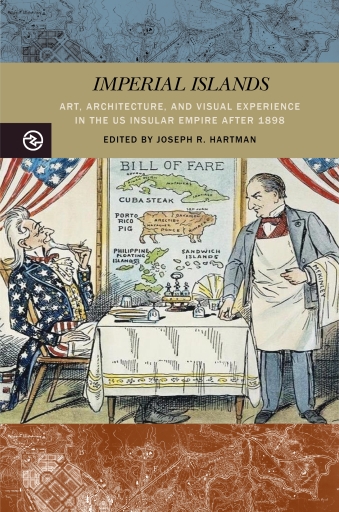
<p>When the USS <i>Maine </i>mysteriously exploded in Havana’s harbor on February 15, 1898, the United States joined local rebel forces to avenge the <i>Maine </i>and “liberate” Cuba from the Spanish empire. “Remember the Maine! To Hell with Spain!” So went the popular slogan. Little did the Cubans know that the United States was not going to give them freedom—in less than a year the American flag replaced the Spanish flag over the various island colonies of Cuba, Guam, Puerto Rico, and the Philippines. Spurred by military successes and dreams of an island empire, the US annexed Hawai‘i that same year, even establishing island colonies throughout Micronesia and the Antilles.<br><br>With the new governmental orders of creating new art, architecture, monuments, and infrastructure from the United States, the island cultures of the Caribbean and Pacific were now caught in a strategic scope of a growing imperial power. These spatial and visual objects created a visible confrontation between local indigenous, African, Asian, Spanish, and US imperial expressions. These material and visual histories often go unacknowledged, but serve as uncomplicated “proof” for the visible confrontation between the US and the new island territories. The essays in this volume contribute to an important art-historical, visual cultural, architectural, and materialist critique of a growing body of scholarship on the US Empire and the War of 1898. <br><br><i>Imperial Islands </i>seeks to reimagine the history and cultural politics of art, architecture, and visual experience in the US insular context. The authors of this volume propose a new direction of visual culture and spatial experience through nuanced terrains for writing, envisioning, and revising US-American, Caribbean, and Pacific histories. These original essays address the role of art and architecture in expressions of state power; racialized and gendered representations of the United States and its island colonies; and forms of resistance to US cultural presence. Featuring interdisciplinary approaches, <i>Imperial Islands </i>offers readers a new way of learning the ongoing significance of vision and experience in the US empire today, particularly for Caribbean, Latinx, Pilipinx, and Pacific Island communities.</p>
Categorías
- Idioma
- English
Compartir
También te puede interesar
El arte y la creación de la mente
Eisner, Eliot W.
Petites Filles
Carl, Klaus H.
La historia a través del arte y el arte a través de la historia
Cardoso, José
Arquitectura y planeamiento
Gropius, Walter
Modern Kyoto
Tseng, Alice Y.
Atlas de lo ordinario Chile/Brasil: Dibujos y fotografías de arquitectura moderna
Hugo Mondragón, editor