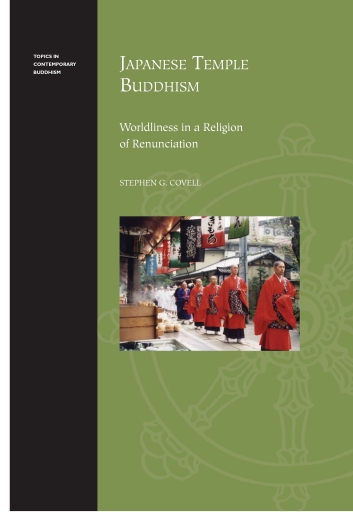
Japanese Temple Buddhism
Publicado por University of Hawaii Press
English
273 páginas
2005
ISBN 9780824863135
Tiempo de lectura estimado: 5 h
PDF
Buy at Association of University Presses - Tienda FILUNI
🇺🇸
 Bajalibros Argentina
🇦🇷
Visitar tienda →
Bajalibros Argentina
🇦🇷
Visitar tienda →
 Bajalibros Latam
🇺🇸
Visitar tienda →
Bajalibros Latam
🇺🇸
Visitar tienda →
 Bookshop Uruguay
🇺🇾
Visitar tienda →
Bookshop Uruguay
🇺🇾
Visitar tienda →
 Catademic
🇺🇸
Visitar tienda →
Catademic
🇺🇸
Visitar tienda →
Disponible en 13 librerías
 Bajalibros Argentina
🇦🇷
Visitar tienda →
Bajalibros Latam
🇺🇸
Visitar tienda →
Bookshop Uruguay
🇺🇾
Visitar tienda →
Catademic
🇺🇸
Visitar tienda →
Bajalibros Argentina
🇦🇷
Visitar tienda →
Bajalibros Latam
🇺🇸
Visitar tienda →
Bookshop Uruguay
🇺🇾
Visitar tienda →
Catademic
🇺🇸
Visitar tienda →








Sobre este libro
There have been many studies that focus on aspects of the history of Japanese Buddhism. Until now, none have addressed important questions of organization and practice in contemporary Buddhism, questions such as how Japanese Buddhism came to be seen as a religion of funeral practices; how Buddhist institutions envision the role of the laity; and how a married clergy has affected life at temples and the image of priests. This volume is the first to address fully contemporary Buddhist life and institutions—topics often overlooked in the conflict between the rhetoric of renunciation and the practices of clerical marriage and householding that characterize much of Buddhism in today’s Japan. Informed by years of field research and his own experiences training to be a Tendai priest, Stephen Covell skillfully refutes this "corruption paradigm" while revealing the many (often contradictory) facets of contemporary institutional Buddhism, or as Covell terms it, Temple Buddhism.
Covell significantly broadens the scope of inquiry to include how Buddhism is approached by both laity and clerics when he takes into account temple families, community involvement, and the commodification of practice. He considers law and tax issues, temple strikes, and the politics of temple boards of directors to shed light on how temples are run and viewed by their inhabitants, supporters, and society in general. In doing so he uncovers the economic realities that shape ritual practices and shows how mundane factors such as taxes influence the debate over temple Buddhism’s role in contemporary Japanese society. In addition, through interviews and analyses of sectarian literature and recent scholarship on gender and Buddhism, he provides a detailed look at priests’ wives, who have become indispensable in the management of temple affairs.
Disponibilidad
Japanese Temple Buddhism está disponible como PDF en 13 librerías online. Entre las librerías que lo venden están Association of University Presses - Tienda FILUNI, Bajalibros Argentina, Bajalibros Latam.
Categorías
- Idioma
- English
Compartir
Preguntas frecuentes
- ¿En qué formatos está disponible Japanese Temple Buddhism?
- Japanese Temple Buddhism está disponible como PDF en 13 librerías online.
- ¿Dónde puedo comprar Japanese Temple Buddhism?
- Puedes comprar Japanese Temple Buddhism en Association of University Presses - Tienda FILUNI, Bajalibros Argentina, Bajalibros Latam. Compara todas las opciones en la lista de esta página.
- ¿Cuánto se tarda en leer Japanese Temple Buddhism?
- A un ritmo de lectura medio, Japanese Temple Buddhism se lee en unas 5 h (273 páginas).
Valoraciones y reseñas
Aún no hay valoraciones. Sé el primero en reseñar este libro.
Acceder para valorar y reseñar este libro.