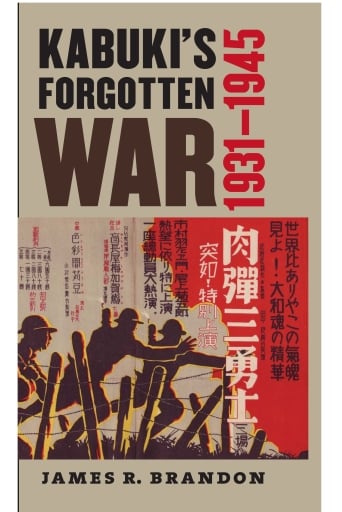
Kabuki's Forgotten War
Publicado por University of Hawaii Press
English
481 páginas
2008
ISBN 9780824863210
Tiempo de lectura estimado: 8 h 49 min
PDF
Comprar en Association of University Presses - Tienda FILUNI
🇺🇸
 Bajalibros Argentina
🇦🇷
Visitar tienda →
Bajalibros Argentina
🇦🇷
Visitar tienda →
 Bajalibros Latam
🇺🇸
Visitar tienda →
Bajalibros Latam
🇺🇸
Visitar tienda →
 Bookshop Uruguay
🇺🇾
Visitar tienda →
Bookshop Uruguay
🇺🇾
Visitar tienda →
 Catademic
🇺🇸
Visitar tienda →
Catademic
🇺🇸
Visitar tienda →
Disponible en 16 librerías
 Bajalibros Argentina
🇦🇷
Visitar tienda →
Bajalibros Latam
🇺🇸
Visitar tienda →
Bookshop Uruguay
🇺🇾
Visitar tienda →
Catademic
🇺🇸
Visitar tienda →
Bajalibros Argentina
🇦🇷
Visitar tienda →
Bajalibros Latam
🇺🇸
Visitar tienda →
Bookshop Uruguay
🇺🇾
Visitar tienda →
Catademic
🇺🇸
Visitar tienda →











Sobre este libro
According to a myth constructed after Japan’s surrender to the Allied Forces in 1945, kabuki was a pure, classical art form with no real place in modern Japanese society. In Kabuki’s Forgotten War, senior theater scholar James R. Brandon calls this view into question and makes a compelling case that, up to the very end of the Pacific War, kabuki was a living theater and, as an institution, an active participant in contemporary events, rising and falling in consonance with Japan’s imperial adventures.
Drawing extensively from Japanese sources—books, newspapers, magazines, war reports, speeches, scripts, and diaries—Brandon shows that kabuki played an important role in Japan’s Fifteen-Year Sacred War. He reveals, for example, that kabuki stars raised funds to buy fighter and bomber aircraft for the imperial forces and that pro-ducers arranged large-scale tours for kabuki troupes to entertain soldiers stationed in Manchuria, China, and Korea. Kabuki playwrights contributed no less than 160 new plays that dramatized frontline battles or rewrote history to propagate imperial ideology.
Abridged by censors, molded by the Bureau of Information, and partially incorporated into the League of Touring Theaters, kabuki reached new audiences as it expanded along with the new Japanese empire. By the end of the war, however, it had fallen from government favor and in 1944–1946 it nearly expired when Japanese government decrees banished leading kabuki companies to minor urban theaters and the countryside.
Kabuki’s Forgotten War includes more than a hundred illustrations, many of which have never been published in an English-language work. It is nothing less than a com-plete revision of kabuki’s recent history and as such goes beyond correcting a significant misconception. This new study remedies a historical absence that has distorted our understanding of Japan’s imperial enterprise and its aftermath.
Disponibilidad
Kabuki's Forgotten War está disponible como PDF en 16 librerías online. Entre las librerías que lo venden están Association of University Presses - Tienda FILUNI, Bajalibros Argentina, Bajalibros Latam.
Categorías
- Idioma
- English
Compartir
Preguntas frecuentes
- ¿En qué formatos está disponible Kabuki's Forgotten War?
- Kabuki's Forgotten War está disponible como PDF en 16 librerías online.
- ¿Dónde puedo comprar Kabuki's Forgotten War?
- Puedes comprar Kabuki's Forgotten War en Association of University Presses - Tienda FILUNI, Bajalibros Argentina, Bajalibros Latam. Compara todas las opciones en la lista de esta página.
- ¿Cuánto se tarda en leer Kabuki's Forgotten War?
- A un ritmo de lectura medio, Kabuki's Forgotten War se lee en unas 8 h 49 min (481 páginas).
Valoraciones y reseñas
Aún no hay valoraciones. Sé el primero en reseñar este libro.
Acceder para valorar y reseñar este libro.