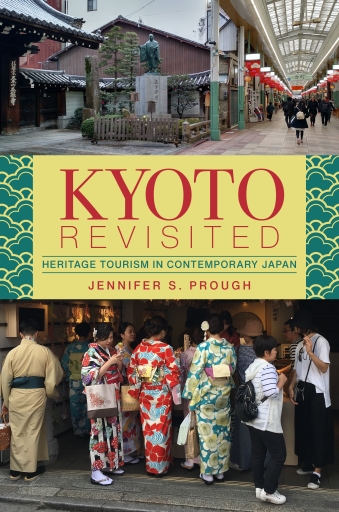
Kyoto Revisited
Publicado por University of Hawaii Press
Inglés
2022
ISBN 9780824891695
eBook
Comprar en Association of University Presses - Tienda FILUNI
🇺🇸
 Bajalibros Argentina
🇦🇷
Visitar tienda →
Bajalibros Argentina
🇦🇷
Visitar tienda →
 Bajalibros Latam
🇺🇸
Visitar tienda →
Bajalibros Latam
🇺🇸
Visitar tienda →
 Bookshop Uruguay
🇺🇾
Visitar tienda →
Bookshop Uruguay
🇺🇾
Visitar tienda →
 Catademic
🇺🇸
Visitar tienda →
Catademic
🇺🇸
Visitar tienda →
Disponible en 16 librerías
 Bajalibros Argentina
🇦🇷
Visitar tienda →
Bajalibros Latam
🇺🇸
Visitar tienda →
Bookshop Uruguay
🇺🇾
Visitar tienda →
Catademic
🇺🇸
Visitar tienda →
Bajalibros Argentina
🇦🇷
Visitar tienda →
Bajalibros Latam
🇺🇸
Visitar tienda →
Bookshop Uruguay
🇺🇾
Visitar tienda →
Catademic
🇺🇸
Visitar tienda →











Sobre este libro
There is a charm to Kyoto. Surrounded by lush green hills, the city feels alive with nature, history, culture—and tourists. At once ancient capital, modern city, and home to numerous cultural heritage sites, Kyoto looms large in the promotion of Japanese culture at home and abroad. In the wake of years of economic recession followed by the national promotion of “cool Japan” in popular culture and tourism of the twenty-first century, anthropologist Jennifer Prough sets out to examine how the city’s history and culture have been mobilized to create heritage experiences for today’s tourists. The heart of her book, Kyoto Revisited, centers on what it means to produce these for visitors, why seeing and feeling culture and tradition appeal to both domestic and international travelers, and the challenges faced by a heritage tourism city.
As Prough’s study suggests, heritage has multiple meanings. It is created as interested parties—state and local, public and private—tell different stories about the past, which are marketed in response to tourists’ desire for face-to-face engagement in an experience economy. Her work examines several prominent features of Kyoto tourism, including promotion plans, heritage neighborhood renovation, the role of the seasons and traditional aesthetics in citywide events, the appeal of sites commemorating the Meiji restoration, and the trend of walking in the heritage district in a rented kimono. Throughout Prough brings together scholarship from Japanese studies, heritage studies, and the anthropology of tourism to highlight the interplay between the romantic desire for heritage tourism and the emphasis on “personal experience” (taiken) in the visitor industry today. Experience has long been an integral part of tourism—even as what counts as experience has shifted across time and place (from taking a photo to staying with locals to trying one’s hand at a traditional craft)—yet these touristic desires take on a new tinge in the experience economy. Kyoto Revisited demonstrates not only how the past has been used to construct the city’s identity and shape understandings of Japan for travelers, but also how these speak to broader trends in our contemporary moment.
Disponibilidad
Kyoto Revisited está disponible como eBook en 16 librerías online. Entre las librerías que lo venden están Association of University Presses - Tienda FILUNI, Bajalibros Argentina, Bajalibros Latam.
- Idioma
- Inglés
Compartir
Preguntas frecuentes
- ¿En qué formatos está disponible Kyoto Revisited?
- Kyoto Revisited está disponible como eBook en 16 librerías online.
- ¿Dónde puedo comprar Kyoto Revisited?
- Puedes comprar Kyoto Revisited en Association of University Presses - Tienda FILUNI, Bajalibros Argentina, Bajalibros Latam. Compara todas las opciones en la lista de esta página.
Valoraciones y reseñas
Aún no hay valoraciones. Sé el primero en reseñar este libro.
Acceder para valorar y reseñar este libro.