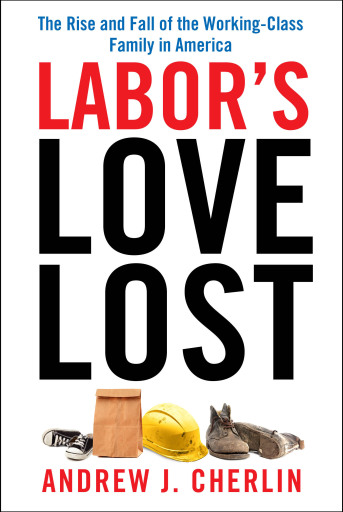
Labor's Love Lost
Publicado por Russell Sage Foundation
English
2014
ISBN 9781610448444
eBook
Buy at ebookstaolistic
🇺🇸
Catademic
🇺🇸
Visitar tienda →
ebookstaolistic
🇺🇸
Visitar tienda →
Bajalibros Latam
🇺🇸
Visitar tienda →
RS
RSAGE
🇺🇸
Visitar tienda →
Association of University Presses - Tienda FILUNI
🇺🇸
Visitar tienda →

Ebooks Librería Antártica
🇨🇱
Visitar tienda →
Ebooks Agustin
🇪🇸
Visitar tienda →
Bajalibros Argentina
🇦🇷
Visitar tienda →

Sanborns Ebooks
🇲🇽
Visitar tienda →
ebooks Libreria del GAM
🇺🇾
Visitar tienda →
Bookshop Uruguay
🇺🇾
Visitar tienda →
ebookskitapenas
🇬🇹
Visitar tienda →
Ebooks Yenny - El Ateneo
🇦🇷
Visitar tienda →
Crisol Ebooks
🇨🇴
Visitar tienda →
Disponible en 14 librerías
Catademic
🇺🇸
Visitar tienda →
ebookstaolistic
🇺🇸
Visitar tienda →
Association of University Presses - Tienda FILUNI
🇺🇸
Visitar tienda →
Ebooks Librería Antártica
🇨🇱
Visitar tienda →
Ebooks Agustin
🇪🇸
Visitar tienda →
Sanborns Ebooks
🇲🇽
Visitar tienda →
ebooks Libreria del GAM
🇺🇾
Visitar tienda →
ebookskitapenas
🇬🇹
Visitar tienda →
Ebooks Yenny - El Ateneo
🇦🇷
Visitar tienda →
Crisol Ebooks
🇨🇴
Visitar tienda →
Sobre este libro
<div>Two generations ago, young men and women with only a high-school degree would have entered the plentiful industrial occupations which then sustained the middle-class ideal of a male-breadwinner family. Such jobs have all but vanished over the past forty years, and in their absence ever-growing numbers of young adults now hold precarious, low-paid jobs with few fringe benefits. Facing such insecure economic prospects, less-educated young adults are increasingly forgoing marriage and are having children within unstable cohabiting relationships. This has created a large marriage gap between them and their more affluent, college-educated peers. In Labor’s Love Lost, noted sociologist Andrew Cherlin offers a new historical assessment of the rise and fall of working-class families in America, demonstrating how momentous social and economic transformations have contributed to the collapse of this once-stable social class and what this seismic cultural shift means for the nation’s future. Drawing from more than a hundred years of census data, Cherlin documents how today’s marriage gap mirrors that of the Gilded Age of the late-nineteenth century, a time of high inequality much like our own. Cherlin demonstrates that the widespread prosperity of working-class families in the mid-twentieth century, when both income inequality and the marriage gap were low, is the true outlier in the history of the American family. In fact, changes in the economy, culture, and family formation in recent decades have been so great that Cherlin suggests that the working-class family pattern has largely disappeared. Labor's Love Lost shows that the primary problem of the fall of the working-class family from its mid-twentieth century peak is not that the male-breadwinner family has declined, but that nothing stable has replaced it. The breakdown of a stable family structure has serious consequences for low-income families, particularly for children, many of whom underperform in school, thereby reducing their future employment prospects and perpetuating an intergenerational cycle of economic disadvantage. To address this disparity, Cherlin recommends policies to foster educational opportunities for children and adolescents from disadvantaged families. He also stresses the need for labor market interventions, such as subsidizing low wages through tax credits and raising the minimum wage. Labor's Love Lost provides a compelling analysis of the historical dynamics and ramifications of the growing number of young adults disconnected from steady, decent-paying jobs and from marriage. Cherlin’s investigation of today’s “would-be working class” shines a much-needed spotlight on the struggling middle of our society in today’s new Gilded Age.</div>
- Idioma
- English
Compartir
También te puede interesar
Ciencias Sociales 2EGB
O conflito da cultura moderna e outros escritos
Bueno, Arthur
Gerência ambiental
Zorzal, Fábio Márcio Bisi
O Significado em Frege e Carnap
Emmendorfer, Ana Paula
Las cárceles que elegimos
Lessing, Doris
Bojayá: entre el miedo y los medios
Lancheros Ruiz, Aida Carolina, Rincón Ortiz, Julián Andrés