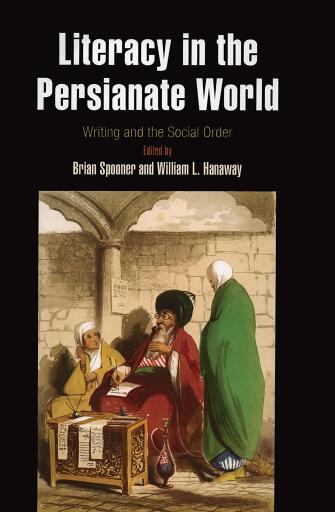
Literacy in the Persianate World
Publicado por University of Pennsylvania Museum
English
456 páginas
2012
ISBN 9781934536568
Tiempo de lectura estimado: 8 h 22 min
PDF
Buy at Bajalibros Latam
🇺🇸
 Alpha Books
🇨🇴
Visitar tienda →
Alpha Books
🇨🇴
Visitar tienda →
 Bajalibros Argentina
🇦🇷
Visitar tienda →
Bajalibros Argentina
🇦🇷
Visitar tienda →
 Bookshop Uruguay
🇺🇾
Visitar tienda →
Bookshop Uruguay
🇺🇾
Visitar tienda →
 Crisol Ebooks
🇵🇪
Visitar tienda →
Crisol Ebooks
🇵🇪
Visitar tienda →
Disponible en 13 librerías
Alpha Books
🇨🇴
Visitar tienda →
Bajalibros Argentina
🇦🇷
Visitar tienda →
 Bookshop Uruguay
🇺🇾
Visitar tienda →
Crisol Ebooks
🇵🇪
Visitar tienda →
Bookshop Uruguay
🇺🇾
Visitar tienda →
Crisol Ebooks
🇵🇪
Visitar tienda →








Sobre este libro
Persian has been a written language since the sixth century B.C. Only Chinese, Greek, and Latin have comparable histories of literacy. Although Persian script changed-first from cuneiform to a modified Aramaic, then to Arabic-from the ninth to the nineteenth centuries it served a broader geographical area than any language in world history. It was the primary language of administration and belles lettres from the Balkans under the earlier Ottoman Empire to Central China under the Mongols, and from the northern branches of the Silk Road in Central Asia to southern India under the Mughal Empire. Its history is therefore crucial for understanding the function of writing in world history. Each of the chapters of Literacy in the Persianate World opens a window onto a particular stage of this history, starting from the reemergence of Persian in the Arabic script after the Arab-Islamic conquest in the seventh century A.D., through the establishment of its administrative vocabulary, its literary tradition, its expansion as the language of trade in the thirteenth century, and its adoption by the British imperial administration in India, before being reduced to the modern role of national language in three countries (Afghanistan, Iran, and Tajikistan) in the twentieth century. Two concluding chapters compare the history of written Persian with the parallel histories of Chinese and Latin, with special attention to the way its use was restricted and channeled by social practice. This is the first comparative study of the historical role of writing in three languages, including two in non-Roman scripts, over a period of two and a half millennia, providing an opportunity for reassessment of the work on literacy in English that has accumulated over the past half century. The editors take full advantage of this opportunity in their introductory essay.
Disponibilidad
Literacy in the Persianate World está disponible como PDF en 13 librerías online. Entre las librerías que lo venden están Alpha Books, Bajalibros Argentina, Bajalibros Latam.
Categorías
- Idioma
- English
Compartir
Preguntas frecuentes
- ¿En qué formatos está disponible Literacy in the Persianate World?
- Literacy in the Persianate World está disponible como PDF en 13 librerías online.
- ¿Dónde puedo comprar Literacy in the Persianate World?
- Puedes comprar Literacy in the Persianate World en Alpha Books, Bajalibros Argentina, Bajalibros Latam. Compara todas las opciones en la lista de esta página.
- ¿Cuánto se tarda en leer Literacy in the Persianate World?
- A un ritmo de lectura medio, Literacy in the Persianate World se lee en unas 8 h 22 min (456 páginas).
Valoraciones y reseñas
Aún no hay valoraciones. Sé el primero en reseñar este libro.
Acceder para valorar y reseñar este libro.