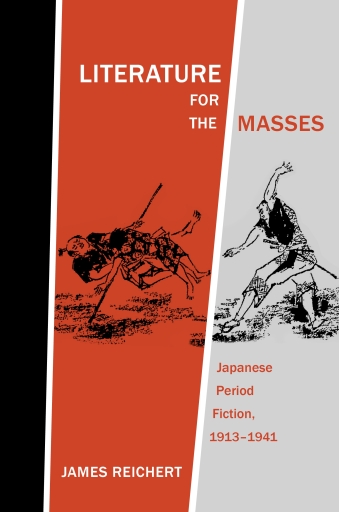
Literature for the Masses
Por Reichert, James
Publicado por University of Hawaii Press
English
2025
ISBN 9798880700479
eBook
Buy at Association of University Presses - Tienda FILUNI
🇺🇸
Catademic
🇺🇸
Visitar tienda →
Bajalibros Latam
🇺🇸
Visitar tienda →
Association of University Presses - Tienda FILUNI
🇺🇸
Visitar tienda →

Ebooks Librería Antártica
🇨🇱
Visitar tienda →
Ebooks Agustin
🇪🇸
Visitar tienda →
Bajalibros Argentina
🇦🇷
Visitar tienda →

Sanborns Ebooks
🇲🇽
Visitar tienda →
ebooks Libreria del GAM
🇺🇾
Visitar tienda →
Bookshop Uruguay
🇺🇾
Visitar tienda →

ebookskitapenas
🇬🇹
Visitar tienda →
Ebooks Yenny - El Ateneo
🇦🇷
Visitar tienda →
Crisol Ebooks
🇨🇴
Visitar tienda →
Disponible en 12 librerías
Catademic
🇺🇸
Visitar tienda →
Association of University Presses - Tienda FILUNI
🇺🇸
Visitar tienda →
Ebooks Librería Antártica
🇨🇱
Visitar tienda →
Ebooks Agustin
🇪🇸
Visitar tienda →
Sanborns Ebooks
🇲🇽
Visitar tienda →
ebooks Libreria del GAM
🇺🇾
Visitar tienda →
ebookskitapenas
🇬🇹
Visitar tienda →
Ebooks Yenny - El Ateneo
🇦🇷
Visitar tienda →
Crisol Ebooks
🇨🇴
Visitar tienda →
Sobre este libro
<p><i>Literature for the Masses</i> is the first English-language book on popular stories known in Japan alternatively as period fiction or mass literature. It highlights the important cultural and ideological work performed by this ubiquitous, yet overlooked, literary form. Focused on the years 1913 to 1941, which coincide exactly with the rise of industrial capitalism and mass culture in Japan, the book challenges the conventional wisdom that period-themed entertainment was an anachronistic holdover from the past. Through a close analysis of well-known examples of the genre, such as Nakazato Kaizan’s <i>The Great Buddha Pass</i> (1913–1921), Yoshikawa Eiji’s <i>Miyamoto Musashi</i> (1935–1939), and Mikami Otokichi’s <i>The Transformation of Yukinojō</i> (1934–1935), James Reichert shows how these materials were thoroughly integrated into both the modern media ecosystem and the creative sphere of the written arts.<br><br>The book further broadens its perspective by including other more experimental narratives not typically categorized as belonging to the genre: Shimazaki Tōson’s <i>Before the Dawn</i> (1929–1935), Tanizaki Jun’ichirō’s <i>The Secret History of the Lord of Musashi</i> (1931–1932, 1935), and Ōkubo Yasuo’s 1938 translation of <i>Gone with the Wind</i>. Although respectively seen as too elevated, too satirical, and too foreign to belong to the category of period fiction, the volume elucidates how all three texts actively mine the cultural associations of the genre. This more expansive lens emphasizes how Japanese period fiction constituted a capacious form of expression every bit as disruptive and pervasive as commercial newspapers and magazines and the new communication technologies of film and radio. Reichert thus argues that producers and consumers perceived the genre to be a literary revolution that could offer radically new avenues for feeling and experiencing the Japanese past.</p>
- Idioma
- English
Compartir
También te puede interesar
The Chaos and Cosmos of Kurosawa Tokiko
Nenzi, Laura
Tracing the Itinerant Path
Griffiths, Caitilin J.
Unspeakable Acts
Sorgenfrei, Carol Fisher
Down and Out in Late Meiji Japan
Huffman, James L.
Le Japon
Montblanc, Comte Charles de
A Diplomat in Japan- The Inner History of the Critical Years in the Evolution of Japan
Satow, Ernest Mason