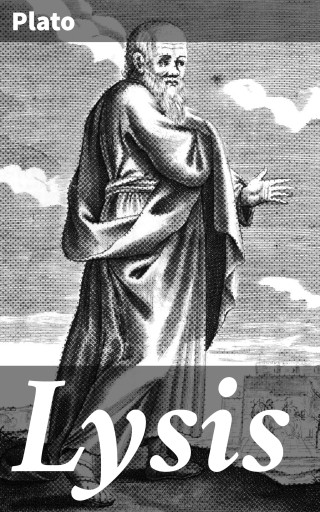
Lysis
Por Plato
Publicado por Good Press
Inglés
2019
ISBN 4057664120274
eBook
Comprar en SBS Librerías
🇨🇴
 Alpha Books
🇨🇴
Visitar tienda →
Alpha Books
🇨🇴
Visitar tienda →
 Bajalibros Argentina
🇦🇷
Visitar tienda →
Bajalibros Argentina
🇦🇷
Visitar tienda →
 Bajalibros Latam
🇺🇸
Visitar tienda →
Bajalibros Latam
🇺🇸
Visitar tienda →
 Bookshop Uruguay
🇺🇾
Visitar tienda →
Bookshop Uruguay
🇺🇾
Visitar tienda →
 Crisol Ebooks
🇵🇪
Visitar tienda →
Crisol Ebooks
🇵🇪
Visitar tienda →
Disponible en 18 librerías
Alpha Books
🇨🇴
Visitar tienda →
Bajalibros Argentina
🇦🇷
Visitar tienda →
Bajalibros Latam
🇺🇸
Visitar tienda →
Bookshop Uruguay
🇺🇾
Visitar tienda →
Crisol Ebooks
🇵🇪
Visitar tienda →













Sobre este libro
In "Lysis," Plato explores the intricate nature of friendship and the philosophical implications of love through a dialogue that features Socrates conversing with two young men, Lysis and Menexenus. The work is characterized by its dialectical method, where philosophical inquiry unfolds through a series of probing questions and answers. The dialogue reflects Plato's Socratic style, emphasizing the importance of defining terms and seeking truth, while delving into themes of desire, identity, and the essence of true friendship in the context of Athenian society. This text serves as a critical examination of the connections between individuals and the ideal forms that govern human relationships. Plato (c. 428/427'Äì348/347 BCE) was a seminal figure in Western philosophy, a student of Socrates, and the founder of the Academy in Athens. His engagement with ethics, metaphysics, and epistemology profoundly shaped philosophical thought. "Lysis" can be seen as a reflection of his own experiences within the socio-political landscape of Athens, where friendships were often intertwined with public life, thus providing both an intellectual inquiry and a personal reflection on the nature of companionship. I highly recommend "Lysis" to readers interested in the philosophical exploration of interpersonal relationships. Plato's incisive dialogue challenges us to reflect on our own friendships and the deeper meanings of love and loyalty. Engaging with this text will not only enrich your understanding of ancient philosophy but also offer timeless insights into the human condition.
In this enriched edition, we have carefully created added value for your reading experience:
- A succinct Introduction situates the work's timeless appeal and themes.
- The Synopsis outlines the central plot, highlighting key developments without spoiling critical twists.
- A detailed Historical Context immerses you in the era's events and influences that shaped the writing.
- An Author Biography reveals milestones in the author's life, illuminating the personal insights behind the text.
- A thorough Analysis dissects symbols, motifs, and character arcs to unearth underlying meanings.
- Reflection questions prompt you to engage personally with the work's messages, connecting them to modern life.
- Hand‐picked Memorable Quotes shine a spotlight on moments of literary brilliance.
- Interactive footnotes clarify unusual references, historical allusions, and archaic phrases for an effortless, more informed read.
Disponibilidad
Lysis está disponible como EPUB en 18 librerías online. Entre las librerías que lo venden están Alpha Books, Bajalibros Argentina, Bajalibros Latam.
Categorías
- Idioma
- Inglés
Compartir
Preguntas frecuentes
- ¿En qué formatos está disponible Lysis?
- Lysis está disponible como EPUB en 18 librerías online.
- ¿Dónde puedo comprar Lysis?
- Puedes comprar Lysis en Alpha Books, Bajalibros Argentina, Bajalibros Latam. Compara todas las opciones en la lista de esta página.
Valoraciones y reseñas
Aún no hay valoraciones. Sé el primero en reseñar este libro.
Acceder para valorar y reseñar este libro.