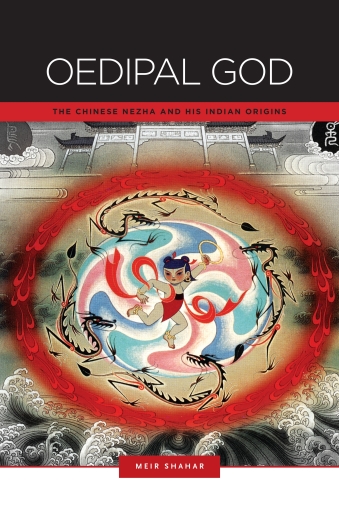
Oedipal God
Por Shahar, Meir
Publicado por University of Hawaii Press
English
273 páginas
2015
ISBN 9780824856960
PDF
Buy at Catademic
🇺🇸
Catademic
🇺🇸
Visitar tienda →
UN
University of Hawaiʻi Press
🇺🇸
Visitar tienda →
Bajalibros Latam
🇺🇸
Visitar tienda →
Association of University Presses - Tienda FILUNI
🇺🇸
Visitar tienda →
publica.la marketplace
🇦🇷
Visitar tienda →
Ebooks Librería Antártica
🇨🇱
Visitar tienda →
Ebooks Agustin
🇪🇸
Visitar tienda →
Bajalibros Argentina
🇦🇷
Visitar tienda →

Sanborns Ebooks
🇲🇽
Visitar tienda →
ebooks Libreria del GAM
🇺🇾
Visitar tienda →
Bookshop Uruguay
🇺🇾
Visitar tienda →

ebookskitapenas
🇬🇹
Visitar tienda →
Ebooks Yenny - El Ateneo
🇦🇷
Visitar tienda →
Crisol Ebooks
🇨🇴
Visitar tienda →
Disponible en 14 librerías
Catademic
🇺🇸
Visitar tienda →

UN
University of Hawaiʻi Press
🇺🇸
Visitar tienda →
Association of University Presses - Tienda FILUNI
🇺🇸
Visitar tienda →
publica.la marketplace
🇦🇷
Visitar tienda →
Ebooks Librería Antártica
🇨🇱
Visitar tienda →
Ebooks Agustin
🇪🇸
Visitar tienda →
Sanborns Ebooks
🇲🇽
Visitar tienda →
ebooks Libreria del GAM
🇺🇾
Visitar tienda →
ebookskitapenas
🇬🇹
Visitar tienda →
Ebooks Yenny - El Ateneo
🇦🇷
Visitar tienda →
Crisol Ebooks
🇨🇴
Visitar tienda →
Sobre este libro
<p><i>Oedipal God</i> offers the most comprehensive account in any language of the prodigal deity Nezha. Celebrated for over a millennium, Nezha is among the most formidable and enigmatic of all Chinese gods. In this theoretically informed study Meir Shahar recounts Nezha’s riveting tale—which culminates in suicide and attempted patricide—and uncovers hidden tensions in the Chinese family system. In deploying the Freudian hypothesis, Shahar does not imply the Chinese legend’s identity with the Greek story of Oedipus. For one, in Nezha’s story the erotic attraction to the mother is not explicitly acknowledged. More generally, Chinese oedipal tales differ from Freud’s Greek prototype by the high degree of repression that is applied to them. Shahar argues that, despite a disastrous father-son relationship, Confucian ethics require that the oedipal drive masquerade as filial piety in Nezha’s story, dictating that the child-god kill himself before trying to avenge himself upon his father.<br><br>Combining impeccable scholarship with an eminently readable style, the book covers a vast terrain: It surveys the image of the endearing child-god across varied genres from oral and written fiction, through theater, cinema, and television serials, to Japanese manga cartoons. It combines literary analysis with Shahar’s own anthropological field work, providing a thorough ethnography of Nezha’s flourishing cult. Crossing the boundaries between China’s diverse religious traditions, it tracks the rebellious infant in the many ways he has been venerated by Buddhist monks, Daoist priests, and possessed spirit mediums, whose dramatic performances have served to negotiate individual, familial, and collective tensions. Finally, the book offers a detailed history of the legend and the cult reaching back over two thousand years to its origins in India, where Nezha began as a mythological being named Nalakūbara, whose sexual misadventures were celebrated in the Sanskrit epics as early as the first centuries BCE. Here Shahar reveals the long-term impact that Indian mythology has exerted—through the medium of esoteric Buddhism—upon the Chinese imagination of divinity.<br><br>A tour de force of literary analysis, ethnographic research, psychological insight, and cross-cultural investigation, <i>Oedipal God</i> is a must read for anyone interested in Chinese studies and the historical connection between India and China. Shahar’s broad reach and engaging approach will appeal to specialists and students in a variety of disciplines including Chinese religion, Chinese literature, anthropology, Buddhist studies, psychology, Indian studies, and cross-cultural history.</p>
Categorías
- Idioma
- English
Compartir
También te puede interesar
PARTHIA (Illustrated)
Rawlinson, George
Burning Money
Blake, C. Fred
Milk Craze
Mak, Veronica S. W.
The Yearbook of China's Cultural Industries 2011
Fei, Liu, Hong, Zheng, Lin, Huang, Xuan, Cui, Yangyu, Chen Hu
From Comrades to Bodhisattvas
Fisher, Gareth
Cries of Joy, Songs of Sorrow
Moskowitz, Marc L.