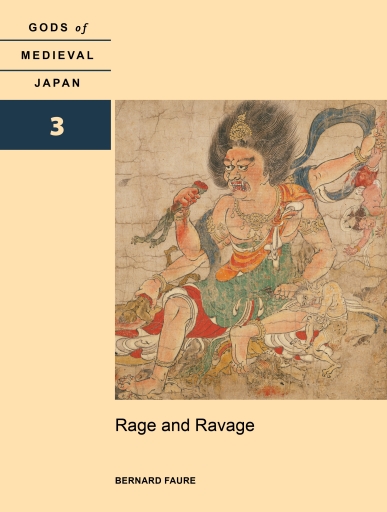
Rage and Ravage
Por Faure, Bernard
Publicado por University of Hawaii Press
English
553 páginas
2021
ISBN 9780824889364
PDF
Buy at Association of University Presses - Tienda FILUNI
🇺🇸
Catademic
🇺🇸
Visitar tienda →
Bajalibros Latam
🇺🇸
Visitar tienda →
Association of University Presses - Tienda FILUNI
🇺🇸
Visitar tienda →

Ebooks Librería Antártica
🇨🇱
Visitar tienda →
Ebooks Agustin
🇪🇸
Visitar tienda →
Bajalibros Argentina
🇦🇷
Visitar tienda →

Sanborns Ebooks
🇲🇽
Visitar tienda →
ebooks Libreria del GAM
🇨🇱
Visitar tienda →
Bookshop Uruguay
🇺🇾
Visitar tienda →

ebookskitapenas
🇬🇹
Visitar tienda →
Ebooks Yenny - El Ateneo
🇦🇷
Visitar tienda →
Crisol Ebooks
🇵🇪
Visitar tienda →
Disponible en 12 librerías
Catademic
🇺🇸
Visitar tienda →
Association of University Presses - Tienda FILUNI
🇺🇸
Visitar tienda →
Ebooks Librería Antártica
🇨🇱
Visitar tienda →
Ebooks Agustin
🇪🇸
Visitar tienda →
Sanborns Ebooks
🇲🇽
Visitar tienda →
ebooks Libreria del GAM
🇨🇱
Visitar tienda →
ebookskitapenas
🇬🇹
Visitar tienda →
Ebooks Yenny - El Ateneo
🇦🇷
Visitar tienda →
Crisol Ebooks
🇵🇪
Visitar tienda →
Sobre este libro
<p>Written by one of the leading scholars of Japanese religion, <i>Rage and Ravage</i> is the third installment of a milestone project in our understanding of the mythico-ritual system of esoteric Buddhism—specifically the nature and roles of deities in the religious world of medieval Japan and beyond. Bernard Faure introduces readers to medieval Japanese religiosity and shows the centrality of the gods in religious discourse and ritual; in doing so he moves away from the usual textual, historical, and sociological approaches that constitute the “method” of current religious studies. Throughout, he engages theoretical insights drawn from structuralism, post-structuralism, and Actor-Network Theory to retrieve the “implicit pantheon” (as opposed to the “explicit orthodox pantheon”) of esoteric Japanese Buddhism (Mikkyō).<br><br>In volumes one and two, <i>The Fluid Pantheon</i> and <i>Protectors and Predators, </i>Faure argued against a polarity or dichotomy between buddhas and kami by emphasizing the existence of deities that did not belong to either category, and he rejected the retrospective notion of “hybridity.” The present work makes a similar case about the reified distinction between gods and demons to show that, due to the fluid nature of the Japanese pantheon, these terms do not represent stable identities: Gods can become demons, and demons are sometimes deified. Divine protectors were often former predators, and in some instances they retained their predatory features even after being converted. After emphasizing the demonic aspects of devas as “gods or spirits of obstacles” in the earlier volumes, Faure now focuses on the deva-like or “divine” aspects of deities that have been described as “demonic.” <br><br><i>Rage and Ravage</i> and its companion volumes persuade readers that the gods constituted a central part of medieval Japanese religion and that the latter cannot be reduced to a simplistic confrontation, parallelism, or complementarity between some monolithic teachings known as “Buddhism” and “Shinto.” Once these reductionist labels and categories are discarded, a new and fascinating religious landscape begins to unfold.</p>
Categorías
- Idioma
- English
Compartir
También te puede interesar
Maritime Ryukyu, 1050–1650
Smits, Gregory
The Chaos and Cosmos of Kurosawa Tokiko
Nenzi, Laura
Imagining Exile in Heian Japan
Stockdale, Jonathan
The Art of Censorship in Postwar Japan
Fischer, Kirsten Cather
Whispers from a Storm
Hasegawa, Teru
Branding Japanese Food
Cwiertka, Katarzyna J., Yasuhara, Miho