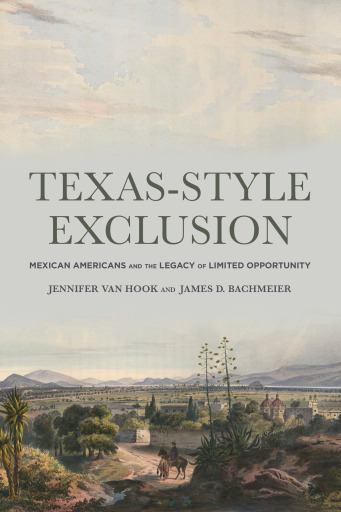
Texas-Style Exclusion
Por Van Hook, Jennifer, Bachmeier, James D.
Publicado por Russell Sage Foundation
English
2024
ISBN 9781610449298
eBook
Buy at Bajalibros Latam
🇺🇸
Catademic
🇺🇸
Visitar tienda →
Bajalibros Latam
🇺🇸
Visitar tienda →
Association of University Presses - Tienda FILUNI
🇺🇸
Visitar tienda →

Ebooks Librería Antártica
🇨🇱
Visitar tienda →
Ebooks Agustin
🇪🇸
Visitar tienda →
Bajalibros Argentina
🇦🇷
Visitar tienda →

Sanborns Ebooks
🇲🇽
Visitar tienda →
ebooks Libreria del GAM
🇨🇱
Visitar tienda →
Bookshop Uruguay
🇺🇾
Visitar tienda →

ebookskitapenas
🇬🇹
Visitar tienda →
Ebooks Yenny - El Ateneo
🇦🇷
Visitar tienda →
Crisol Ebooks
🇵🇪
Visitar tienda →
Disponible en 12 librerías
Catademic
🇺🇸
Visitar tienda →
Association of University Presses - Tienda FILUNI
🇺🇸
Visitar tienda →
Ebooks Librería Antártica
🇨🇱
Visitar tienda →
Ebooks Agustin
🇪🇸
Visitar tienda →
Sanborns Ebooks
🇲🇽
Visitar tienda →
ebooks Libreria del GAM
🇨🇱
Visitar tienda →
ebookskitapenas
🇬🇹
Visitar tienda →
Ebooks Yenny - El Ateneo
🇦🇷
Visitar tienda →
Crisol Ebooks
🇵🇪
Visitar tienda →
Sobre este libro
While Americans largely support legal immigration, this support is conditional on the basis that immigrants do not make use of public assistance. Previous generations of immigrants, such as European-origin Industrial Era immigrants, came to U.S. impoverished, worked hard, and achieved the American Dream seemingly on their own. Mexican immigrants, the nation’s largest contemporary immigrant group, are often viewed with suspicion and are accused of being dependent on the government and refusing to integrate into American society the “right way.” In <i>Texas-Style Exclusion</i>, sociologists Jennifer Van Hook and James D. Bachmeier investigate such claims by comparing how American society has responded to different groups of immigrants over time.<br> <br> Drawing on census and archival data on the quality of public schooling, Van Hook and Bachmeier find that Industrial Era European immigrants, who were primarily located in the northeastern U.S., benefited from programs and policies championed by the Americanization and Progressive movements. The Americanization movement sought to help acclimate new arrivals and transform “foreigners” into “Americans” by providing night school programs to promote civic integration and basic education, as well as other services. The Progressive movement, which aimed to improve education, work, and health conditions, sought to expand investment in public schools and make primary and secondary schooling mandatory, which kept working class children in school as opposed to entering the workforce. This access to education allowed for integration and astonishing intergenerational mobility.<br> <br> Mexican immigrants in the 1920s and 1930s, the majority of whom resided in Texas, had radically different experiences from their European counterparts. Mexicans in Texas were subjected to racism, segregation, labor exploitation, and intentional school failures. This resulted in tremendous generational disadvantage that persists to the current day. Mexicans from this cohort who left Texas for states with strong Americanization and Progressive movements saw improved educational outcomes and integration. Additionally, Mexicans who immigrated after the Civil Rights Movement saw significantly greater inter-generational mobility and educational attainment than earlier cohorts due to the protections provided by civil rights laws. Van Hook and Bachmeier conclude that whether one is optimistic or pessimistic about the integration of Mexican Americans depends on <i>when</i> and <i>where</i> one looks.<br> <br> <i>Texas-Style Exclusion</i> is an engaging examination of policies and practices that have been glossed over and forgotten that promoted mobility and integration for certain immigrant groups and impeded them for others.
- Idioma
- English
Compartir
También te puede interesar
Aposentadoria, Cotidiano e Espaços Urbanos: Vivências na Cidade de Florianópolis
Costa, Aline Bogoni, Soares, Dulce Helena Penna
Jauría
Padgett, Humberto
Dilemas clásicos para mexicanos y otros supervivientes
Boullosa, Pablo
Sexo, violencia y castigo
Jaramillo Sierra, Isabel Cristina, Correa Flórez, María Camila
Los Herederos de Eva
Fauzt, Franz Xaver
Parents Without Papers
Bean, Frank D., Brown, Susan K., Bachmeier, James D., Brown, Susan, Bachmeier, James