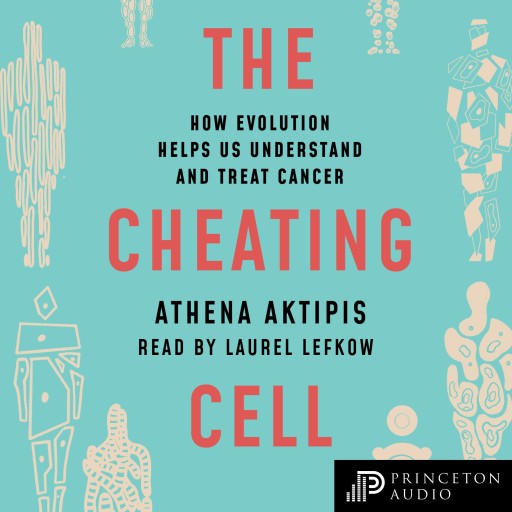
The Cheating Cell
Por Aktipis, Athena
Publicado por Princeton University Press
English
2020
ISBN 9780691205090
Audiolibro
Buy at LORANCHBOOKSTORE
🇺🇸
Catademic
🇺🇸
Visitar tienda →
Bajalibros Latam
🇺🇸
Visitar tienda →
LORANCHBOOKSTORE
🇺🇸
Visitar tienda →
Ebooks Librería Carlos Fuentes
🇲🇽
Visitar tienda →
Viubux
🇲🇽
Visitar tienda →
Ebooks Librería Antártica
🇨🇱
Visitar tienda →
Ebooks Happy Books
🇨🇴
Visitar tienda →
ebooks libreria española
🇪🇨
Visitar tienda →
Bajalibros Argentina
🇦🇷
Visitar tienda →

eBooks y Audiolibros en Librería Lerner
🇨🇴
Visitar tienda →
ebooks Libreria del GAM
🇺🇾
Visitar tienda →
Bookshop Uruguay
🇺🇾
Visitar tienda →

Ebooks Yenny - El Ateneo
🇦🇷
Visitar tienda →
Disponible en 13 librerías
Catademic
🇺🇸
Visitar tienda →

LORANCHBOOKSTORE
🇺🇸
Visitar tienda →
Ebooks Librería Carlos Fuentes
🇲🇽
Visitar tienda →
Viubux
🇲🇽
Visitar tienda →
Ebooks Librería Antártica
🇨🇱
Visitar tienda →
Ebooks Happy Books
🇨🇴
Visitar tienda →
ebooks libreria española
🇪🇨
Visitar tienda →
eBooks y Audiolibros en Librería Lerner
🇨🇴
Visitar tienda →
ebooks Libreria del GAM
🇺🇾
Visitar tienda →
Ebooks Yenny - El Ateneo
🇦🇷
Visitar tienda →
Sobre este libro
This audiobook narrated by Laurel Lefkow offers a fundamental and groundbreaking reassessment of how we view and manage cancer
When we think of the forces driving cancer, we don't necessarily think of evolution. But evolution and cancer are closely linked, for the historical processes that created life also created cancer. The Cheating Cell delves into this extraordinary relationship, and shows that by understanding cancer's evolutionary origins, researchers can come up with more effective, revolutionary treatments.
Athena Aktipis goes back billions of years to explore when unicellular forms became multicellular organisms. Within these bodies of cooperating cells, cheating ones arose, overusing resources and replicating out of control, giving rise to cancer. Aktipis illustrates how evolution has paved the way for cancer's ubiquity, and why it will exist as long as multicellular life does. Even so, she argues, this doesn't mean we should give up on treating cancer—in fact, evolutionary approaches offer new and promising options for the disease's prevention and treatments that aim at long-term management rather than simple eradication. Looking across species—from sponges and cacti to dogs and elephants—we are discovering new mechanisms of tumor suppression and the many ways that multicellular life-forms have evolved to keep cancer under control. By accepting that cancer is a part of our biological past, present, and future—and that we cannot win a war against evolution—treatments can become smarter, more strategic, and more humane.
Unifying the latest research from biology, ecology, medicine, and social science, The Cheating Cell challenges us to rethink cancer's fundamental nature and our relationship to it.
- Idioma
- English
Compartir
También te puede interesar
Auge y reinado de los mamíferos
Brusatte, Steve
Bajo la piel del océano
Pedrós-Alió, Carlos
Educação Em Saúde: Os Microrganismos E Epidemias
(organizador), Anderson Barbosa Baptista
Introductory Microbiology
Abha Tikkoo, D. V. Pathak, Sneh Goyal
Tu cerebro al descubierto. Lo que la neurociencia nos revela sobre el cerebro y sus rarezas
Dingman, Marc
Museo de historia natural Colegio San José
Berrío Martínez, Jineth, Vásquez Valencia, María Fernanda, Estrada Orrego, Victoria