Ir al contenido principal
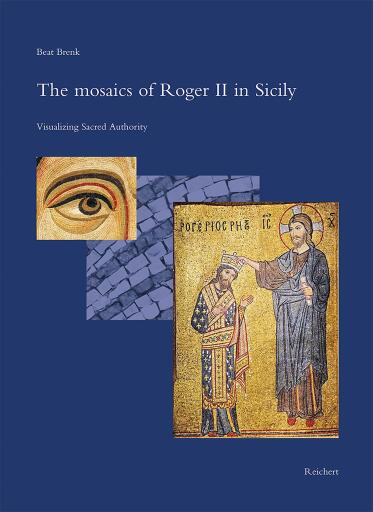
The Mosaics of Roger II in Sicily

The Mosaics of Roger II in Sicily

Por Brenk, Beat

Publicado por Dr Ludwig Reichert Verlag

English 185 páginas 2023 ISBN 9783752000771
Tiempo de lectura estimado: 3 h 24 min
PDF

Sobre este libro

This book on the Sicilian Norman mosaics has an unusual inception story. The ideas expressed in it were generated not primarily through library readings but rather through the direct observation of the mosaics themselves from the scaffolds in the Cappella Palatina and the Martorana in Palermo and the Cefalù Cathedral, as well as those in churches in the Greek East (Daphni, Nea Moni on Chios, St. Michael in Kiev, etc.). The aim, indeed, was to analyse all the mosaics from the greatest possible proximity. At the same time, digital photography, which has developed rapidly in the last twenty years, has been a crucial auxiliary. Seeing at close range has raised new questions that have placed the mosaic as an artistic technique in a broader context. For the first time, it has been possible to present a chemical analysis of tesserae (by Andreas Kronz ) from the Cappella Palatina. New observations on the artistic design and the craft production process of the mosaics, the organisation of the mosaic workshops and the economic conditions of the mosaic are up for debate. The present study is entirely focused on defining the artistic originality of Norman mosaics in comparison to Byzantine programmes and working methods. The common art-historical practice of seeking "influences and models" has been laid aside. The Martorana, the Cappella Palatina and Cefalù Cathedral are new and unprecedented creations of the Norman court, executed by master builders, sculptors and mosaicists a small proportion of whom were locally sourced, while many others originated from other parts of the Mediterranean region. Greek mosaicists, together with mosaicists probably brought to Sicily from Venice, Rome and elsewhere, formed part of a single workshop that utilized a common approach, common techniques and designs, and was responsible for the decoration of the vast wall surfaces at the three sites, executed between about 1135 and 1143/1148. The three Norman structures, all dating to the reign of Roger II, are virtually awash with mosaics and paintings, a sign of royal rhetoric that should be understood not as a continuation of local traditions but as a form of unsurpassable and unrepeatable conceptual art. King Roger's aim was to surpass all his predecessors with the power of his imperious rhetoric. All three programmes culminate in a powerful presentation of the celestial hierarchy ruled by the Pantocrator and seconded by archangels, prophets, apostles, saints and Church Fathers, and are characterized by a syncretic union of the Eastern and Western churches together with elements from Fatimid culture. Only the royal palace chapel has been additionally furnished with a programme of New and Old Testament scenes to which Herbert Kessler devotes a profound analysis.

Disponibilidad

The Mosaics of Roger II in Sicily está disponible como PDF en 8 librerías online. Entre las librerías que lo venden están Bajalibros Argentina, Bajalibros Latam, Bookshop Uruguay.

Idioma
English
Compartir

Preguntas frecuentes

¿En qué formatos está disponible The Mosaics of Roger II in Sicily?
The Mosaics of Roger II in Sicily está disponible como PDF en 8 librerías online.
¿Dónde puedo comprar The Mosaics of Roger II in Sicily?
Puedes comprar The Mosaics of Roger II in Sicily en Bajalibros Argentina, Bajalibros Latam, Bookshop Uruguay. Compara todas las opciones en la lista de esta página.
¿Cuánto se tarda en leer The Mosaics of Roger II in Sicily?
A un ritmo de lectura medio, The Mosaics of Roger II in Sicily se lee en unas 3 h 24 min (185 páginas).

Valoraciones y reseñas

Aún no hay valoraciones. Sé el primero en reseñar este libro.

Acceder para valorar y reseñar este libro.

Comentarios

Acceder para unirte a la conversación.

Aún no hay comentarios.