
The Republic
Por Plato
Publicado por E-Kitap Projesi & Cheapest Books
Disponible en 15 librerías
 Bajalibros Argentina
🇦🇷
Visitar tienda →
Bajalibros Argentina
🇦🇷
Visitar tienda →
 Bajalibros Colombia
🇨🇴
Visitar tienda →
Bajalibros Colombia
🇨🇴
Visitar tienda →
 Bajalibros Latam
🇺🇸
Visitar tienda →
Bajalibros Latam
🇺🇸
Visitar tienda →
 Bookshop Uruguay
🇺🇾
Visitar tienda →
Bookshop Uruguay
🇺🇾
Visitar tienda →
 Crisol Ebooks
🇵🇪
Visitar tienda →
Crisol Ebooks
🇵🇪
Visitar tienda →









¿No encuentras tu librería aquí? Abre tu librería
Sobre este libro
Disponibilidad
The Republic está disponible como audiolibro en 15 librerías online. Entre las librerías que lo venden están Bajalibros Argentina, Bajalibros Colombia, Bajalibros Latam.
Categorías
- Idioma
- Inglés
Preguntas frecuentes
- ¿En qué formatos está disponible The Republic?
- The Republic está disponible como audiolibro en 15 librerías online.
- ¿Dónde puedo comprar The Republic?
- Puedes comprar The Republic en Bajalibros Argentina, Bajalibros Colombia, Bajalibros Latam. Compara todas las opciones en la lista de esta página.
Valoraciones y reseñas
Aún no hay valoraciones. Sé el primero en reseñar este libro.
Acceder para valorar y reseñar este libro.
También te puede interesar
Egiptosophia
Piulats Riu, Octavi

The Greatest Literary Masterpieces for the Holiday Season
Goethe, Johann Wolfgang von, Stendhal, Verne, Jules, Flaubert, Gustave, Carroll, Lewis, Storm, Theodor, Ibsen, Henrik, Dickens, Charles, Plato, Balzac, Honoré de, Twain, Mark, Stowe, Harriet Beecher, Tagore, Rabindranath, Dostoyevsky, Fyodor, Whitman, Walt, Machiavelli, Niccolò, Wilde, Oscar, Stevenson, Robert Louis, Cooper, James Fenimore, Poe, Edgar Allan, Shakespeare, William, Boccaccio, Giovanni, Confucius, MacDonald, George, Stoker, Bram, Brontë, Charlotte, Brontë, Anne, Brontë, Emily, Thoreau, Henry David, London, Jack, James, Henry, Alcott, Louisa May, Hugo, Victor, Doyle, Arthur Conan, Burnett, Frances Hodgson, Conrad, Joseph, Austen, Jane, Melville, Herman, Eliot, George, Sterne, Laurence, Hardy, Thomas, Swift, Jonathan, Wharton, Edith, Pérez Galdós, Benito, Defoe, Daniel, Fielding, Henry, Dumas, Alexandre, Kipling, Rudyard, Howells, William Dean, Kâlidasa, Grahame, Kenneth, Proust, Marcel, Irving, Washington, Valera, Juan, Cather, Willa, Hawthorne, Nathaniel, Homer, Leroux, Gastón, Baudelaire, Charles, Thackeray, William Makepeace, Voltaire, Chopin, Kate, Apuleius, Milton, John, Gilman, Charlotte Perkins, Douglass, Frederick, Laozi, Keats, John, Joyce, James, Radcliffe, Ann Ward, Gibran, Kahlil, Okakura, Kakuzo, Natsume, Sōseki, Der Ling, Princess, Baum, L. Frank, Wells, H. G., Yeats, W. B., Barrie, J. M., Chesterton, G. K., Eliot, T. S., Montgomery, L. M., Lewis, C. S., Lawrence, D. H., Forster, E. M., Lovecraft, H. P., Fitzgerald, F. Scott, Aurelius, Marcus, Nietzsche, Friedrich, Wallace, Lewis, Turgenev, Ivan, Chekhov, Anton, Tolstoy, Leo, Gógol, Nikolai, Scott, Walter, Sir, Shaw, George Bernard, de Cervantes, Miguel, Shelley, Mary, Xueqin, Cao, Zola, Émile, Válmíki, Chatterjee, Bankim Chandra, Shelley, P. B., Von Arnim, Elizabeth, Hesse, Herman, Dante, de la Barca, Pedro Calderón, Tzu, Sun, Nitobe, Inazo, Grossmith, George Weedon, Collins, Willkie

Emancipación y redención en la filosofía de Walter Benjamin
Zapata Yepes, Rubén Darío

Qué sabes de... SÓCRATES
Vilà, Ramon
Rhetoric
Aristotle
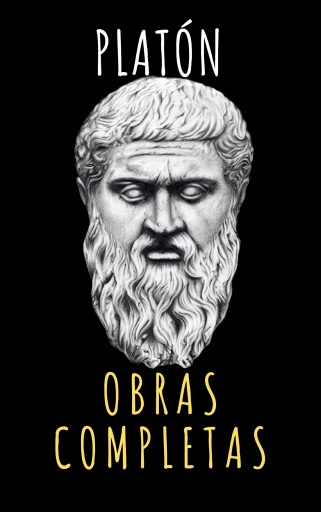
Obras Completas de Platón
Plato