Ir al contenido principal
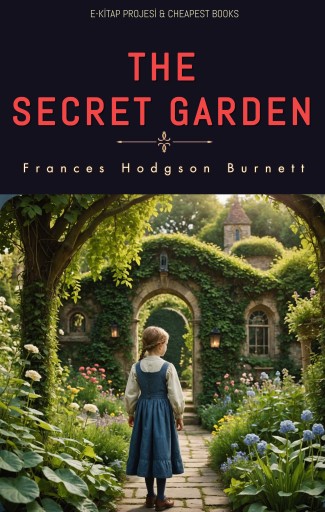
Portada del libro «The Secret Garden», de Frances Hodgson Burnett

The Secret Garden

Por Burnett, Frances Hodgson

Publicado por E-Kitap Projesi & Cheapest Books

Inglés 2024 ISBN 9786155565113
eBook

Sobre este libro

When Mary Lennox was sent to Misselthwaite Manor to live with her uncle everybody said she was the most disagreeable-looking child ever seen. It was true, too. She had a little thin face and a little thin body, thin light hair and a sour expression. Her hair was yellow, and her face was yellow because she had been born in India and had always been ill in one way or another. Her father had held a position under the English Government and had always been busy and ill himself, and her mother had been a great beauty who cared only to go to parties and amuse herself with gay people. She had not wanted a little girl at all, and when Mary was born she handed her over to the care of an Ayah, who was made to understand that if she wished to please the Mem Sahib she must keep the child out of sight as much as possible. So when she was a sickly, fretful, ugly little baby she was kept out of the way, and when she became a sickly, fretful, toddling thing she was kept out of the way also. She never remembered seeing familiarly anything but the dark faces of her Ayah and the other native servants, and as they always obeyed her and gave her her own way in everything, because the Mem Sahib would be angry if she was disturbed by her crying, by the time she was six years old she was as tyrannical and selfish a little pig as ever lived. The young English governess who came to teach her to read and write disliked her so much that she gave up her place in three months, and when other governesses came to try to fill it they always went away in a shorter time than the first one. So if Mary had not chosen to really want to know how to read books she would never have learned her letters at all. One frightfully hot morning, when she was about nine years old, she awakened feeling very cross, and she became crosser still when she saw that the servant who stood by her bedside was not her Ayah. "Why did you come?" she said to the strange woman. "I will not let you stay. Send my Ayah to me." The woman looked frightened, but she only stammered that the Ayah could not come and when Mary threw herself into a passion and beat and kicked her, she looked only more frightened and repeated that it was not possible for the Ayah to come to Missie Sahib. There was something mysterious in the air that morning. Nothing was done in its regular order and several of the native servants seemed missing, while those whom Mary saw slunk or hurried about with ashy and scared faces. But no one would tell her anything and her Ayah did not come. She was actually left alone as the morning went on, and at last she wandered out into the garden and began to play by herself under a tree near the veranda. She pretended that she was making a flower-bed, and she stuck big scarlet hibiscus blossoms into little heaps of earth, all the time growing more and more angry and muttering to herself the things she would say and the names she would call Saidie when she returned. "Pig! Pig! Daughter of Pigs!" she said, because to call a native a pig is the worst insult of all. She was grinding her teeth and saying this over and over again when she heard her mother come out on the ve-randa with some one. She was with a fair young man and they stood talking together in low strange voices. Mary knew the fair young man who looked like a boy. She had heard that he was a very young officer who had just come from England. The child stared at him, but she stared most at her mother. She always did this when she had a chance to see her, because the Mem Sahib—Mary used to call her that oftener than anything else—was such a tall, slim, pretty person and wore such lovely clothes. Her hair was like curly silk and she had a delicate little nose which seemed to be disdaining things, and she had large laughing eyes. All her clothes were thin and floating, and Mary said they were "full of lace." They looked fuller of lace than ever this morning, but her eyes were not laughing at all.

Disponibilidad

The Secret Garden está disponible como EPUB en 20 librerías online. Entre las librerías que lo venden están Alpha Books, Bajalibros Argentina, Bajalibros Colombia.

Idioma
Inglés
Compartir

Preguntas frecuentes

¿En qué formatos está disponible The Secret Garden?
The Secret Garden está disponible como EPUB en 20 librerías online.
¿Dónde puedo comprar The Secret Garden?
Puedes comprar The Secret Garden en Alpha Books, Bajalibros Argentina, Bajalibros Colombia. Compara todas las opciones en la lista de esta página.

Valoraciones y reseñas

Aún no hay valoraciones. Sé el primero en reseñar este libro.

Acceder para valorar y reseñar este libro.

Comentarios

Acceder para unirte a la conversación.

Aún no hay comentarios.

También te puede interesar

Portada del libro «Lunes o martes», de Virginia Woolf

Lunes o martes

Virginia Woolf

Portada del libro «Histórias extraordinárias», de Edgar Allan Poe

Histórias extraordinárias

Poe, Edgar Allan
Portada del libro «20.000 léguas submarinas», de Verne Julio

20.000 léguas submarinas

Verne Julio

Portada del libro «El gran Meaulnes (Los mejores clásicos)», de Alain Fournier

El gran Meaulnes (Los mejores clásicos)

Fournier, Alain

Portada del libro «El jardín de Rama (Serie Rama 1)», de Arthur C. Clarke, Gentry Lee

El jardín de Rama (Serie Rama 1)

Clarke, Arthur C., Lee, Gentry

Portada del libro «The Bucket List Edition: The Greatest Classics in One Volume», de Henry David Thoreau, Walt Whitman

The Bucket List Edition: The Greatest Classics in One Volume

Thoreau, Henry David, Whitman, Walt, Gibran, Kahlil, Stowe, Harriet Beecher, Douglass, Frederick, Cooper, James Fenimore, James, Henry, Poe, Edgar Allan, Lovecraft, H. P., Shakespeare, William, Milton, John, Swift, Jonathan, Defoe, Daniel, Fielding, Henry, Sterne, Laurence, Austen, Jane, Thackeray, William Makepeace, Shelley, P. B., Shelley, Mary, Keats, John, Brontë, Charlotte, Brontë, Emily, Brontë, Anne, Eliot, George, Dickens, Charles, Hardy, Thomas, Von Arnim, Elizabeth, Lawrence, D. H., Radcliffe, Ann Ward, Stoker, Bram, Doyle, Arthur Conan, Conrad, Joseph, Wilde, Oscar, Carroll, Lewis, Burnett, Frances Hodgson, Lewis, C. S., Grossmith, George Weedon, Wells, H. G., Collins, Willkie, Chesterton, G. K., Forster, E. M., Eliot, T. S., Joyce, James, Shaw, George Bernard, Yeats, W. B., Scott, Sir Walter, Stevenson, Robert Louis, Grahame, Kenneth, MacDonald, George, Barrie, J. M., Twain, Mark, London, Jack, Melville, Herman, Hawthorne, Nathaniel, Alcott, Louisa May, Cather, Willa, Wharton, Edith, Chopin, Kate, Wallace, Lewis, Montgomery, M., Homer, Plato, Apuleius, Aurelius, Marcus, von Goethe, Johann Wolfgang, Hesse, Herman, Nietzsche, Friedrich, Verne, Jules, Proust, Marcel, Hugo, Victor, Flaubert, Gustave, Leroux, Gastón, de Balzac, Honoré, Stendhal, Voltaire, Baudelaire, Charles, Dumas, Alexandre, Zola, Émile, Ibsen, Henrik, Tolstoy, Leo, Dostoyevsky, Fyodor, Turgenev, Ivan, Chekhov, Anton, Gógol, Nikolai, de Cervantes, Miguel, Galdós, Benito Pérez, de la Barca, Pedro Calderón, Dante, Boccaccio, Giovanni, Machiavelli, Niccolò, Tagore, Rabindranath, Chatterjee, Bankim Chandra, Kâlidasa, Válmíki, Laozi, Tzu, Sun, Confucius, Xueqin, Cao, Der Ling, Princess, Nitobe, Inazo, Okakura, Kakuzo, Natsume, Sōseki, Gilman, Charlotte Perkins, Fitzgerald, F. Scott, Howells, William Dean, Irving, Washington, Baum, L. Frank, Storm, Theodor, Valera, Juan, Kipling, Rudyard