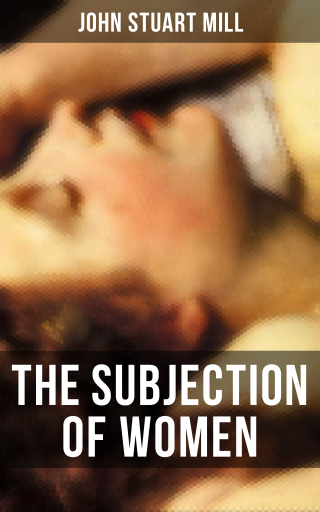
THE SUBJECTION OF WOMEN
Publicado por Musaicum Books
English
2017
ISBN 9788027233175
eBook
Buy at Crisol Ebooks
🇵🇪
 Bajalibros Argentina
🇦🇷
Visitar tienda →
Bajalibros Argentina
🇦🇷
Visitar tienda →
 Bajalibros Latam
🇺🇸
Visitar tienda →
Bajalibros Latam
🇺🇸
Visitar tienda →
 Bookshop Uruguay
🇺🇾
Visitar tienda →
Bookshop Uruguay
🇺🇾
Visitar tienda →
 ebooks Libreria del GAM
🇨🇱
Visitar tienda →
ebooks Libreria del GAM
🇨🇱
Visitar tienda →
Disponible en 9 librerías
Bajalibros Argentina
🇦🇷
Visitar tienda →
Bajalibros Latam
🇺🇸
Visitar tienda →
Bookshop Uruguay
🇺🇾
Visitar tienda →
 ebooks Libreria del GAM
🇨🇱
Visitar tienda →
ebooks Libreria del GAM
🇨🇱
Visitar tienda →




Sobre este libro
John Stuart Mill's 'The Subjection of Women' is a groundbreaking work in the realm of feminist literature, challenging the traditional patriarchal society of the 19th century. Written in a persuasive and logical manner, Mill discusses the inherent inequality and subjugation faced by women in both public and private spheres, advocating for their equal rights and opportunities. Drawing on philosophical and political theories, the book serves as a call to action for social reform and the recognition of women as individuals deserving of respect and autonomy. John Stuart Mill, a prominent philosopher and political economist, was a staunch advocate for individual liberty and social equality. Inspired by his own upbringing and the influential women in his life, including his wife Harriet Taylor, Mill was compelled to address the systemic injustices faced by women in society through his writing. His dedication to the principles of utilitarianism and liberalism shines through in 'The Subjection of Women', presenting a compelling argument for gender equality. I highly recommend 'The Subjection of Women' to readers interested in the history of feminism, political philosophy, and social justice. Mill's insightful analysis and persuasive rhetoric make this book a must-read for anyone seeking to understand the ongoing struggles for gender equality and the importance of individual rights.
In this enriched edition, we have carefully created added value for your reading experience:
- A succinct Introduction situates the work's timeless appeal and themes.
- The Synopsis outlines the central plot, highlighting key developments without spoiling critical twists.
- A detailed Historical Context immerses you in the era's events and influences that shaped the writing.
- An Author Biography reveals milestones in the author's life, illuminating the personal insights behind the text.
- A thorough Analysis dissects symbols, motifs, and character arcs to unearth underlying meanings.
- Reflection questions prompt you to engage personally with the work's messages, connecting them to modern life.
- Hand‐picked Memorable Quotes shine a spotlight on moments of literary brilliance.
- Interactive footnotes clarify unusual references, historical allusions, and archaic phrases for an effortless, more informed read.
Disponibilidad
THE SUBJECTION OF WOMEN está disponible como eBook en 9 librerías online. Entre las librerías que lo venden están Bajalibros Argentina, Bajalibros Latam, Bookshop Uruguay.
Categorías
- Idioma
- English
Compartir
Preguntas frecuentes
- ¿En qué formatos está disponible THE SUBJECTION OF WOMEN?
- THE SUBJECTION OF WOMEN está disponible como eBook en 9 librerías online.
- ¿Dónde puedo comprar THE SUBJECTION OF WOMEN?
- Puedes comprar THE SUBJECTION OF WOMEN en Bajalibros Argentina, Bajalibros Latam, Bookshop Uruguay. Compara todas las opciones en la lista de esta página.
Valoraciones y reseñas
Aún no hay valoraciones. Sé el primero en reseñar este libro.
Acceder para valorar y reseñar este libro.