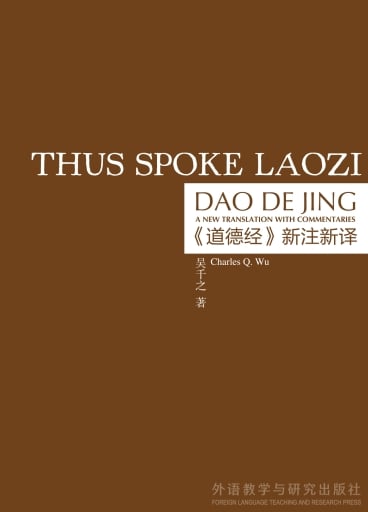
Thus Spoke Laozi
Publicado por University of Hawaii Press
English
202 páginas
2016
ISBN 9780824857660
Tiempo de lectura estimado: 3 h 42 min
PDF
Buy at Ebooks Yenny - El Ateneo
🇦🇷
 Association of University Presses - Tienda FILUNI
🇺🇸
Visitar tienda →
Association of University Presses - Tienda FILUNI
🇺🇸
Visitar tienda →
 Bajalibros Argentina
🇦🇷
Visitar tienda →
Bajalibros Argentina
🇦🇷
Visitar tienda →
 Bajalibros Latam
🇺🇸
Visitar tienda →
Bajalibros Latam
🇺🇸
Visitar tienda →
 Bookshop Uruguay
🇺🇾
Visitar tienda →
Bookshop Uruguay
🇺🇾
Visitar tienda →
 Catademic
🇺🇸
Visitar tienda →
Catademic
🇺🇸
Visitar tienda →
Disponible en 13 librerías
Association of University Presses - Tienda FILUNI
🇺🇸
Visitar tienda →
Bajalibros Argentina
🇦🇷
Visitar tienda →
Bajalibros Latam
🇺🇸
Visitar tienda →
Bookshop Uruguay
🇺🇾
Visitar tienda →
Catademic
🇺🇸
Visitar tienda →








Sobre este libro
Daodejing (Tao Te Ching) by Chinese philosopher Laozi (Lao Tzu) is one of the most popular Chinese texts, with more than 100 translations available. Why another? Author Charles Q. Wu believes that his explorations of the infinite nature of the Daodejing can “bring the readers yet another step closer to what Laozi actually says and how he says it through still another translation.” The strength of Wu’s version comes from his superior bilingual talents and unique cross-cultural perspective, drawing widely from both Chinese and Western sources. He provides his target audience of nonacademics and non-Chinese readers with line-by-line bilingual text and commentaries, and tries to retain the original beauty of the poetry and paradoxes of Laozi’s writings. His ambition here is for English-speaking readers to experience what Laozi “sounds” like, as if they were reading the work in Chinese.
Taking a fresh look at what is known as the Wang Bi edition of Laozi’s immortal work, Wu makes use of new findings from recent archaeological discoveries, and invites readers to “participate in the translation and interpretation as an open-door, open-ended process.” Rather than claiming finality in his translation Wu sees himself as a tour guide, leading readers toward unexpected aha! moments as they encounter a more thorough understanding the Daodejing.
Disponibilidad
Thus Spoke Laozi está disponible como PDF en 13 librerías online. Entre las librerías que lo venden están Association of University Presses - Tienda FILUNI, Bajalibros Argentina, Bajalibros Latam.
- Idioma
- English
Compartir
Preguntas frecuentes
- ¿En qué formatos está disponible Thus Spoke Laozi?
- Thus Spoke Laozi está disponible como PDF en 13 librerías online.
- ¿Dónde puedo comprar Thus Spoke Laozi?
- Puedes comprar Thus Spoke Laozi en Association of University Presses - Tienda FILUNI, Bajalibros Argentina, Bajalibros Latam. Compara todas las opciones en la lista de esta página.
- ¿Cuánto se tarda en leer Thus Spoke Laozi?
- A un ritmo de lectura medio, Thus Spoke Laozi se lee en unas 3 h 42 min (202 páginas).
Valoraciones y reseñas
Aún no hay valoraciones. Sé el primero en reseñar este libro.
Acceder para valorar y reseñar este libro.