
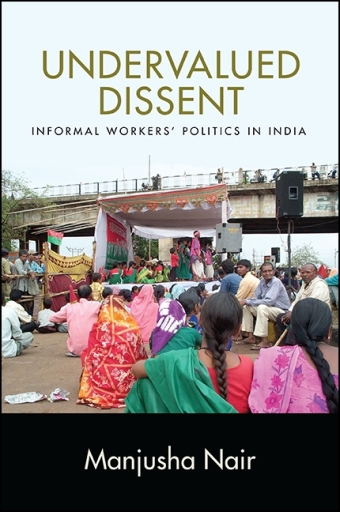
Undervalued Dissent
Por Nair, Manjusha
Publicado por State University of New York Press
English
250 páginas
2016
PDF
Buy at Catademic
🇺🇸
 Bajalibros Argentina
🇦🇷
Visitar tienda →
Bajalibros Argentina
🇦🇷
Visitar tienda →
 Bajalibros Latam
🇺🇸
Visitar tienda →
Bajalibros Latam
🇺🇸
Visitar tienda →
 Bookshop Uruguay
🇺🇾
Visitar tienda →
Bookshop Uruguay
🇺🇾
Visitar tienda →
 Crisol Ebooks
🇵🇪
Visitar tienda →
Crisol Ebooks
🇵🇪
Visitar tienda →
Disponible en 9 librerías
Bajalibros Argentina
🇦🇷
Visitar tienda →
Bajalibros Latam
🇺🇸
Visitar tienda →
Bookshop Uruguay
🇺🇾
Visitar tienda →
 Crisol Ebooks
🇵🇪
Visitar tienda →
Crisol Ebooks
🇵🇪
Visitar tienda →




Sobre este libro
<p><b>Uses two case studies to demonstrate how neoliberal reforms in India have de-democratized labor politics.</b></p><p><b>Honorable Mention, 2018 Global Division Book Award presented by the Global Division of the Society for the Study of Social Problems </b></p><p>Historically, the Indian state has not offered welfare and social rights to all of its citizens, yet a remarkable characteristic of its polity has been the ability of citizens to dissent in a democratic way. In <i>Undervalued Dissent</i>, Manjusha Nair argues that this democratic space has been vanishing slowly. Based on extensive fieldwork in Chhattisgarh, a regional state in central India, this book examines two different informal workers' movements. Informal workers are not part of organized labor unions and make up eighty-five percent of the Indian workforce. The first movement started in 1977 and was a success, while the other movement began in 1989 and still continues today, without success. The workers in both movements had similar backgrounds, skills, demands, and strategies. Nair maintains that the first movement succeeded because the workers contended within a labor regime that allowed space for democratic dissent, and the second movement failed because they contested within a widely altered labor regime following neoliberal reforms, where these spaces of democratic dissent were preempted. The key difference between the two regimes, Nair suggests, is not in the withdrawal of a prolabor state from its protective and regulatory role, as has been argued by many, but rather in the rise of a new kind of state that became functionally decentralized, economically predatory, and politically communalized. These changes, Nair concludes, successfully de-democratized labor politics in India.</p>
- Idioma
- English
Compartir
También te puede interesar
Forging Islamic Power and Place
Bradley, Francis R.

Campagne de la frégate "la Manche" dans les mers de l'Inde
Desjardins, Adolphe
Buddhist Nuns, Monks, and Other Worldly Matters
Schopen, Gregory

Javaphilia
Spiller, Henry
The Story of the Guides
Younghusband, G. J.

The Defence of Lucknow
Wilson, T. F.