Aller au contenu principal
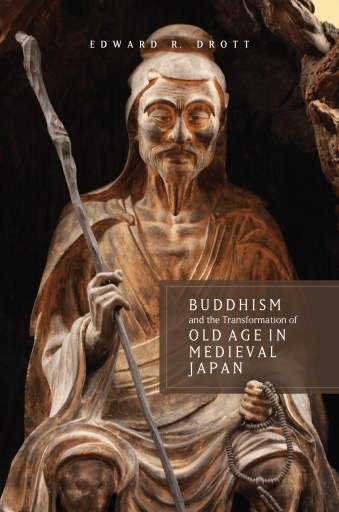
Buddhism and the Transformation of Old Age in Medieval Japan

Buddhism and the Transformation of Old Age in Medieval Japan

Par Drott, Edward R.

Publié par University of Hawaii Press

English 2016 ISBN 9780824866846
eBook

À propos de ce livre

Scholars have long remarked on the frequency with which Japanese myths portrayed gods (kami) as old men or okina. Many of these “sacred elders” came to be featured in premodern theater, most prominently in Noh. In the closing decades of the twentieth-century, as the number of Japan’s senior citizens climbed steadily, the sacred elder of premodern myth became a subject of renewed interest and was seen by some as evidence that the elderly in Japan had once been accorded a level of respect unknown in recent times. In Buddhism and the Transformation of Old Age in Medieval Japan, Edward Drott charts the shifting sets of meanings ascribed to old age in medieval Japan, tracing the processes by which the aged body was transformed into a symbol of otherworldly power and the cultural, political, and religious circumstances that inspired its reimagination. Drott examines how the aged body was used to conceptualize forms of difference and to convey religious meanings in a variety of texts: official chronicles, literary works, Buddhist legends and didactic tales. In early Japan, old age was most commonly seen as a mark of negative distinction, one that represented the ugliness, barrenness, and pollution against which the imperial court sought to define itself. From the late-Heian period, however, certain Buddhist authors seized upon the aged body as a symbolic medium though which to challenge traditional dichotomies between center and margin, high and low, and purity and defilement, crafting narratives that associated aged saints and avatars with the cults, lineages, sacred sites, or religious practices these authors sought to promote. Contributing to a burgeoning literature on religion and the body, Buddhism and the Transformation of Old Age in Medieval Japan applies approaches developed in gender studies to “denaturalize” old age as a matter of representation, identity, and performance. By tracking the ideological uses of old age in premodern Japan, this work breaks new ground, revealing the role of religion in the construction of generational categories and the ways in which religious ideas and practices can serve not only to naturalize, but also challenge “common sense” about the body.

Disponibilité

Buddhism and the Transformation of Old Age in Medieval Japan est disponible en eBook dans 13 librairies en ligne. Parmi les librairies qui le proposent : Association of University Presses - Tienda FILUNI, Bajalibros Argentina, Bajalibros Latam.

Langue
English
Partager

Questions fréquentes

Dans quels formats Buddhism and the Transformation of Old Age in Medieval Japan est-il disponible ?
Buddhism and the Transformation of Old Age in Medieval Japan est disponible en eBook dans 13 librairies en ligne.
Où puis-je acheter Buddhism and the Transformation of Old Age in Medieval Japan ?
Vous pouvez acheter Buddhism and the Transformation of Old Age in Medieval Japan sur Association of University Presses - Tienda FILUNI, Bajalibros Argentina, Bajalibros Latam. Comparez toutes les options dans la liste de cette page.

Notes et avis

Pas encore de note. Soyez le premier à donner votre avis sur ce livre.

Se connecter pour noter ce livre et donner votre avis.
Commentaires

Se connecter pour rejoindre la conversation.

Pas encore de commentaires.