Projectland
Par High, Holly
Publié par University of Hawaii Press
English
265 pages
2021
ISBN 9780824888671
PDF
Buy at Bajalibros Latam
🇺🇸
Catademic
🇺🇸
Visiter la boutique →
UN
University of Hawaiʻi Press
🇺🇸
Visiter la boutique →
Bajalibros Latam
🇺🇸
Visiter la boutique →
Association of University Presses - Tienda FILUNI
🇺🇸
Visiter la boutique →

Ebooks Librería Antártica
🇨🇱
Visiter la boutique →
Ebooks Agustin
🇪🇸
Visiter la boutique →
Bajalibros Argentina
🇦🇷
Visiter la boutique →

Sanborns Ebooks
🇲🇽
Visiter la boutique →
ebooks Libreria del GAM
🇺🇾
Visiter la boutique →
Bookshop Uruguay
🇺🇾
Visiter la boutique →
ebookskitapenas
🇬🇹
Visiter la boutique →
Ebooks Yenny - El Ateneo
🇦🇷
Visiter la boutique →
Crisol Ebooks
🇨🇴
Visiter la boutique →
Disponible dans 13 librairies
Catademic
🇺🇸
Visiter la boutique →

UN
University of Hawaiʻi Press
🇺🇸
Visiter la boutique →
Association of University Presses - Tienda FILUNI
🇺🇸
Visiter la boutique →
Ebooks Librería Antártica
🇨🇱
Visiter la boutique →
Ebooks Agustin
🇪🇸
Visiter la boutique →
Sanborns Ebooks
🇲🇽
Visiter la boutique →
ebooks Libreria del GAM
🇺🇾
Visiter la boutique →
ebookskitapenas
🇬🇹
Visiter la boutique →
Ebooks Yenny - El Ateneo
🇦🇷
Visiter la boutique →
Crisol Ebooks
🇨🇴
Visiter la boutique →
À propos de ce livre
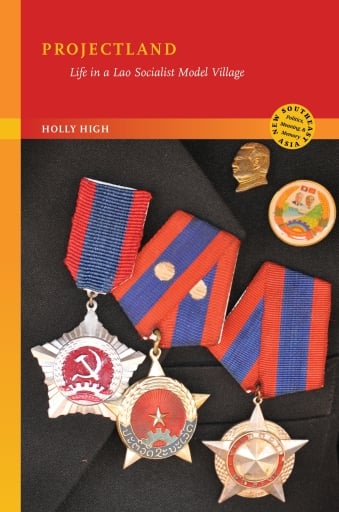
<p>In <i>Projectland,</i> anthropologist Holly High combines an engaging first-person narrative of her fieldwork with a political ethnography of Laos, more than forty years after the establishment of the Lao PDR and more than seven decades since socialist ideologues first “liberated” parts of upland country. In a remote village of Kandon, High finds that although socialism has declined significantly as an economic model, it is ascendant and thriving in the culture of politics and the politics of culture.<br><br>Kandon is remarkable by any account. The villagers are ethnic Kantu (Katu), an ethnicity associated by early ethnographers above all with human sacrifice. They had repelled French control, and as the war went on, the revolutionary forces of Sekong were headquartered in Kandon territories. In 1996, Kandon village moved and resettled in a plateau area. “New Kandon” has become Sekong Province’s first certified “Culture Village,” the nation’s very first “Open Defecation Free and Model Health Village,” and the president of Laos personally granted the village a Labor Flag and Medal. <br><br>High provides a unique and timely assessment of the Lao Party-state’s resettlement politics, and she recounts with skillful nuance the stories that are often cast into shadows by the usual focus on New Kandon as a success. Her book follows the lives of a small group of villagers who returned to the old village in the mountains, effectively defying policy but, in their words, obeying the presence that animates the land there. Revealing her sensibility with tremendous composure, High tells the experiences of women who, bound by steep bride-prices to often violent marriages, have tasted little of the socialist project of equality, unity, and independence. These women spoke to the author of “necessities” as a limit to their own lives. In a context where the state has defined the legitimate forms of success and agency, “necessity” emerged as a means of framing one’s life as nonconforming but also nonagentive.</p>
- Langue
- English
Partager