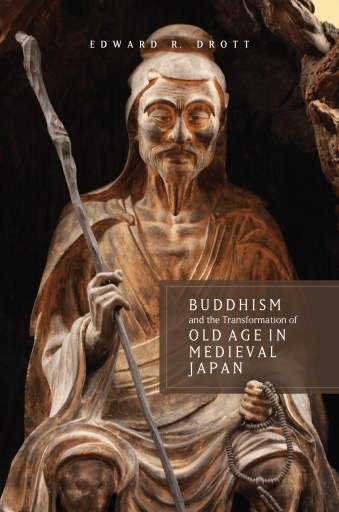
Buddhism and the Transformation of Old Age in Medieval Japan
Pubblicato da University of Hawaii Press
English
2016
ISBN 9780824866846
eBook
Buy at Ebooks Librería Antártica
🇨🇱
 Association of University Presses - Tienda FILUNI
🇺🇸
Visita il negozio →
Association of University Presses - Tienda FILUNI
🇺🇸
Visita il negozio →
 Bajalibros Argentina
🇦🇷
Visita il negozio →
Bajalibros Argentina
🇦🇷
Visita il negozio →
 Bajalibros Latam
🇺🇸
Visita il negozio →
Bajalibros Latam
🇺🇸
Visita il negozio →
 Bookshop Uruguay
🇺🇾
Visita il negozio →
Bookshop Uruguay
🇺🇾
Visita il negozio →
 Catademic
🇺🇸
Visita il negozio →
Catademic
🇺🇸
Visita il negozio →
Disponibile in 13 librerie
Association of University Presses - Tienda FILUNI
🇺🇸
Visita il negozio →
Bajalibros Argentina
🇦🇷
Visita il negozio →
Bajalibros Latam
🇺🇸
Visita il negozio →
Bookshop Uruguay
🇺🇾
Visita il negozio →
Catademic
🇺🇸
Visita il negozio →








Informazioni su questo libro
Scholars have long remarked on the frequency with which Japanese myths portrayed gods (kami) as old men or okina. Many of these “sacred elders” came to be featured in premodern theater, most prominently in Noh. In the closing decades of the twentieth-century, as the number of Japan’s senior citizens climbed steadily, the sacred elder of premodern myth became a subject of renewed interest and was seen by some as evidence that the elderly in Japan had once been accorded a level of respect unknown in recent times. In Buddhism and the Transformation of Old Age in Medieval Japan, Edward Drott charts the shifting sets of meanings ascribed to old age in medieval Japan, tracing the processes by which the aged body was transformed into a symbol of otherworldly power and the cultural, political, and religious circumstances that inspired its reimagination.
Drott examines how the aged body was used to conceptualize forms of difference and to convey religious meanings in a variety of texts: official chronicles, literary works, Buddhist legends and didactic tales. In early Japan, old age was most commonly seen as a mark of negative distinction, one that represented the ugliness, barrenness, and pollution against which the imperial court sought to define itself. From the late-Heian period, however, certain Buddhist authors seized upon the aged body as a symbolic medium though which to challenge traditional dichotomies between center and margin, high and low, and purity and defilement, crafting narratives that associated aged saints and avatars with the cults, lineages, sacred sites, or religious practices these authors sought to promote.
Contributing to a burgeoning literature on religion and the body, Buddhism and the Transformation of Old Age in Medieval Japan applies approaches developed in gender studies to “denaturalize” old age as a matter of representation, identity, and performance. By tracking the ideological uses of old age in premodern Japan, this work breaks new ground, revealing the role of religion in the construction of generational categories and the ways in which religious ideas and practices can serve not only to naturalize, but also challenge “common sense” about the body.
Disponibilità
Buddhism and the Transformation of Old Age in Medieval Japan è disponibile come eBook in 13 librerie online. Tra le librerie che lo vendono ci sono Association of University Presses - Tienda FILUNI, Bajalibros Argentina, Bajalibros Latam.
Categorie
- Lingua
- English
Condividi
Domande frequenti
- In quali formati è disponibile Buddhism and the Transformation of Old Age in Medieval Japan?
- Buddhism and the Transformation of Old Age in Medieval Japan è disponibile come eBook in 13 librerie online.
- Dove posso comprare Buddhism and the Transformation of Old Age in Medieval Japan?
- Puoi comprare Buddhism and the Transformation of Old Age in Medieval Japan su Association of University Presses - Tienda FILUNI, Bajalibros Argentina, Bajalibros Latam. Confronta tutte le opzioni nell’elenco di questa pagina.
Valutazioni e recensioni
Ancora nessuna valutazione. Sii il primo a recensire questo libro.
Accedi per valutare e recensire questo libro.