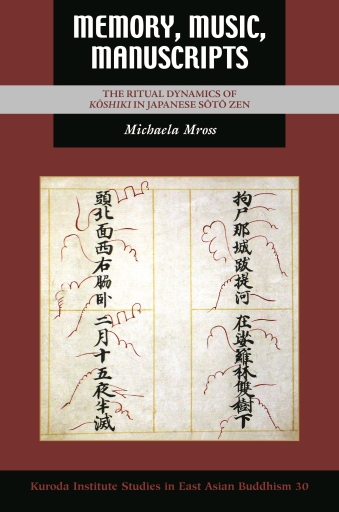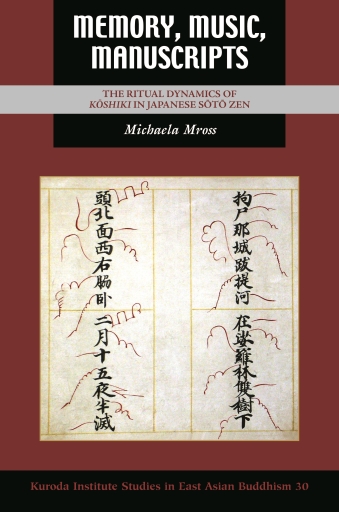
Memory, Music, Manuscripts
Pubblicato da University of Hawaii Press
English
393 pagine
2022
ISBN 9780824892876
Tempo di lettura stimato: 7 h 12 min
PDF
Buy at Bajalibros Latam
🇺🇸
 Association of University Presses - Tienda FILUNI
🇺🇸
Visita il negozio →
Association of University Presses - Tienda FILUNI
🇺🇸
Visita il negozio →
 Bajalibros Argentina
🇦🇷
Visita il negozio →
Bajalibros Argentina
🇦🇷
Visita il negozio →
 Bookshop Uruguay
🇺🇾
Visita il negozio →
Bookshop Uruguay
🇺🇾
Visita il negozio →
 Catademic
🇺🇸
Visita il negozio →
Catademic
🇺🇸
Visita il negozio →
Disponibile in 13 librerie
Association of University Presses - Tienda FILUNI
🇺🇸
Visita il negozio →
Bajalibros Argentina
🇦🇷
Visita il negozio →
 Bookshop Uruguay
🇺🇾
Visita il negozio →
Catademic
🇺🇸
Visita il negozio →
Bookshop Uruguay
🇺🇾
Visita il negozio →
Catademic
🇺🇸
Visita il negozio →








Informazioni su questo libro
Kōshiki (Buddhist ceremonials) belong to a shared ritual repertoire of Japanese Buddhism that began with Tendai Pure Land belief in the late tenth century and spread to all Buddhist schools, including Sōtō Zen in the thirteenth century. In Memory, Music, Manuscripts, Michaela Mross elegantly combines the study of premodern manuscripts and woodblock prints with ethnographic fieldwork to illuminate the historical development of the highly musical kōshiki rituals performed by Sōtō Zen clerics. She demonstrates how ritual change is often shaped by factors outside the ritual context per se—by, for example, institutional interests, evolving biographic images of eminent monks, or changes in the cultural memory of a particular lineage. Her close study of the fascinating world of kōshiki in Sōtō Zen sheds light on Buddhism as a lived religion and the interplay of ritual, doctrine, literature, collective memory, material culture, and music.
Mross highlights in particular the sonic dimension in rituals. Scholars of Buddhist and ritual studies have largely overlooked the soundscapes of rituals despite the importance of music for many ritual specialists and the close connection between the acquisition of ritual expertise and learning to vocalize sacred texts or play musical instruments. Indeed, Sōtō clerics strive to perfect their vocal skills and view kōshiki and the singing of liturgical texts as vital Zen practices and an expression of buddhahood—similar to seated meditation.
Innovative and groundbreaking, Memory, Music, Manuscripts is the first in-depth study of kōshiki in Zen Buddhism and the first monograph in English on this influential liturgical genre. A companion website featuring video recordings of selected kōshiki performances is available at https://searchworks.stanford.edu/view/dq109wp7548.
Disponibilità
Memory, Music, Manuscripts è disponibile come PDF in 13 librerie online. Tra le librerie che lo vendono ci sono Association of University Presses - Tienda FILUNI, Bajalibros Argentina, Bajalibros Latam.
Categorie
- Lingua
- English
Condividi
Domande frequenti
- In quali formati è disponibile Memory, Music, Manuscripts?
- Memory, Music, Manuscripts è disponibile come PDF in 13 librerie online.
- Dove posso comprare Memory, Music, Manuscripts?
- Puoi comprare Memory, Music, Manuscripts su Association of University Presses - Tienda FILUNI, Bajalibros Argentina, Bajalibros Latam. Confronta tutte le opzioni nell’elenco di questa pagina.
- Quanto tempo ci vuole per leggere Memory, Music, Manuscripts?
- A un ritmo di lettura medio, Memory, Music, Manuscripts si legge in circa 7 h 12 min (393 pagine).
Valutazioni e recensioni
Ancora nessuna valutazione. Sii il primo a recensire questo libro.
Accedi per valutare e recensire questo libro.