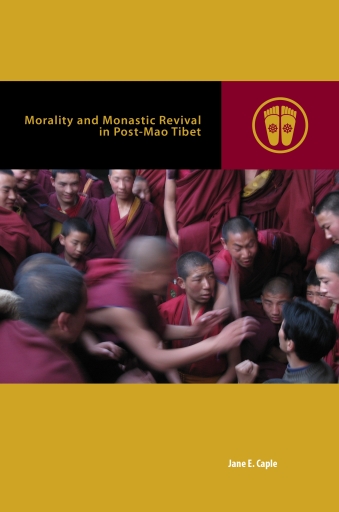
Morality and Monastic Revival in Post-Mao Tibet
Pubblicato da University of Hawaii Press
English
233 pagine
2019
ISBN 9780824878054
Tempo di lettura stimato: 4 h 16 min
PDF
Buy at Association of University Presses - Tienda FILUNI
🇺🇸
 Bajalibros Argentina
🇦🇷
Visita il negozio →
Bajalibros Argentina
🇦🇷
Visita il negozio →
 Bajalibros Latam
🇺🇸
Visita il negozio →
Bajalibros Latam
🇺🇸
Visita il negozio →
 Bookshop Uruguay
🇺🇾
Visita il negozio →
Bookshop Uruguay
🇺🇾
Visita il negozio →
 Catademic
🇺🇸
Visita il negozio →
Catademic
🇺🇸
Visita il negozio →
Disponibile in 13 librerie
 Bajalibros Argentina
🇦🇷
Visita il negozio →
Bajalibros Latam
🇺🇸
Visita il negozio →
Bookshop Uruguay
🇺🇾
Visita il negozio →
Catademic
🇺🇸
Visita il negozio →
Bajalibros Argentina
🇦🇷
Visita il negozio →
Bajalibros Latam
🇺🇸
Visita il negozio →
Bookshop Uruguay
🇺🇾
Visita il negozio →
Catademic
🇺🇸
Visita il negozio →








Informazioni su questo libro
The speed and extent of the Tibetan Buddhist monastic revival make it one of the most extraordinary stories of religious resurgence in post-Mao China. At the end of the 1970s, there were no working monasteries; within a decade, thousands had been reconstructed and repopulated. Most studies have focused on the political challenges facing Tibetan monasteries, emphasizing their relationship to the Chinese state. Yet, in their efforts to revive and develop their institutions, monks have also had to negotiate a rapidly changing society, playing a delicate balancing act fraught with moral dilemma as well as political danger. Drawing on the recent “moral turn” in anthropology, this volume, the first full-length ethnographic study of the subject, explores the social and moral dimensions of monastic revival and reform across a range of Geluk monasteries in northeast Tibet (Amdo/Qinghai Province) from the 1980s on.
Author Jane Caple’s analysis shows that ideas and debates about how best to maintain the mundane bases of monastic Buddhism—economy and population—are intermeshed with those concerning the proper role and conduct of monks and the ethics of monastic-lay relations. Facing a shrinking monastic population, monks are grappling with the impacts of secular education, demographic transition, rising living standards, urbanization, and marketization, all of which have driven debates within Buddhism elsewhere and fueled perceptions of monastic decline. Some Tibetans—including monks—are even questioning the “good” of the mass form of monasticism that has been a distinctive feature of Tibetan society for hundreds of years. Given monastic Buddhism’s integral position in Tibetan community life and association with Tibetan identity, Caple argues that its precarity in relation to Tibetan society raises questions about its future that go well beyond the issue of religious freedom.
Disponibilità
Morality and Monastic Revival in Post-Mao Tibet è disponibile come PDF in 13 librerie online. Tra le librerie che lo vendono ci sono Association of University Presses - Tienda FILUNI, Bajalibros Argentina, Bajalibros Latam.
- Lingua
- English
Condividi
Domande frequenti
- In quali formati è disponibile Morality and Monastic Revival in Post-Mao Tibet?
- Morality and Monastic Revival in Post-Mao Tibet è disponibile come PDF in 13 librerie online.
- Dove posso comprare Morality and Monastic Revival in Post-Mao Tibet?
- Puoi comprare Morality and Monastic Revival in Post-Mao Tibet su Association of University Presses - Tienda FILUNI, Bajalibros Argentina, Bajalibros Latam. Confronta tutte le opzioni nell’elenco di questa pagina.
- Quanto tempo ci vuole per leggere Morality and Monastic Revival in Post-Mao Tibet?
- A un ritmo di lettura medio, Morality and Monastic Revival in Post-Mao Tibet si legge in circa 4 h 16 min (233 pagine).
Valutazioni e recensioni
Ancora nessuna valutazione. Sii il primo a recensire questo libro.
Accedi per valutare e recensire questo libro.