
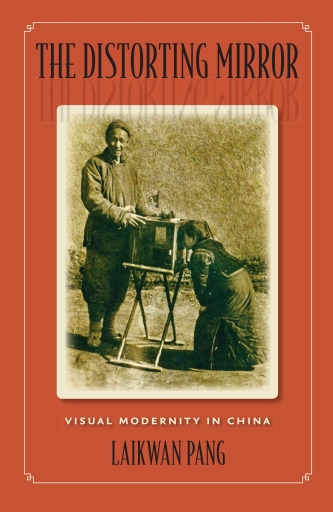
The Distorting Mirror
Pubblicato da University of Hawaii Press
Disponibile in 13 librerie
 Association of University Presses - Tienda FILUNI
🇺🇸
Visita il negozio →
Association of University Presses - Tienda FILUNI
🇺🇸
Visita il negozio →
 Bajalibros Argentina
🇦🇷
Visita il negozio →
Bajalibros Argentina
🇦🇷
Visita il negozio →
 Bajalibros Latam
🇺🇸
Visita il negozio →
Bajalibros Latam
🇺🇸
Visita il negozio →
 Bookshop Uruguay
🇺🇾
Visita il negozio →
Bookshop Uruguay
🇺🇾
Visita il negozio →









Informazioni su questo libro
Disponibilità
The Distorting Mirror è disponibile come PDF in 13 librerie online. Tra le librerie che lo vendono ci sono Association of University Presses - Tienda FILUNI, Bajalibros Argentina, Bajalibros Latam.
Categorie
- Lingua
- English
Domande frequenti
- In quali formati è disponibile The Distorting Mirror?
- The Distorting Mirror è disponibile come PDF in 13 librerie online.
- Dove posso comprare The Distorting Mirror?
- Puoi comprare The Distorting Mirror su Association of University Presses - Tienda FILUNI, Bajalibros Argentina, Bajalibros Latam. Confronta tutte le opzioni nell’elenco di questa pagina.
- Quanto tempo ci vuole per leggere The Distorting Mirror?
- A un ritmo di lettura medio, The Distorting Mirror si legge in circa 5 h 25 min (295 pagine).
Valutazioni e recensioni
Ancora nessuna valutazione. Sii il primo a recensire questo libro.
Accedi per valutare e recensire questo libro.
Potrebbe piacerti anche
Buddhism and Taoism Face to Face
Mollier, Christine

Ethnographies of Islam in China

In Macao
Gunnison, Charles A.
The Emergence of China
Brooks, A. Taeko, Brooks, E. Bruce

The Yearbook of China's Cultural Industries 2011
Fei, Liu, Hong, Zheng, Lin, Huang, Xuan, Cui, Yangyu, Chen Hu

China tropical
Freyre, Gilberto