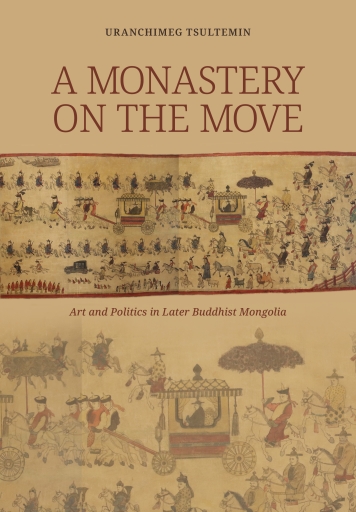
A Monastery on the Move
Publicado por University of Hawaii Press
English
2020
ISBN 9780824885717
eBook
Buy at ebooks Libreria del GAM
🇨🇱
 Association of University Presses - Tienda FILUNI
🇺🇸
Visitar loja →
Association of University Presses - Tienda FILUNI
🇺🇸
Visitar loja →
 Bajalibros Argentina
🇦🇷
Visitar loja →
Bajalibros Argentina
🇦🇷
Visitar loja →
 Bajalibros Latam
🇺🇸
Visitar loja →
Bajalibros Latam
🇺🇸
Visitar loja →
 Bookshop Uruguay
🇺🇾
Visitar loja →
Bookshop Uruguay
🇺🇾
Visitar loja →
 Catademic
🇺🇸
Visitar loja →
Catademic
🇺🇸
Visitar loja →
Disponível em 13 livrarias
Association of University Presses - Tienda FILUNI
🇺🇸
Visitar loja →
Bajalibros Argentina
🇦🇷
Visitar loja →
Bajalibros Latam
🇺🇸
Visitar loja →
Bookshop Uruguay
🇺🇾
Visitar loja →
Catademic
🇺🇸
Visitar loja →








Sobre este livro
In 1639, while the Géluk School of the Fifth Dalai Lama and Qing emperors vied for supreme authority in Inner Asia, Zanabazar (1635–1723), a young descendent of Chinggis Khaan, was proclaimed the new Jebtsundampa ruler of the Khalkha Mongols. Over the next three centuries, the ger (yurt) erected to commemorate this event would become the mobile monastery Ikh Khüree, the political seat of the Jebtsundampas and a major center of Mongolian Buddhism. When the monastery and its surrounding structures were destroyed in the 1930s, they were rebuilt and renamed Ulaanbaatar, the modern-day capital of Mongolia.
Based on little-known works of Mongolian Buddhist art and architecture, A Monastery on the Move presents the intricate and colorful history of Ikh Khüree and of Zanabazar, himself an eminent artist. Author Uranchimeg Tsultemin makes the case for a multifaceted understanding of Mongol agency during the Géluk’s political ascendancy and the Qing appropriation of the Mongol concept of dual rulership (shashin tör) as the nominal “Buddhist Government.” In rich conversation with heretofore unpublished textual, archeological, and archival sources (including ritualized oral histories), Uranchimeg argues that the Qing emperors’ “Buddhist Government” was distinctly different from the Mongol vision of sovereignty, which held Zanabazar and his succeeding Jebtsundampa reincarnates to be Mongolia’s rightful rulers. This vision culminated in their independence from the Qing and the establishment of the Jebtsundampa’s theocractic government in 1911.
A groundbreaking work, A Monastery on the Move provides a fascinating, in-depth analysis and interpretation of Mongolian Buddhist art and its role in shaping borders and shifting powers in Inner Asia.
Disponibilidade
A Monastery on the Move está disponível como eBook em 13 livrarias online. Entre as livrarias que o vendem estão Association of University Presses - Tienda FILUNI, Bajalibros Argentina, Bajalibros Latam.
Categorias
- Idioma
- English
Compartilhar
Perguntas frequentes
- Em quais formatos A Monastery on the Move está disponível?
- A Monastery on the Move está disponível como eBook em 13 livrarias online.
- Onde posso comprar A Monastery on the Move?
- Você pode comprar A Monastery on the Move em Association of University Presses - Tienda FILUNI, Bajalibros Argentina, Bajalibros Latam. Compare todas as opções na lista desta página.
Avaliações e resenhas
Ainda não há avaliações. Seja o primeiro a resenhar este livro.
Entrar para avaliar e resenhar este livro.