
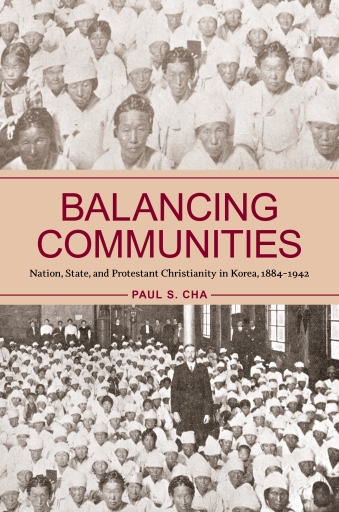
Balancing Communities
Por Cha, Paul S.
Publicado por University of Hawaii Press
English
265 páginas
2022
ISBN 9780824891152
PDF
Buy at Catademic
🇺🇸
 Catademic
🇺🇸
Visitar loja →
Catademic
🇺🇸
Visitar loja →
 Bajalibros Latam
🇺🇸
Visitar loja →
Bajalibros Latam
🇺🇸
Visitar loja →
 Association of University Presses - Tienda FILUNI
🇺🇸
Visitar loja →
Association of University Presses - Tienda FILUNI
🇺🇸
Visitar loja →
 Ebooks Librería Antártica
🇨🇱
Visitar loja →
Ebooks Librería Antártica
🇨🇱
Visitar loja →
 Ebooks Agustin
🇪🇸
Visitar loja →
Ebooks Agustin
🇪🇸
Visitar loja →
 Bajalibros Argentina
🇦🇷
Visitar loja →
Bajalibros Argentina
🇦🇷
Visitar loja →
 Sanborns Ebooks
🇲🇽
Visitar loja →
Sanborns Ebooks
🇲🇽
Visitar loja →
 ebooks Libreria del GAM
🇨🇱
Visitar loja →
ebooks Libreria del GAM
🇨🇱
Visitar loja →
 Bookshop Uruguay
🇺🇾
Visitar loja →
Bookshop Uruguay
🇺🇾
Visitar loja →
 ebookskitapenas
🇬🇹
Visitar loja →
ebookskitapenas
🇬🇹
Visitar loja →
 Ebooks Yenny - El Ateneo
🇦🇷
Visitar loja →
Ebooks Yenny - El Ateneo
🇦🇷
Visitar loja →
 Crisol Ebooks
🇵🇪
Visitar loja →
Crisol Ebooks
🇵🇪
Visitar loja →
Disponível em 12 livrarias
Catademic
🇺🇸
Visitar loja →
Bajalibros Latam
🇺🇸
Visitar loja →
Association of University Presses - Tienda FILUNI
🇺🇸
Visitar loja →
Ebooks Librería Antártica
🇨🇱
Visitar loja →
Ebooks Agustin
🇪🇸
Visitar loja →
Bajalibros Argentina
🇦🇷
Visitar loja →
Sanborns Ebooks
🇲🇽
Visitar loja →
ebooks Libreria del GAM
🇨🇱
Visitar loja →
Bookshop Uruguay
🇺🇾
Visitar loja →
ebookskitapenas
🇬🇹
Visitar loja →
Ebooks Yenny - El Ateneo
🇦🇷
Visitar loja →
Crisol Ebooks
🇵🇪
Visitar loja →
Sobre este livro
<p>Starting in 1884 with the arrival of the first resident Protestant missionary in Korea and ending with the expulsion of missionaries from the peninsula by the Japanese colonial government in 1942, <i>Balancing Communities </i>examines how the competing demands of communal identities and memberships shaped the early history of Protestantism in Korea. In so doing, the author challenges the conventional history of Korean Protestantism in terms of its relationship to the (South) Korean nation-state. Conversion to Christianity granted Koreans membership in a faith-based organization that, at least in theory, transcended national and political boundaries. As a result, Korean Christians possessed dual membership in a transnational religious community and an earthly political state. Some strove to harmonize these two associations. Others privileged one membership over the other. Regardless, the potential for conflict was always present. <br><br>Balancing competing demands was not simply a Korean issue. Missionaries also struggled to reconcile their national allegiances, political identities, and religious partnerships with both Korean Christian leaders and government officials. Improperly calibrated communal demands produced conflict and instability among missionaries, Korean Christians, and the state. These demands led to struggles for control over social institutions such as hospitals and schools, incited schisms and debates over church membership, and challenged state power and social patterns. When they were balanced differently, these demands could lead to surprisingly stable and long-lasting relations. The price of this stability, however, was often the perpetuation of inequality, for the language of community masked the hierarchy of power embedded in these associations. <br><br>Scholars of both Korea and World Christianity have identified South Korea as a prime example of the “successful” spread of Christianity outside Euro-America in the nineteenth and twentieth centuries. Paul S. Cha interrogates the construction of Korean Protestantism and successfully argues that frameworks anchored to nationalism or the nation-state fail to capture the complexities of this religion’s history in Korea and the relationships that formed among Korean Christians, missionaries, and government officials, especially during the colonial period.</p>
Categorias
- Idioma
- English
Compartilhar
Você também pode gostar

Hasta el fin del mundo
Westphal, Francisco
History and Ecclesiastical Relations of the Churches of the Presbyterial Order at Amoy, China
Talmage, John Van Nest
Born Again
Lee, Timothy S.
Invincible and Righteous Outlaw
Kang, Minsoo

Homing
Jo, Ji-Yeon O.

Almas Entrelaçadas:
De Gomes, Leonora Costa Oliveira Lucena