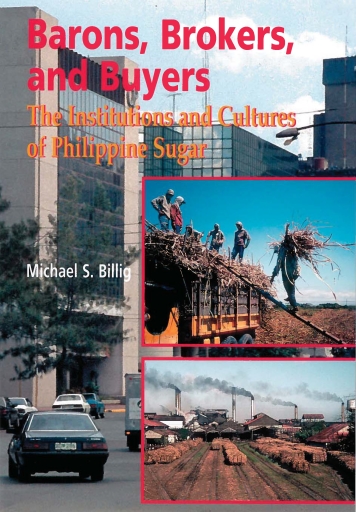
Barons, Brokers, and Buyers
Publicado por University of Hawaii Press
English
337 páginas
2002
ISBN 9780824861568
Tempo de leitura estimado: 6 h 11 min
PDF
Buy at Sanborns Ebooks
🇲🇽
 Association of University Presses - Tienda FILUNI
🇺🇸
Visitar loja →
Association of University Presses - Tienda FILUNI
🇺🇸
Visitar loja →
 Bajalibros Argentina
🇦🇷
Visitar loja →
Bajalibros Argentina
🇦🇷
Visitar loja →
 Bajalibros Latam
🇺🇸
Visitar loja →
Bajalibros Latam
🇺🇸
Visitar loja →
 Bookshop Uruguay
🇺🇾
Visitar loja →
Bookshop Uruguay
🇺🇾
Visitar loja →
 Catademic
🇺🇸
Visitar loja →
Catademic
🇺🇸
Visitar loja →
Disponível em 13 livrarias
Association of University Presses - Tienda FILUNI
🇺🇸
Visitar loja →
Bajalibros Argentina
🇦🇷
Visitar loja →
Bajalibros Latam
🇺🇸
Visitar loja →
Bookshop Uruguay
🇺🇾
Visitar loja →
Catademic
🇺🇸
Visitar loja →








Sobre este livro
This innovative ethnography takes a new approach to the study of Philippine sugar. For much of the late colonial history of the Philippines, sugar was its most lucrative export, the biggest employer, and the greatest source of political influence. The so-called "Sugar Barons"--wealthy hacendero planters located mainly in Central Luzon and on the Visayan island of Negros--gained the reputation as kingmakers and became noted for their lavish lifestyles and the quasi-feudal nature of their estates. But Philippine sugar gradually declined into obsolescence; today it is regarded as a "sunset industry" that can barely satisfy domestic demand. While planters continue to think of themselves as wielding considerable power and influence, they are more often seen as vestiges of a bygone era.
Michael Billig examines sugar's decline within both the dynamic context of contemporary Philippine society and the global context of the international sugar market. His multi-sited ethnographic analysis focuses mainly on conflicts among the various elite sectors (planters, millers, traders, commercial buyers, politicians) and concludes that the most salient political, economic, and cultural trend in the Philippines today is the decline of rural, agrarian elite power and the rise of urban industrial, commercial, and financial power. His reflections on his relationships with informants in the midst of the politically charged atmosphere that surrounds the sugar industry provide a candid look at the role of the observer who, try as he might to remain impartial, finds himself swept into the vortex of policy debates and power plays.
Disponibilidade
Barons, Brokers, and Buyers está disponível como PDF em 13 livrarias online. Entre as livrarias que o vendem estão Association of University Presses - Tienda FILUNI, Bajalibros Argentina, Bajalibros Latam.
Categorias
- Idioma
- English
Compartilhar
Perguntas frequentes
- Em quais formatos Barons, Brokers, and Buyers está disponível?
- Barons, Brokers, and Buyers está disponível como PDF em 13 livrarias online.
- Onde posso comprar Barons, Brokers, and Buyers?
- Você pode comprar Barons, Brokers, and Buyers em Association of University Presses - Tienda FILUNI, Bajalibros Argentina, Bajalibros Latam. Compare todas as opções na lista desta página.
- Quanto tempo leva para ler Barons, Brokers, and Buyers?
- Em um ritmo médio de leitura, Barons, Brokers, and Buyers leva cerca de 6 h 11 min para ser lido (337 páginas).
Avaliações e resenhas
Ainda não há avaliações. Seja o primeiro a resenhar este livro.
Entrar para avaliar e resenhar este livro.