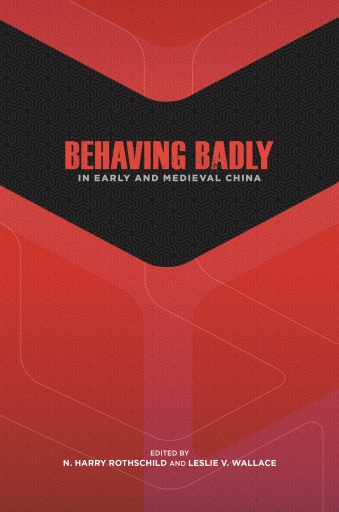
Behaving Badly in Early and Medieval China
Publicado por University of Hawaii Press
English
2017
ISBN 9780824874230
eBook
Buy at Ebooks Librería Antártica
🇨🇱
 Association of University Presses - Tienda FILUNI
🇺🇸
Visitar loja →
Association of University Presses - Tienda FILUNI
🇺🇸
Visitar loja →
 Bajalibros Argentina
🇦🇷
Visitar loja →
Bajalibros Argentina
🇦🇷
Visitar loja →
 Bajalibros Latam
🇺🇸
Visitar loja →
Bajalibros Latam
🇺🇸
Visitar loja →
 Bookshop Uruguay
🇺🇾
Visitar loja →
Bookshop Uruguay
🇺🇾
Visitar loja →
 Catademic
🇺🇸
Visitar loja →
Catademic
🇺🇸
Visitar loja →
Disponível em 13 livrarias
Association of University Presses - Tienda FILUNI
🇺🇸
Visitar loja →
Bajalibros Argentina
🇦🇷
Visitar loja →
Bajalibros Latam
🇺🇸
Visitar loja →
Bookshop Uruguay
🇺🇾
Visitar loja →
Catademic
🇺🇸
Visitar loja →








Sobre este livro
Behaving Badly in Early and Medieval China presents a rogues’ gallery of treacherous regicides, impious monks, cutthroat underlings, ill-bred offspring, and disloyal officials. It plumbs the dark matter of the human condition, placing front and center transgressive individuals and groups traditionally demonized by Confucian annalists and largely shunned by modern scholars. The work endeavors to apprehend the actions and motivations of these men and women, whose conduct deviated from normative social, cultural, and religious expectations.
Early chapters examine how core Confucian bonds such as those between parents and children, and ruler and minister, were compromised, even severed. The living did not always reverently pay homage to the dead, children did not honor their parents with due filiality, a decorous distance was not necessarily observed between sons and stepmothers, and subjects often pursued their own interests before those of the ruler or the state. The elasticity of ritual and social norms is explored: Chapters on brazen Eastern Han (25–220) mourners and deviant calligraphers, audacious falconers, volatile Tang (618–907) Buddhist monks, and drunken Song (960–1279) literati reveal social norms treated not as universal truths but as debated questions of taste wherein political and social expedience both determined and highlighted individual roles within larger social structures and defined what was and was not aberrant.
A Confucian predilection to “valorize [the] civil and disparage the martial” and Buddhist proscriptions on killing led literati and monks alike to condemn the cruelty and chaos of war. The book scrutinizes cultural attitudes toward military action and warfare, including those surrounding the bloody and capricious world of the Zuozhuan (Chronicle of Zuo), the relentless violence of the Five Dynasties and Ten States periods (907–979), and the exploits of Tang warrior priests—a series of studies that complicates the rhetoric by situating it within the turbulent realities of the times. By the end of this volume, readers will come away with the understanding that behaving badly in early and medieval China was not about morality but perspective, politics, and power.
Disponibilidade
Behaving Badly in Early and Medieval China está disponível como eBook em 13 livrarias online. Entre as livrarias que o vendem estão Association of University Presses - Tienda FILUNI, Bajalibros Argentina, Bajalibros Latam.
Categorias
- Idioma
- English
Compartilhar
Perguntas frequentes
- Em quais formatos Behaving Badly in Early and Medieval China está disponível?
- Behaving Badly in Early and Medieval China está disponível como eBook em 13 livrarias online.
- Onde posso comprar Behaving Badly in Early and Medieval China?
- Você pode comprar Behaving Badly in Early and Medieval China em Association of University Presses - Tienda FILUNI, Bajalibros Argentina, Bajalibros Latam. Compare todas as opções na lista desta página.
Avaliações e resenhas
Ainda não há avaliações. Seja o primeiro a resenhar este livro.
Entrar para avaliar e resenhar este livro.