
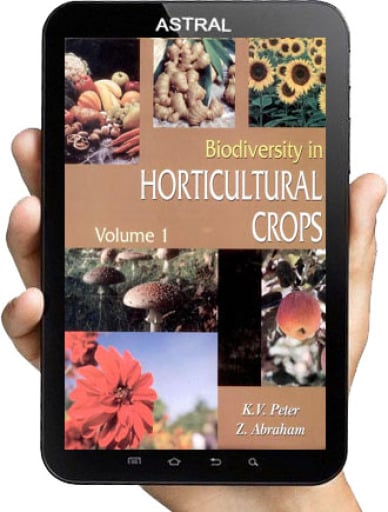
Biodiversity in Horticultural Crops Vol. 1
Publicado por Astral International Pvt Ltd
English
648 páginas
2021
ISBN 9788170358411
Tempo de leitura estimado: 11 h 53 min
PDF
Buy at Catademic
🇺🇸
Disponível em 1 livrarias

Sobre este livro
Among the natural resources, plant biodiversity is the key to human existence and survival. Horticultural crops contribute to nutritional and livelihood security. Mankind depends on near about 5000 plant species worldwide to meet food and other needs. This number is just a fraction of total world flora of 2.5 lakh species of mosses, ferns, conifers and flowering plants. More than 50,000 plant species are meeting the food (calories) needs of human world wide. There is still greater dependence on a few plant species; 20 to 30 in global context. Horticultural crops encompass fruit crops, vegetables, ornamentals, plantation crops, spices, aromatic and medicinal plants, tuber crops and mushrooms. Temperate, subtropical and tropical horticultural crops are characterized by their adoption to varying ecology and land use patterns. The present volume ‘Biodiversity in Horticultural Crops’ has 18 chapters contributed by eminent scientists working in the respective crops. Biodiversity is conceived as gift of nature for sustainability, nutritional security and above all to widen the food basket. Man lives not for food alone, but to enjoy nature’s gift-fruits, vegetables, flowering plants, foliages and so on. Genes for desirable traits are embedded in biodiversity and as such the present the volume thrown open horticultural bioresources to human benefit. The present volume emphasis current and widely grown horticultural crops in India in all its biodiversity. The volume is edited by Dr K V Peter, Former Vice-Chancellor and current Professor of Horticulture, Kerala Agricultural University. As vegetable breeder at G B Pant University of Agriculture and Technology, Pantnagar he surveyed, collected, documented and conserved working germplasm of tomato, brinjal and chili. During 1991-1998, as Director, Indian Institute of Spices Research, Calicut, he facilitated establishment of worlds largest collection of black pepper germ plasm. Working collections of cardamom, ginger, turmeric, nutmeg, clove, allspice and vanill were also felicitated to be organized. He also co-authored descriptors of black pepper and cardamom published by IPGRI, Rome.
Disponibilidade
Biodiversity in Horticultural Crops Vol. 1 está disponível como PDF em 1 livraria online.
Categorias
- Idioma
- English
Compartilhar
Perguntas frequentes
- Em quais formatos Biodiversity in Horticultural Crops Vol. 1 está disponível?
- Biodiversity in Horticultural Crops Vol. 1 está disponível como PDF em 1 livraria online.
- Onde posso comprar Biodiversity in Horticultural Crops Vol. 1?
- Você pode comprar Biodiversity in Horticultural Crops Vol. 1 em Catademic. Compare todas as opções na lista desta página.
- Quanto tempo leva para ler Biodiversity in Horticultural Crops Vol. 1?
- Em um ritmo médio de leitura, Biodiversity in Horticultural Crops Vol. 1 leva cerca de 11 h 53 min para ser lido (648 páginas).
Avaliações e resenhas
Ainda não há avaliações. Seja o primeiro a resenhar este livro.
Entrar para avaliar e resenhar este livro.
Você também pode gostar
Biodiversity in Horticultural Crops Vol. 4
K V Peter
Biodiversity in Horticultural Crops Vol. 3
K V Peter

Bougainvillea: A Color Handbook
Roy, R K
Diseases of Major Medicinal Plants
K. K. Janardhanan
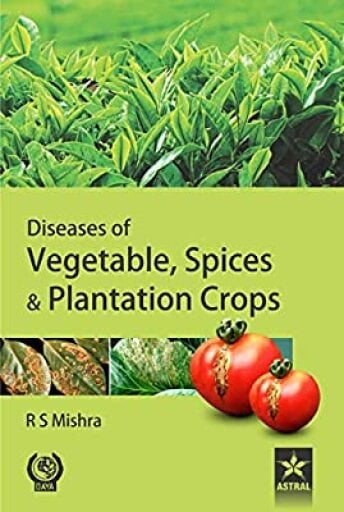
Diseases of Vegetable Spices and Plantation Crops
R S Mishra

Nitrogen Bacteria and Legumes
Hopkins, Cyril G.