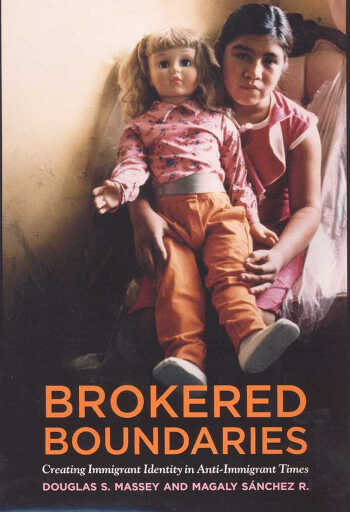
Brokered Boundaries
Por Massey, Douglas S., Sánchez R., Magaly
Publicado por Russell Sage Foundation
English
2010
ISBN 9781610446662
eBook
Buy at Catademic
🇺🇸
Catademic
🇺🇸
Visitar loja →
Bajalibros Latam
🇺🇸
Visitar loja →
Association of University Presses - Tienda FILUNI
🇺🇸
Visitar loja →

Ebooks Librería Antártica
🇨🇱
Visitar loja →
Ebooks Agustin
🇪🇸
Visitar loja →
Bajalibros Argentina
🇦🇷
Visitar loja →
Sanborns Ebooks
🇲🇽
Visitar loja →
ebooks Libreria del GAM
🇨🇱
Visitar loja →
Bookshop Uruguay
🇺🇾
Visitar loja →
ebookskitapenas
🇬🇹
Visitar loja →
Ebooks Yenny - El Ateneo
🇦🇷
Visitar loja →
Crisol Ebooks
🇵🇪
Visitar loja →
Disponível em 12 livrarias
Catademic
🇺🇸
Visitar loja →
Association of University Presses - Tienda FILUNI
🇺🇸
Visitar loja →

Ebooks Librería Antártica
🇨🇱
Visitar loja →
Ebooks Agustin
🇪🇸
Visitar loja →
Sanborns Ebooks
🇲🇽
Visitar loja →
ebooks Libreria del GAM
🇨🇱
Visitar loja →
ebookskitapenas
🇬🇹
Visitar loja →
Ebooks Yenny - El Ateneo
🇦🇷
Visitar loja →
Crisol Ebooks
🇵🇪
Visitar loja →
Sobre este livro
<div>Anti-immigrant sentiment reached a fever pitch after 9/11, but its origins go back much further. Public rhetoric aimed at exposing a so-called invasion of Latino immigrants has been gaining ground for more than three decades—and fueling increasingly restrictive federal immigration policy. Accompanied by a flagging U.S. economy—record-level joblessness, bankruptcy, and income inequality—as well as waning consumer confidence, these conditions signaled one of the most hostile environments for immigrants in recent memory. In Brokered Boundaries, Douglas Massey and Magaly Sánchez untangle the complex political, social, and economic conditions underlying the rise of xenophobia in U.S. society. The book draws on in-depth interviews with Latin American immigrants in metropolitan New York and Philadelphia and—in their own words and images—reveals what life is like for immigrants attempting to integrate in anti-immigrant times. What do the social categories "Latino" and "American" actually mean to today's immigrants? Brokered Boundaries analyzes how first- and second-generation immigrants from Central and South America and the Caribbean navigate these categories and their associated meanings as they make their way through U.S. society. Massey and Sánchez argue that the mythos of immigration, in which newcomers gradually shed their respective languages, beliefs, and cultural practices in favor of a distinctly American way of life, is, in reality, a process of negotiation between new arrivals and native-born citizens. Natives control interactions with outsiders by creating institutional, social, psychological, and spatial mechanisms that delimit immigrants' access to material resources and even social status. Immigrants construct identities based on how they perceive and respond to these social boundaries. The authors make clear that today's Latino immigrants are brokering boundaries in the context of unprecedented economic uncertainty, repressive anti-immigrant legislation, and a heightening fear that upward mobility for immigrants translates into downward mobility for the native-born. Despite an absolute decline in Latino immigration, immigration-related statutes have tripled in recent years, including many that further shred the safety net for legal permanent residents as well as the undocumented. Brokered Boundaries shows that, although Latin American immigrants come from many different countries, their common reception in a hostile social environment produces an emergent Latino identity soon after arrival. During anti-immigrant times, however, the longer immigrants stay in America, the more likely they are to experience discrimination and the less likely they are to identify as Americans.</div>
Categorias
- Idioma
- English
Compartilhar
Você também pode gostar
Teilen und Haben
Parianen, Franca
Das ist Krieg
Suchanow, Klementyna
Die Uhr kann gehen. Das Ende der Gehorsamkeitskultur.
Geißler, Karlheinz A.
humanvoll
Legun, Patrick
Fundamentos De Relações Governamentais
Galvão, Eduardo Ribeiro
Plano De Mobilidade Urbana De Vitória-es:
Da Da Silva, Marcelo Fonseca Ferreira