Building and Remembering
Por Urwin, Chris
Publicado por University of Hawaii Press
English
2023
ISBN 9780824893439
eBook
Buy at Association of University Presses - Tienda FILUNI
🇺🇸
Catademic
🇺🇸
Visitar loja →
Bajalibros Latam
🇺🇸
Visitar loja →
Association of University Presses - Tienda FILUNI
🇺🇸
Visitar loja →

Ebooks Librería Antártica
🇨🇱
Visitar loja →
Ebooks Agustin
🇪🇸
Visitar loja →
Bajalibros Argentina
🇦🇷
Visitar loja →

Sanborns Ebooks
🇲🇽
Visitar loja →
ebooks Libreria del GAM
🇨🇱
Visitar loja →
Bookshop Uruguay
🇺🇾
Visitar loja →

ebookskitapenas
🇬🇹
Visitar loja →
Ebooks Yenny - El Ateneo
🇦🇷
Visitar loja →
Crisol Ebooks
🇵🇪
Visitar loja →
Disponível em 12 livrarias
Catademic
🇺🇸
Visitar loja →
Association of University Presses - Tienda FILUNI
🇺🇸
Visitar loja →
Ebooks Librería Antártica
🇨🇱
Visitar loja →
Ebooks Agustin
🇪🇸
Visitar loja →
Sanborns Ebooks
🇲🇽
Visitar loja →
ebooks Libreria del GAM
🇨🇱
Visitar loja →
ebookskitapenas
🇬🇹
Visitar loja →
Ebooks Yenny - El Ateneo
🇦🇷
Visitar loja →
Crisol Ebooks
🇵🇪
Visitar loja →
Sobre este livro
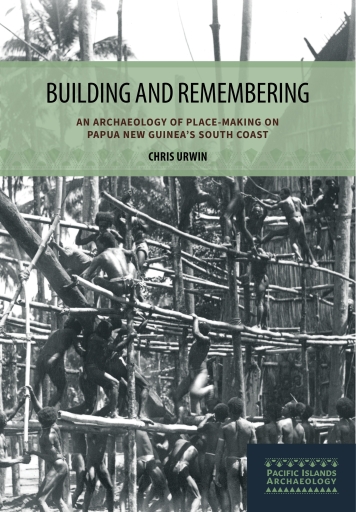
<p><i>Building and Remembering </i>is a multidisciplinary study of how memory works in relation to the material past. Based on collaborative ethnoarchaeological research carried out in Orokolo Bay (Papua New Guinea), Chris Urwin explores oral traditions maintained and produced in relation to artifacts and stratigraphy. He shows how cultivation and construction bring people from Orokolo Bay into regular contact with pottery sherds and thin layers of black sand. Both the pottery and the sand are forms of material evidence that remind people of the movements and activities of their ancestors, and they help sustain stories of origins and connections. The sherds remind people of the layout of their ancestors’ villages, and of the annual maritime visits by Motu people who came from 400 km to the east. The black sand evokes events of the distant past when their ancestors created the land through magic. Villagers in Orokolo Bay have intimate knowledge of the contents of the subsurface, and places where people work and dig more regularly are thought of as especially ancient. Here, people conduct their own form of “archaeology” as part of everyday life.<br><br>This book interweaves such community constructions of the past with the emergence of large coastal villages in Orokolo Bay and across a broader span of the south coast of Papua New Guinea. The villages housed dense populations and hosted elaborate masked ceremonies that could span decades. When Sir Albert Maori Kiki—the former Deputy Prime Minister—moved to Orokolo Bay in the mid-1930s, he was mesmerized by the place, which appeared like “a modern metropolis . . . buzzing with noise and activity.” Yet little is known of when these villages originated or how they developed. In this book, archaeological digs and radiocarbon dating are used to gain insight into how several Orokolo Bay sites developed, focusing on the key origin and migration village of Popo. Village elders share their understandings of ancestral places during surveys and through oral traditions. People lived in Popo for some five hundred years, moving to, through, and from the estates, expanding and at times shifting the village to access the social and subsistence benefits of coastal village life.</p>
- Idioma
- English
Compartilhar