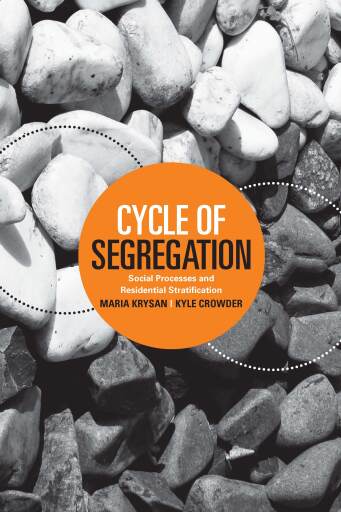
Cycle of Segregation
Por Krysan, Maria, Crowder, Kyle
Publicado por Russell Sage Foundation
English
2017
ISBN 9781610448697
eBook
Buy at Bajalibros Latam
🇺🇸
Catademic
🇺🇸
Visitar loja →
ebookstaolistic
🇺🇸
Visitar loja →
Bajalibros Latam
🇺🇸
Visitar loja →
RS
RSAGE
🇺🇸
Visitar loja →
Association of University Presses - Tienda FILUNI
🇺🇸
Visitar loja →

Ebooks Librería Antártica
🇨🇱
Visitar loja →
Ebooks Agustin
🇪🇸
Visitar loja →
Bajalibros Argentina
🇦🇷
Visitar loja →

Sanborns Ebooks
🇲🇽
Visitar loja →
ebooks Libreria del GAM
🇺🇾
Visitar loja →
Bookshop Uruguay
🇺🇾
Visitar loja →

ebookskitapenas
🇬🇹
Visitar loja →
Ebooks Yenny - El Ateneo
🇦🇷
Visitar loja →
Crisol Ebooks
🇨🇴
Visitar loja →
Disponível em 14 livrarias
Catademic
🇺🇸
Visitar loja →
ebookstaolistic
🇺🇸
Visitar loja →
Association of University Presses - Tienda FILUNI
🇺🇸
Visitar loja →
Ebooks Librería Antártica
🇨🇱
Visitar loja →
Ebooks Agustin
🇪🇸
Visitar loja →
Sanborns Ebooks
🇲🇽
Visitar loja →
ebooks Libreria del GAM
🇺🇾
Visitar loja →
ebookskitapenas
🇬🇹
Visitar loja →
Ebooks Yenny - El Ateneo
🇦🇷
Visitar loja →
Crisol Ebooks
🇨🇴
Visitar loja →
Sobre este livro
The Fair Housing Act of 1968 outlawed housing discrimination by race and provided an important tool for dismantling legal segregation. But almost fifty years later, residential segregation remains virtually unchanged in many metropolitan areas, particularly where large groups of racial and ethnic minorities live. Why does segregation persist at such high rates and what makes it so difficult to combat? In <i>Cycle of Segregation</i>, sociologists Maria Krysan and Kyle Crowder examine how everyday social processes shape residential stratification. Past neighborhood experiences, social networks, and daily activities all affect the mobility patterns of different racial groups in ways that have cemented segregation as a self-perpetuating cycle in the twenty-first century.<br> <br> Through original analyses of national-level surveys and in-depth interviews with residents of Chicago, Krysan and Crowder find that residential stratification is reinforced through the biases and blind spots that individuals exhibit in their searches for housing. People rely heavily on information from friends, family, and coworkers when choosing where to live. Because these social networks tend to be racially homogenous, people are likely to receive information primarily from members of their own racial group and move to neighborhoods that are also dominated by their group. Similarly, home-seekers who report wanting to stay close to family members can end up in segregated destinations because their relatives live in those neighborhoods. The authors suggest that even absent of family ties, people gravitate toward neighborhoods that are familiar to them through their past experiences, including where they have previously lived, and where they work, shop, and spend time. Because historical segregation has shaped so many of these experiences, even these seemingly race-neutral decisions help reinforce the cycle of residential stratification. As a result, segregation has declined much more slowly than many social scientists have expected.<br> <br> To overcome this cycle, Krysan and Crowder advocate multi-level policy solutions that pair inclusionary zoning and affordable housing with education and public relations campaigns that emphasize neighborhood diversity and high-opportunity areas. They argue that together, such programs can expand the number of destinations available to low-income residents and help offset the negative images many people hold about certain neighborhoods or help introduce them to places they had never considered. <i>Cycle of Segregation</i> demonstrates why a nuanced understanding of everyday social processes is critical for interrupting entrenched patterns of residential segregation.<br>
- Idioma
- English
Compartilhar
Você também pode gostar
Ciencias Sociales 4 EGB
Argentina e o Brasil Frente aos Estados Unidos (2003 – 2015) : Entre a Autonomia e a Subordinação
Milani, Lívia Peres
O serviço social e a questão socioambiental
Vieira, Sergio Luiz de Souza
O lugar do outro
Certeau, Michel De
¿La Comunidad Andina de Naciones, cuál integración económica regional?
Prado, María Mercedes
Las clases medias profesionales en Cali
Sánchez Salcedo, José Fernando