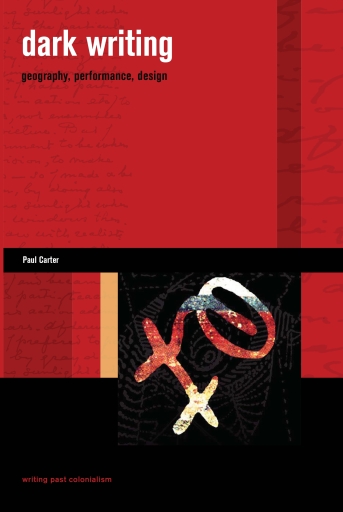
Dark Writing
Por Carter, Paul
Publicado por University of Hawaii Press
English
329 páginas
2008
ISBN 9780824862145
PDF
Buy at Association of University Presses - Tienda FILUNI
🇺🇸
Catademic
🇺🇸
Visitar loja →
Bajalibros Latam
🇺🇸
Visitar loja →
Association of University Presses - Tienda FILUNI
🇺🇸
Visitar loja →

Ebooks Librería Antártica
🇨🇱
Visitar loja →
Ebooks Agustin
🇪🇸
Visitar loja →
Bajalibros Argentina
🇦🇷
Visitar loja →

Sanborns Ebooks
🇲🇽
Visitar loja →
ebooks Libreria del GAM
🇨🇱
Visitar loja →
Bookshop Uruguay
🇺🇾
Visitar loja →

ebookskitapenas
🇬🇹
Visitar loja →
Ebooks Yenny - El Ateneo
🇦🇷
Visitar loja →
Crisol Ebooks
🇵🇪
Visitar loja →
Disponível em 12 livrarias
Catademic
🇺🇸
Visitar loja →
Association of University Presses - Tienda FILUNI
🇺🇸
Visitar loja →
Ebooks Librería Antártica
🇨🇱
Visitar loja →
Ebooks Agustin
🇪🇸
Visitar loja →
Sanborns Ebooks
🇲🇽
Visitar loja →
ebooks Libreria del GAM
🇨🇱
Visitar loja →
ebookskitapenas
🇬🇹
Visitar loja →
Ebooks Yenny - El Ateneo
🇦🇷
Visitar loja →
Crisol Ebooks
🇵🇪
Visitar loja →
Sobre este livro
<p>We do not see empty figures and outlines; we do not move in straight lines. Everywhere we are surrounded by dapple; the geometry of our embodied lives is curviform, meandering, bi-pedal. Our personal worlds are timed, inter-positional, and contingent. But nowhere in the language of cartography and design do these ordinary experiences appear. This, <i>Dark Writing</i> argues, is a serious omission because they are designs on the world: architects and colonizers use their lines to construct the places where we will live. But the rectilinear streets, squares, and public spaces produced in this way leave out people and the entire environmental history of their coming together. How, this book asks, can we explain the omission of bodies from maps and plans? And how can we redraw the lines maps and plans use so that the qualitative world of shadows, footprints, comings and goings, and occasions—all essential qualities of places that incubate sociality—can be registered? <br><br>In short, <i>Dark Writing</i> asks why we represent the world as static when our experience of it is mobile. It traces this bias in Enlightenment cartography, in inductive logic, and in contemporary place design. This is the negative critique. Its positive argument is that, when we look closely at these designs on the world, we find traces of a repressed movement form. Even the ideal lines of geometrical figures turn out to contain traces of earlier passages; and there are many forms of graphic design that do engage with the dark environment that surrounds the light of reason. How can this "dark writing"—so important to reconfiguring our world as a place of meeting, of co-existence and sustaining diversity—be represented? And how, therefore, can our representations of the world embody more sensuously the mobile histories that have produced it?<br><br><i>Dark Writing</i> answers these questions using case studies: the exemplary case of the beginnings of the now world-famous Papunya Tula Painting Movement (Central Australia) and three high-profile public place-making initiatives in which the author was involved as artist and thinker. These case studies are nested inside historical chapters and philosophical discussions of the line and linear thinking that make Dark Writing both a highly personal book and a narrative with wide general appeal.</p>
- Idioma
- English
Compartilhar