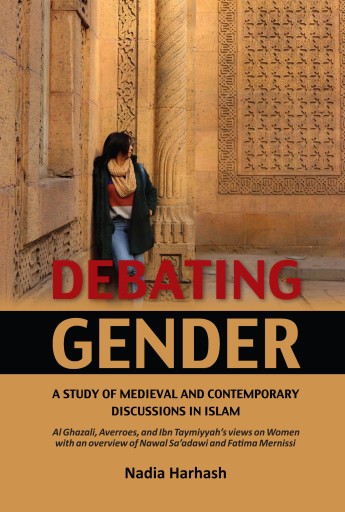
Debating Gender
Por Harhash, Nadia
Publicado por Al Nasher Technical Services
English
2024
ISBN 9789950385962
eBook
Buy at Bajalibros Latam
🇺🇸
Bajalibros Latam
🇺🇸
Visitar loja →
LORANCHBOOKSTORE
🇺🇸
Visitar loja →
Libros Patagonia
🇨🇱
Visitar loja →
Ebooks Librería Carlos Fuentes
🇲🇽
Visitar loja →
Ebooks Librería Antártica
🇨🇱
Visitar loja →
Ebooks Happy Books
🇨🇴
Visitar loja →
ebooks libreria española
🇪🇨
Visitar loja →
Bajalibros Argentina
🇦🇷
Visitar loja →
Alpha Books
🇨🇴
Visitar loja →

Sanborns Ebooks
🇲🇽
Visitar loja →
ebooks Libreria del GAM
🇨🇱
Visitar loja →
Bookshop Uruguay
🇺🇾
Visitar loja →
Ebooks Yenny - El Ateneo
🇦🇷
Visitar loja →
Crisol Ebooks
🇵🇪
Visitar loja →

Disponível em 14 livrarias
LORANCHBOOKSTORE
🇺🇸
Visitar loja →
Libros Patagonia
🇨🇱
Visitar loja →
Ebooks Librería Carlos Fuentes
🇲🇽
Visitar loja →
Ebooks Librería Antártica
🇨🇱
Visitar loja →
Ebooks Happy Books
🇨🇴
Visitar loja →
ebooks libreria española
🇪🇨
Visitar loja →
Alpha Books
🇨🇴
Visitar loja →
Sanborns Ebooks
🇲🇽
Visitar loja →
ebooks Libreria del GAM
🇨🇱
Visitar loja →
Ebooks Yenny - El Ateneo
🇦🇷
Visitar loja →
Crisol Ebooks
🇵🇪
Visitar loja →

Sobre este livro
This work is an in-depth examination of medieval and contemporary discussions of gender in Islam, focusing in particular on views of women.
Ms. Harhash wisely introduces the discussion by clarifying the legal status of women in medieval Islam, which provides a useful framework for her discussion.
While her sympathy clearly lies with Averroes, I was particularly impressed by the chapter on al Ghazali, which traces a nuanced picture of al Ghazali's approach to women, highlighting striking differences in his various works and connecting his (to the modern ear) unpalatable claims about women- to his embracement of Sufism.
While Ms. Harhash is attracted to the "progressive" view of Averroes, she offers a lucid analysis of his core egalitarian statements in the commentary on the Republic without omitting to point out that his philosophical position is in some tension with the more traditional position in forming his legal decisions.
Ibn Taymiyyah is probably the biggest villain in Ms. Harhash's narrative and is portrayed as a kind of antipode to Averroes.
With respect to modern discussion, she focuses on Nawal El Saadawi and Fatima Mernissi, where she situates the modern discussion vis a vis its medieval counterpart and highlights differences and commonalities.
Ms. Harhash does a good job showing how the critique of the oppression of women in modern days leads to the same question that she had already addressed in Averroes, namely whether a critique of unjust structures in contemporary Islamic societies can be separated from a critique of Islam itself.
Overall, the thesis is a remarkable achievement. Ms. Harhash reconstructs the medieval and modern discussion with intellectual confidence and independence and brings out similarities and differences that are genuinely illuminating.
Categorias
- Idioma
- English
Compartilhar
Você também pode gostar
Biblia, Corán, Tanaj
Blatt, Roberto
Primordial History, Print Capitalism, and Egyptology in Nineteenth-Century Cairo
Mestyan, Adam
Der Deutsche Orden und die Wahrnehmung der eigenen Handlungsspielräume
Homann, Mats
Bahrain's Surviving Dynasty
Matar, Mohamed
The Arabs and Islam in Late Antiquity
Al-Azmeh, Aziz
Memorer la croisade
Zouache, Abbes