Detroit
Publicado por Arcadia Publishing
English
1999
ISBN 9781439610145
eBook
Buy at Viubux
🇲🇽
 Bajalibros Argentina
🇦🇷
Visitar loja →
Bajalibros Argentina
🇦🇷
Visitar loja →
 Bajalibros Latam
🇺🇸
Visitar loja →
Bajalibros Latam
🇺🇸
Visitar loja →
 Bookshop Uruguay
🇺🇾
Visitar loja →
Bookshop Uruguay
🇺🇾
Visitar loja →
 Crisol Ebooks
🇵🇪
Visitar loja →
Crisol Ebooks
🇵🇪
Visitar loja →
 ebooks Libreria del GAM
🇨🇱
Visitar loja →
ebooks Libreria del GAM
🇨🇱
Visitar loja →
Disponível em 9 livrarias
Bajalibros Argentina
🇦🇷
Visitar loja →
Bajalibros Latam
🇺🇸
Visitar loja →
Bookshop Uruguay
🇺🇾
Visitar loja →
Crisol Ebooks
🇵🇪
Visitar loja →
ebooks Libreria del GAM
🇨🇱
Visitar loja →




Sobre este livro
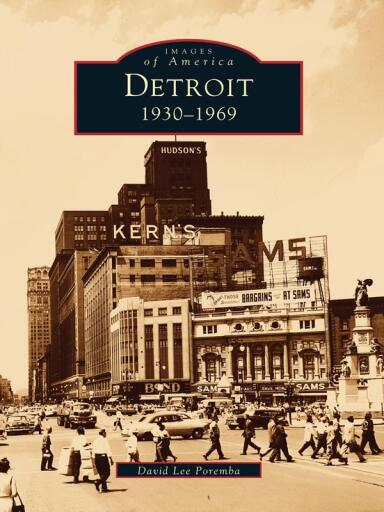
As the roaring twenties came to an end and a new decade dawned, the United States found itself locked in the grips of the Great Depression.
The City of Detroit was no exception as industry laid off workers and bread lines formed across the city. Detroit Mayor Frank Murphy led the country in supporting state and federal welfare programs to help people through the economic crisis. By the middle of the 1930s, Detroit began picking itself up out of the economic mud and was soon flexing its industrial muscle as manufacturing, led by the auto industry, put the Motor City back into shape. As the decade ended and war approached, the city was ready to take its place on the world stage. The country reeled from the shock of the attack on Pearl Harbor and had to shift its industrial might from civilian use to the war effort. Nowhere was that more evident than in Detroit. Its huge manufacturing capabilities, when turned to the making of the implements of war, earned the city a new nickname. The Motor City became to the Arsenal of Democracy and began to evolve once more. The influx of workers from the Deep South to the war industry added yet another facet to the city's society and culture. As the Second World War came to a close and production re-tooled for the return to civilian life, an economic boom swept through Detroit. The city celebrated its 25oth birthday in 1951, prompting an outpouring of funds to build with. Major additions were made to the Art Institute, the Detroit Historical Museum, and the riverfront.
Disponibilidade
Detroit está disponível como eBook em 9 livrarias online. Entre as livrarias que o vendem estão Bajalibros Argentina, Bajalibros Latam, Bookshop Uruguay.
Categorias
- Idioma
- English
Compartilhar
Perguntas frequentes
- Em quais formatos Detroit está disponível?
- Detroit está disponível como eBook em 9 livrarias online.
- Onde posso comprar Detroit?
- Você pode comprar Detroit em Bajalibros Argentina, Bajalibros Latam, Bookshop Uruguay. Compare todas as opções na lista desta página.
Avaliações e resenhas
Ainda não há avaliações. Seja o primeiro a resenhar este livro.
Entrar para avaliar e resenhar este livro.