Domination and Resistance
Publicado por University of Hawaii Press
English
2016
ISBN 9780824858124
eBook
Buy at ebookstaolistic
🇺🇸
Catademic
🇺🇸
Visitar loja →
UN
University of Hawaiʻi Press
🇺🇸
Visitar loja →
ebookstaolistic
🇺🇸
Visitar loja →
Bajalibros Latam
🇺🇸
Visitar loja →
Association of University Presses - Tienda FILUNI
🇺🇸
Visitar loja →

Ebooks Librería Antártica
🇨🇱
Visitar loja →
Ebooks Agustin
🇪🇸
Visitar loja →
Bajalibros Argentina
🇦🇷
Visitar loja →

Sanborns Ebooks
🇲🇽
Visitar loja →
ebooks Libreria del GAM
🇺🇾
Visitar loja →
Bookshop Uruguay
🇺🇾
Visitar loja →

ebookskitapenas
🇬🇹
Visitar loja →
Ebooks Yenny - El Ateneo
🇦🇷
Visitar loja →
Crisol Ebooks
🇨🇴
Visitar loja →
Disponível em 14 livrarias
Catademic
🇺🇸
Visitar loja →
UN
University of Hawaiʻi Press
🇺🇸
Visitar loja →
ebookstaolistic
🇺🇸
Visitar loja →
Association of University Presses - Tienda FILUNI
🇺🇸
Visitar loja →
Ebooks Librería Antártica
🇨🇱
Visitar loja →
Ebooks Agustin
🇪🇸
Visitar loja →
Sanborns Ebooks
🇲🇽
Visitar loja →
ebooks Libreria del GAM
🇺🇾
Visitar loja →
ebookskitapenas
🇬🇹
Visitar loja →
Ebooks Yenny - El Ateneo
🇦🇷
Visitar loja →
Crisol Ebooks
🇨🇴
Visitar loja →
Sobre este livro
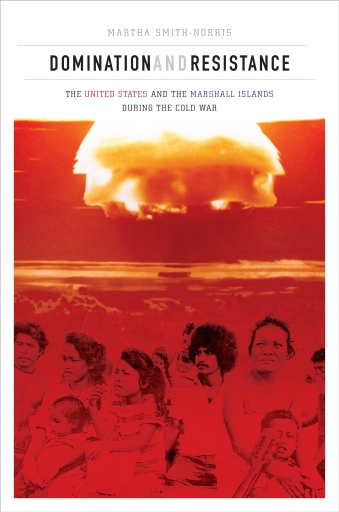
<p><i>Domination and Resistance</i> illuminates the twin themes of superpower domination and indigenous resistance in the central Pacific during the Cold War, with a compelling historical examination of the relationship between the United States and the Republic of the Marshall Islands. For decision makers in Washington, the Marshall Islands represented a strategic prize seized from Japan near the end of World War II. In the postwar period, under the auspices of a United Nations Trusteeship Agreement, the United States reinforced its control of the Marshall Islands and kept the Soviet Union and other Cold War rivals out of this Pacific region. The United States also used the opportunity to test a vast array of powerful nuclear bombs and missiles in the Marshalls, even as it conducted research on the effects of human exposure to radioactive fallout.<br><br><br>Although these military tests and human experiments reinforced the US strategy of deterrence, they also led to the displacement of several atoll communities, serious health implications for the Marshallese, and widespread ecological degradation. Confronted with these troubling conditions, the Marshall Islanders utilized a variety of political and legal tactics—petitions, lawsuits, demonstrations, and negotiations—to draw American and global attention to their plight. In response to these indigenous acts of resistance, the United States strengthened its strategic interests in the Marshalls but made some concessions to the islanders. Under the Compact of Free Association (COFA) and related agreements, the Americans tightened control over the Kwajalein Missile Range while granting the Marshallese greater political autonomy, additional financial assistance, and a mechanism to settle nuclear claims.<br><br><br>Martha Smith-Norris argues that despite COFA's implementation in 1986 and Washington's pivot toward the Asia-Pacific region in the post–Cold War era, the United States has yet to provide adequate compensation to the Republic of the Marshall Islands for the extensive health and environmental damages caused by the US testing programs.</p>
- Idioma
- English
Compartilhar
Você também pode gostar
Ataque aéreo a Halberstadt, el 8 de abril de 1945
Kluge, Alexander
The Great Galveston Disaster
Lester, Paul
Domination and Resistance
Smith-Norris, Martha
African and European Addresses
Roosevelt, Theodore
História do Brasil - Livro I - Monocultura Da Cana De Açúcar A Economia Do Açúcar E As Economias De Subsistência
Planeta do Brasil, Editora

Latin America and the United States
Root, Elihu