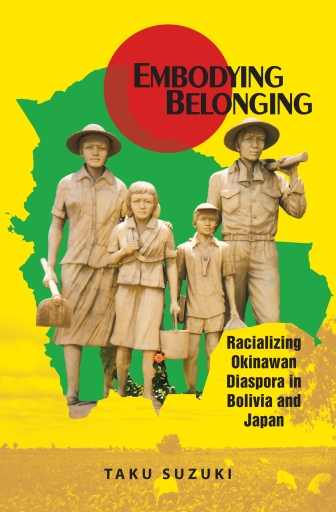
Embodying Belonging
Por Suzuki, Taku
Publicado por University of Hawaii Press
English
273 páginas
2010
ISBN 9780824860547
PDF
Buy at Association of University Presses - Tienda FILUNI
🇺🇸
 Catademic
🇺🇸
Visitar loja →
Catademic
🇺🇸
Visitar loja →
 Bajalibros Latam
🇺🇸
Visitar loja →
Bajalibros Latam
🇺🇸
Visitar loja →
 Association of University Presses - Tienda FILUNI
🇺🇸
Visitar loja →
Association of University Presses - Tienda FILUNI
🇺🇸
Visitar loja →
 Ebooks Librería Antártica
🇨🇱
Visitar loja →
Ebooks Librería Antártica
🇨🇱
Visitar loja →
 Ebooks Agustin
🇪🇸
Visitar loja →
Ebooks Agustin
🇪🇸
Visitar loja →
 Bajalibros Argentina
🇦🇷
Visitar loja →
Bajalibros Argentina
🇦🇷
Visitar loja →
 Sanborns Ebooks
🇲🇽
Visitar loja →
Sanborns Ebooks
🇲🇽
Visitar loja →
 ebooks Libreria del GAM
🇨🇱
Visitar loja →
ebooks Libreria del GAM
🇨🇱
Visitar loja →
 Bookshop Uruguay
🇺🇾
Visitar loja →
Bookshop Uruguay
🇺🇾
Visitar loja →
 ebookskitapenas
🇬🇹
Visitar loja →
ebookskitapenas
🇬🇹
Visitar loja →
 Ebooks Yenny - El Ateneo
🇦🇷
Visitar loja →
Ebooks Yenny - El Ateneo
🇦🇷
Visitar loja →
 Crisol Ebooks
🇵🇪
Visitar loja →
Crisol Ebooks
🇵🇪
Visitar loja →
Disponível em 12 livrarias
Catademic
🇺🇸
Visitar loja →
Bajalibros Latam
🇺🇸
Visitar loja →
Association of University Presses - Tienda FILUNI
🇺🇸
Visitar loja →
Ebooks Librería Antártica
🇨🇱
Visitar loja →
Ebooks Agustin
🇪🇸
Visitar loja →
Bajalibros Argentina
🇦🇷
Visitar loja →
Sanborns Ebooks
🇲🇽
Visitar loja →
ebooks Libreria del GAM
🇨🇱
Visitar loja →
Bookshop Uruguay
🇺🇾
Visitar loja →
ebookskitapenas
🇬🇹
Visitar loja →
Ebooks Yenny - El Ateneo
🇦🇷
Visitar loja →
Crisol Ebooks
🇵🇪
Visitar loja →
Sobre este livro
<p><i>Embodying Belonging</i> is the first full-length study of a Okinawan diasporic community in South America and Japan. Under extraordinary conditions throughout the twentieth century (Imperial Japanese rule, the brutal Battle of Okinawa at the end of World War II, U.S. military occupation), Okinawans left their homeland and created various diasporic communities around the world. Colonia Okinawa, a farming settlement in the tropical plains of eastern Bolivia, is one such community that was established in the 1950s under the guidance of the U.S. military administration. Although they have flourished as farm owners in Bolivia, thanks to generous support from the Japanese government since Okinawa’s reversion to Japan in 1972, hundreds of Bolivian-born ethnic Okinawans have left the Colonia in the last two decades and moved to Japanese cities, such as Yokohama, to become manual laborers in construction and manufacturing industries.<br><br>Based on the author’s multisited field research on the work, education, and community lives of Okinawans in the Colonia and Yokohama, this ethnography challenges the unidirectional model of assimilation and acculturation commonly found in immigration studies. In its vivid depiction of the transnational experiences of Okinawan-Bolivians, it argues that transnational Okinawan-Bolivians underwent the various racialization processes—in which they were portrayed by non-Okinawan Bolivians living in the Colonia and native-born Japanese mainlanders in Yokohama and self-represented by Okinawan-Bolivians themselves—as the physical embodiment of a generalized and naturalized "culture" of Japan, Okinawa, or Bolivia. Racializing narratives and performances ideologically serve as both a cause and result of Okinawan-Bolivians’ social and economic status as successful large-scale farm owners in rural Bolivia and struggling manual laborers in urban Japan.<br><br>As the most comprehensive work available on Okinawan immigrants in Latin America and ethnic Okinawan "return" migrants in Japan, <i>Embodying Belonging</i> is at once a critical examination of the contradictory class and cultural identity (trans)formations of transmigrants; a rich qualitative study of colonial and postcolonial subjects in diaspora, and a bold attempt to theorize racialization as a social process of belonging within local and global schemes.</p>
Categorias
- Idioma
- English
Compartilhar